
Intricate Mehndi Delight, Anyone who’s been around brides on their getting-ready mornings will tell you the matching matters more than the design itself. You can have the cleanest lines in the world and it still looks off if the pattern fights the outfit, or if somebody turns up to a casual dholki wearing full bridal hands.
Our team watches this play out every wedding season across Columbus.
So work through it the way a consultation would. Your hands first, then the outfit, then the occasion, and by the end the design has mostly picked itself.
Start With Your Hands
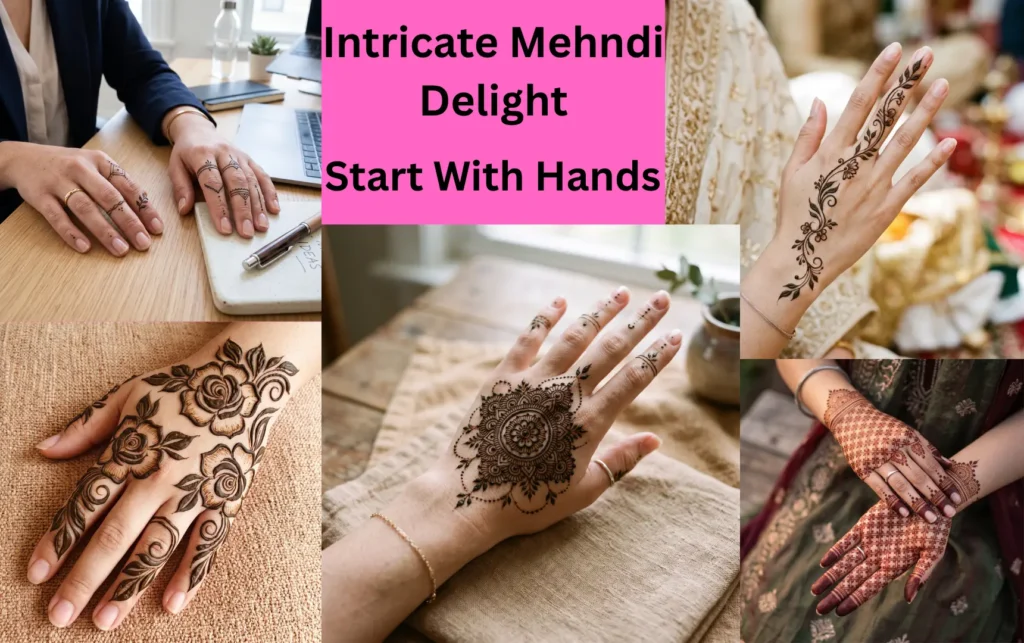
Hands have shape, and a design that flatters one shape can clutter another, which is something clients rarely think about and artists think about constantly.
Bel (vine trail): a single flowing line from fingertip across the back of the hand down to the wrist. Long fingers carry it beautifully. It also happens to fade more gracefully than denser styles.
Arabic bold florals: thick strokes and generous roses with bare skin left deliberately around each motif, and that open space is exactly why it’s the kindest style for shorter or broader hands.
Mandala: one circular medallion on the palm or the back of the hand, fingers kept light. If you’re unsure, start here. It suits nearly everyone and it photographs well.
Jaal (lattice): fine netting across the whole hand, deeply traditional, needs a patient artist and a patient sitter. Honestly it belongs on slim hands, on small ones it turns to clutter.
Finger designs: rings, bands, tips only. Modern, office-safe, quick. Worth knowing that hennaed fingertips fade patchier than anywhere else, so if you wash your hands all day, keep the tips light.
There’s also the palm versus back-of-hand question. Palms stain darkest because the skin there is thickest and holds more dye, but the back of the hand is what actually shows in photos and across a dinner table. If you’re only doing one side, the back of the hand earns its keep at an event, and the palm is the pick when depth of colour is the whole point.
The lighter end of this menu gets its own space in our simple mehndi designs roundup, and there’s a dedicated guide to simple mehandi design for front hand if that’s the side you’re showing.
Matching the Design to Your Outfit
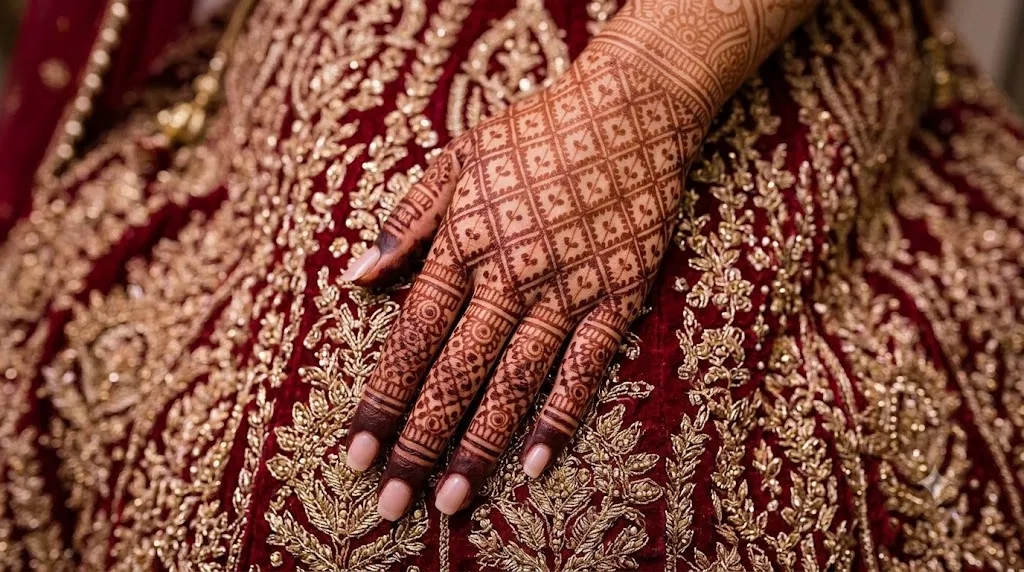
One rule saves most people here: busy outfit, simple mehndi. Plain outfit, go dense.
- A heavy worked lehenga or embroidered sharara wants structured designs with breathing room, a mandala or bold Arabic, because the outfit is already doing the talking.
- A plain kurta or solid saree is where full jaal and packed paisleys finally get their stage.
- Warm colours, your reds and golds and oranges, sit naturally with henna’s maroon at any density.
- Cool pastels are trickier. Mint, lilac, ice blue all photograph better against lighter, open designs, since heavy dark coverage can look severe next to soft colours.
Our stylists run the same logic when they’re balancing bridal hair against a heavy dupatta, the pieces of a look either share the stage or they compete.
What the Occasion Calls For Intricate Mehndi Delight
| Occasion | Style | Coverage |
|---|---|---|
| Bridal | Full Indian/Pakistani, initials hidden in the pattern | Fingertips to elbow, both sides |
| Wedding guest | Full palm or strong back-of-hand piece | Ends at the wrist |
| Eid, Karva Chauth, Teej | Arabic or Indo-Arabic florals | Quick, festive, palm or back |
| Casual, first time | Single motif, mandala, finger rings | Minimal |
Two unwritten rules sit behind that table.
Guests don’t out-mehndi the bride. Wrist-length is generally the polite ceiling at someone else’s wedding, whatever the artist offers you.
And bridal mehndi goes on a day or two before the wedding, never the morning of. The stain comes off orange and needs the next 24 to 48 hours to oxidize into its deep maroon, so booked right, the colour peaks just as the photographer arrives.
Planning a full sitting? The full hand mehndi designs for brides guide goes deep on coverage styles, and the simple mehndi designs for feet guide covers the half most brides decide on last. If there are little ones around for Eid, there’s a separate roundup of simple kids mehndi designs sized for small hands.
The Colour Is Mostly Your Job
The artist gives you the design, but what colour it turns over the next two days is largely down to how you treat it.
- Leave the paste on six to eight hours, overnight if you can sleep carefully. Longer contact means deeper stain, it’s that direct.
- Scrape it off rather than washing it, and keep water off the skin for the first 12 to 24 hours because the darkening is still happening underneath.
- Warmth deepens the colour. The old trick of holding your hands over gently steaming cloves is real.
- Go easy on the lemon-sugar. Its actual job is keeping the paste stuck to your skin longer, and overdoing it can lighten the very stain you’re trying to deepen.
From there you get one to three weeks of colour depending on placement and how much washing your hands do. Palms hold longest. Plain moisturiser, no scrubs over the area.
One Thing Worth Being Strict About Intricate Mehndi Delight
Natural henna stains somewhere between orange and reddish brown. It never stains black.
The instant jet-black cones sold as “black henna” get their colour from PPD, a chemical dye that can blister skin and cause permanent sensitization, and it has no place near anyone’s hands, least of all a bride’s or a child’s. Skin comes before everything else in this work, so if anyone promises you black in an hour, walk away.