

Most beauty and yoga advice works on the surface, skincare products, and cosmetic treatments, through products and treatments and how you apply them, which is fine as far as it goes.
Yoga works underneath that, and a few of its effects on skin have actually been measured in controlled trials rather than just claimed in marketing copy.
Whether practiced in a studio or through digital platforms, the benefits of online yoga offer convenience and accessibility, Some of what gets said about it holds up. Some of it doesn’t.
1. The Science of Yoga for Radiant Skin
Skin reflects what’s going on inside you, so stress and poor sleep and hormonal shifts all end up showing as acne or dullness or faster aging.
A. Stress Reduction & Anti-Aging
Cortisol breaks down collagen, and that’s the actual mechanism linking stress to visible aging.
There’s a randomized controlled trial worth knowing about here. Forty-one people with chronic insomnia were split between yoga nidra and cognitive behavioral therapy, and researchers measured salivary cortisol directly rather than asking people how relaxed they felt. Cortisol dropped significantly in the yoga nidra group.
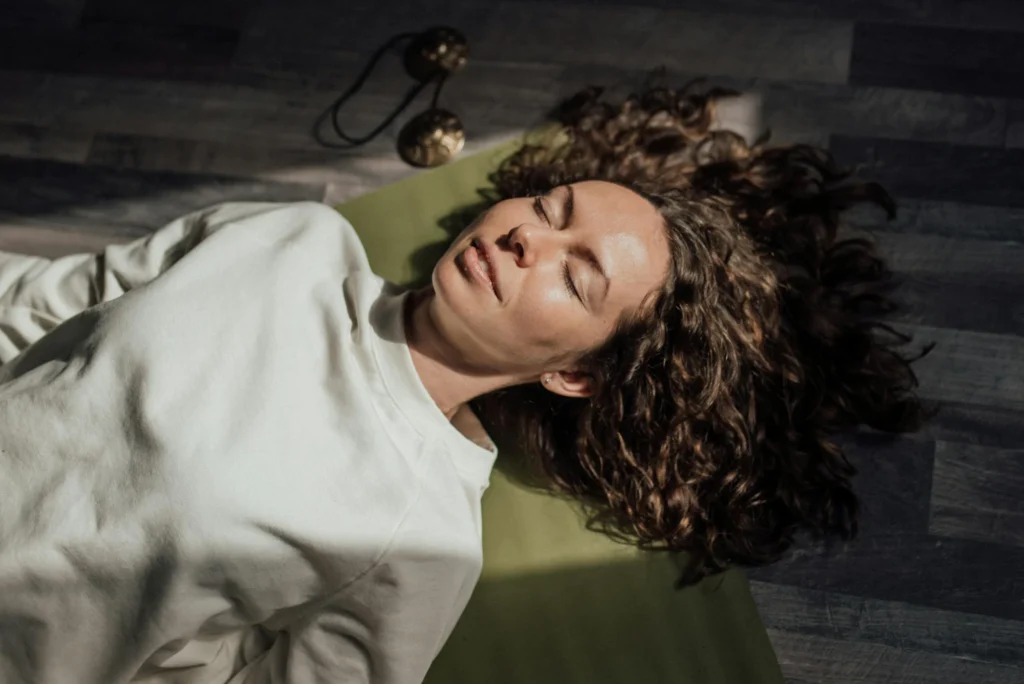
The poses that reduce stress most reliably turn out to be the passive ones rather than the demanding ones. Balasana, or child’s pose, releases tension through the neck and jaw and shoulders, while savasana produces the deepest parasympathetic shift in most practices, which is a technical way of saying it’s the part that actually calms you down.
Breathing does much of this work anyway. Slow controlled breathing stimulates the vagus nerve, and that’s what moves you out of the stressed state.
B. Circulation & Glow
One correction on a claim that turns up in a lot of yoga writing: twisting poses don’t flush toxins out of you. Your liver and kidneys handle that continuously, whether you practice or not.
What movement genuinely does is help lymphatic flow, since the lymphatic system has no pump of its own and depends on muscle contraction to move fluid around. Any physical practice helps with that.
Circulation is the other real effect. Downward dog increases blood flow to the head and face, and twisting poses compress and release the abdominal organs in a way that supports digestion.
Better circulation delivers oxygen and nutrients to skin cells, which is a modest benefit and builds with consistency instead of showing up after one class.
2. Body Toning and Flexibility Sculpting Beauty from Within
Yoga builds strength through sustained holds rather than repetitions, so the result looks different from what weight training gives you.
A. Lean, Toned Muscles
Deep stabilizing muscles get worked in ways most exercise skips over entirely, and those are the ones affecting posture.
Warrior poses work the legs and glutes and shoulders while building endurance. Boat pose targets the deep core, including the transverse abdominis, which sits underneath everything else and rarely gets touched by crunches.
Posture changes faster than muscle definition does, and standing taller affects how clothes hang and how you carry yourself within a few weeks.
B. Flexibility & Movement Quality
Both of the poses worth naming here address specific problems that come from modern life. Pigeon opens the hip flexors, which shorten from sitting in chairs all day. Camel counteracts the forward hunch that comes from desk work and looking at your phone.
That’s the whole reason they’re worth doing. Your hips tighten from chairs and your upper spine rounds from screens, so the practice is undoing something specific rather than working generally.
3. The Connection Between Yoga and Beauty Sleep
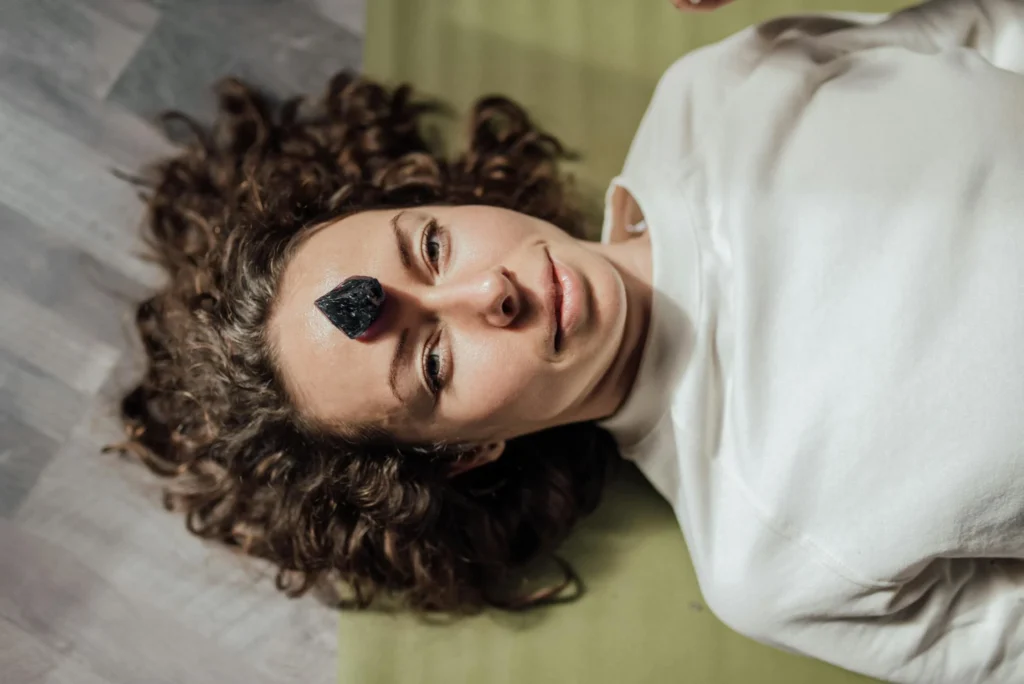
Sleep loss shows on skin faster than almost anything else does, and it turns up as dark circles and puffiness and dullness. Yoga improves sleep quality by reducing insomnia and balancing circadian rhythms.
Yoga improves sleep quality, and a meta-analysis of nineteen studies covering 1,832 women found significant improvement overall.
That yoga nidra trial used polysomnography for its objective measurements, and participants showed increases in N2 and N3 sleep, which are the deeper stages where physical repair happens and where skin regeneration concentrates. Worth knowing that the sleep lab testing was only repeated on patients who volunteered for it, so that part of the finding rests on a smaller group than forty-one.
For evening practice, yoga nidra is a guided body scan done lying down with no physical demand at all, which makes it usable when you’re already exhausted. Legs-up-the-wall drains fluid that’s pooled in your legs during the day, and that’s the one that helps with morning puffiness.
4. The Mind-Beauty Connection
Confidence changes how people carry themselves, and that affects appearance more than most products manage to.
A. Self-Love & Emotional Well-being
Regular practice reduces negative self-talk, partly because yoga asks you to notice what your body can do instead of how it looks.
Heart-opening poses like cobra and camel open the chest, which correlates with more open posture generally, and meditation with affirmations shifts the internal narrative over time.
This one is slower than the physical effects and much harder to measure. People who practice consistently report it more than any other benefit, which is worth something even though it isn’t the same as evidence.
5. The Digital Revolution: Online Yoga
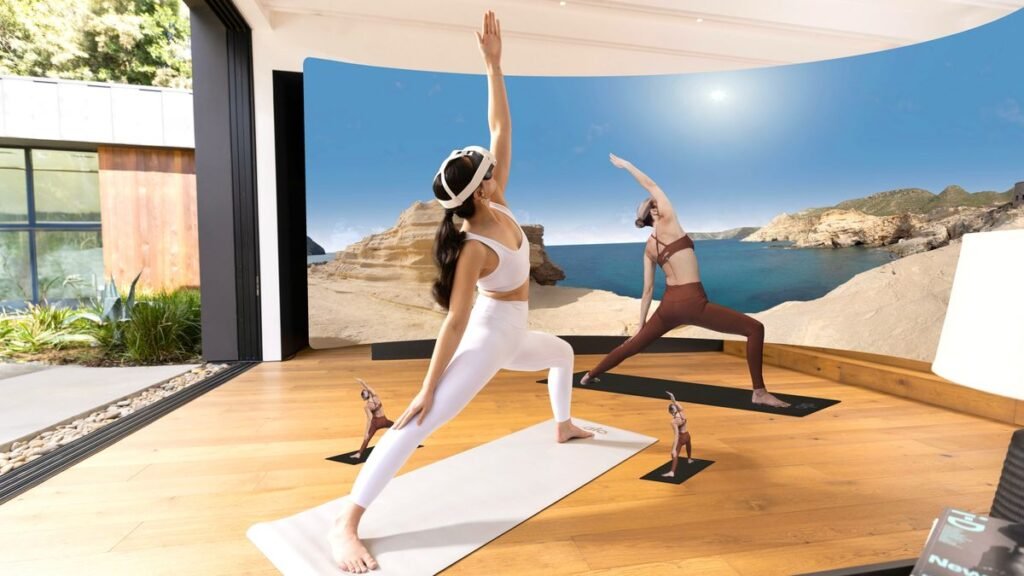
Studio classes don’t fit every schedule, and practicing at home covers that gap.
You can practice at six in the morning or eleven at night. You can choose by level and duration and focus rather than taking whatever the studio scheduled. And you get access to traditions and teachers who aren’t within driving distance of you.
The tradeoff is alignment, because nobody is correcting your form, and bad form causes injury in deep backbends and inversions particularly. A few in-person classes early on are worth the money purely to establish alignment before you move to practicing alone.
If you’re looking at subscription platforms, Glo runs structured programs with strong beginner content, and Alo Moves pairs yoga with broader self-care material.
What to Expect, Realistically
Yoga supports skin health through lower cortisol, better sleep, and improved circulation, and all three of those have research behind them rather than just enthusiasm.
It won’t replace sunscreen or a retinoid, since nothing about breathing addresses UV damage.
Start with fifteen minutes of savasana or yoga nidra before bed. Sleep quality is where the effect shows up fastest, so that’s the version of this you’ll actually notice, and noticing something is what keeps people practicing long enough for the slower effects to arrive.