
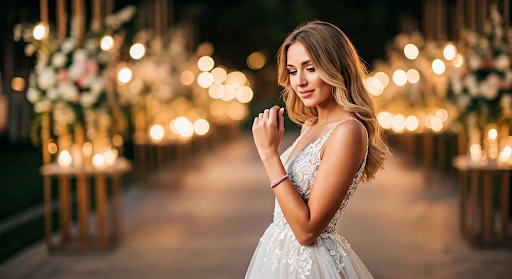
That’s roughly how long you’ll wear this ring, against one day for the dress. Your wedding ring is a classic sign of love and commitment, and it’s also a piece of hardware that has to survive four decades of dishwashing, gym sessions, and cold mornings.
Both halves of that deserve thought.
Matching Your Wedding Ring with Your Bridal Style
Choose it against what you’re already wearing, not in isolation. Getting a wedding ring to create a beautiful bridal look is mostly a coordination problem.
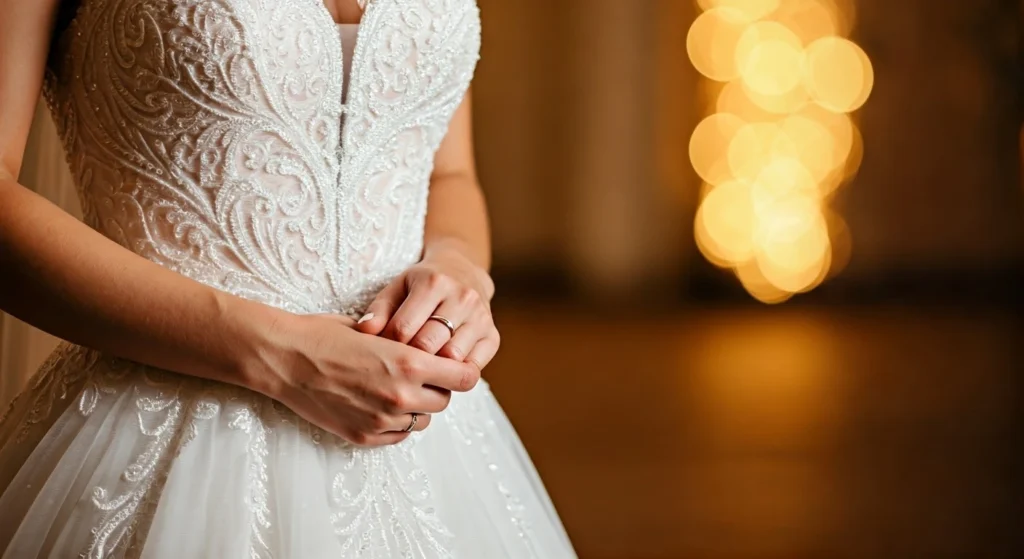
Selecting Rings That Complement Your Dress Design
A classic A-line or ball gown suits a simple solitaire or a pavé band.
Modern mermaid and trumpet gowns take bolder geometry. Boho brides in lace or flowing fabric tend toward floral detail and organic textures, and vintage dresses pair with Art Deco lines or filigree work. None of these are rules, but they’re the pairings that keep showing up because they work, and the reason is proportion. A busy dress and a busy ring compete for the same attention, while a plain dress leaves room for the ring to be the interesting thing.
Wedding rings for women follow the dress rather than fight it.
Considering the Metal Color for Harmony with Accessories
Match the ring to your other jewelry. Not to the dress.
White gold and platinum go with silver-toned pieces and look cool against diamonds. Yellow gold suits gold or pearl accessories. Rose gold works with warm and cool tones both.
There’s a maintenance difference nobody mentions at the counter. White gold is yellow gold alloyed and plated with rhodium, and that plating wears through. Replating runs every one to two years, forever, and each round costs money and takes the ring off your finger for a few days. Platinum is naturally white. It never needs any of that, which is part of why it costs more upfront and less over time.
Choosing a Ring Style That Reflects Your Personality
You’ll wear this at work, at the gym, and doing dishes.
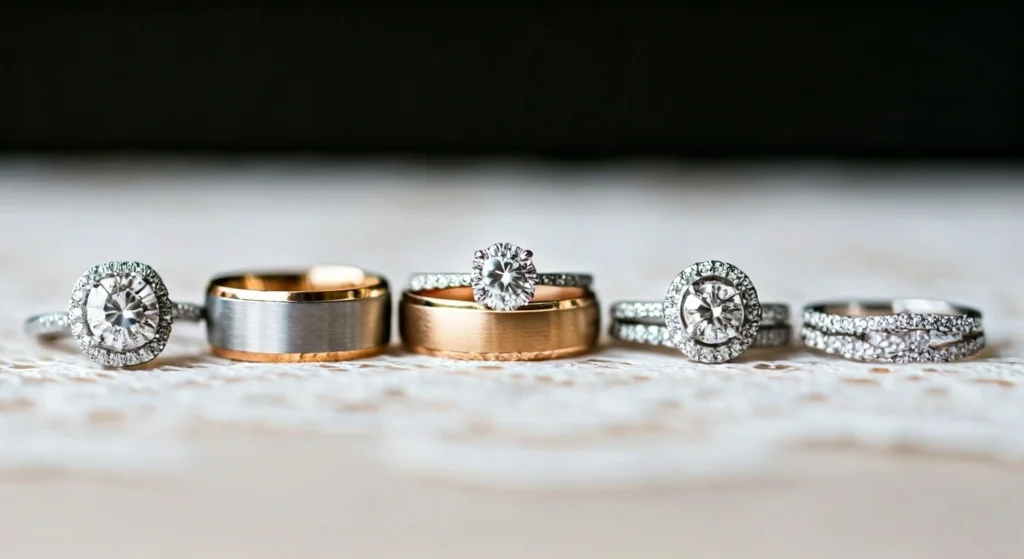
Simple tastes suit a plain band or delicate solitaire. Want more presence? Eternity bands or a halo setting. Vintage preferences point toward milgrain edges and detailed metalwork.
Melbourne brides can see a spread of these styles at Diamond Rings in Melbourne, and trying them on beats deciding from photos.
Coordinating the Engagement Ring and Wedding Band
Profile matters as much as style here. A simple solitaire leaves room for a more detailed band, or a plain match. A detailed engagement ring wants a plain band beside it.
Then there’s the gap. A solitaire with a low-set stone won’t sit flush against a straight band, and you end up with a visible wedge of space between the two rings that no amount of adjusting fixes. Contoured bands solve it, shaped to nest against the setting. This is impossible to judge from a product photo, so bring the engagement ring with you when you shop.
Matching the Ring to the Overall Wedding Theme
Rustic and bohemian weddings suit floral patterns. Beach ceremonies pair with wave motifs or aquamarine. Give this less weight than the rest. The theme lasts an afternoon.
Considering Your Lifestyle and Ring Durability
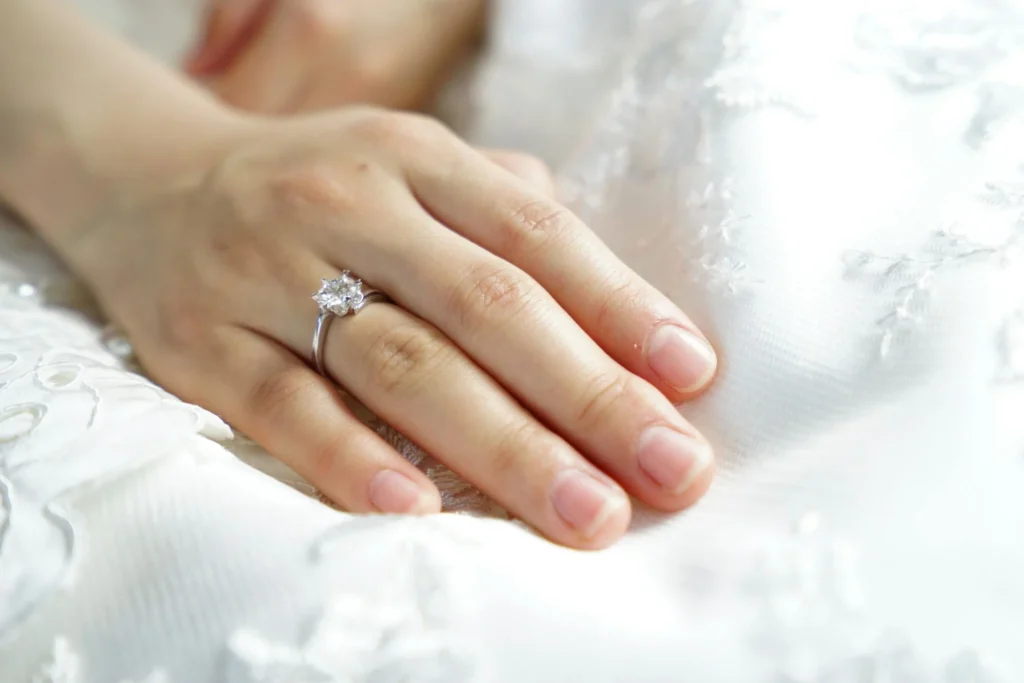
Platinum and gold scratch differently, and the difference compounds over decades.
Gold loses metal when it scratches. Small amounts, invisibly, every time. Platinum displaces it instead, pushing metal sideways rather than shedding it, which is why an old platinum ring weighs what it always did while an old gold ring has quietly thinned.
Purity works backwards from what people expect. 14k gold is harder than 18k, because there’s more alloy holding it together. If you’re rough on your hands, 14k lasts longer despite being less pure.
For settings, bezel beats prong. A bezel surrounds the stone with metal. Prongs catch on sweaters and eventually loosen.
Incorporating Gemstones for Added Sparkle or Meaning
Mohs hardness decides this, not sentiment.
Diamond sits at 10 and won’t scratch under daily wear. Sapphire and ruby at 9 hold up fine. Emerald reaches 7.5 to 8 but carries natural inclusions that chip. Below that, opal, pearl, and moonstone won’t survive a ring worn every day, whatever they mean to you.
Save the softer stones for something you wear occasionally.
Aligning Ring Style with Your Preferred Aesthetic
Yellow gold is the classic. Rose gold is the romantic one. White gold and platinum suit a modern look.
Mixing metals across your engagement ring and band is fine, and plenty of people do it now. Mixing hardnesses is the actual problem, since a softer metal wears down where it rubs against a harder one.
Ensuring Comfort and Fit for Everyday Wear
- Width. Women’s bands typically run 2mm to 4mm. Wider bands also fit tighter, so a 6mm band in your usual size feels snugger than a 2mm one.
- Comfort fit versus standard fit. Standard fit is flat inside. Comfort fit is domed, so less metal touches your finger, it slides over the knuckle more easily, and it creates less friction across a long day. Comfort fit typically runs about half a size smaller than your standard size, which means getting measured in the exact style you’re buying rather than assuming.
- Sizing timing. Fingers swell in heat and after salty food. They’re smallest in the morning. Get measured in the afternoon at normal room temperature, and go back a second time on a different day before committing.
- Resizing. Gold and platinum resize easily. Tungsten, titanium, and cobalt can’t be resized at all, only exchanged. Eternity bands with stones all the way around can’t be resized either, which becomes a problem if your fingers change over twenty years.