
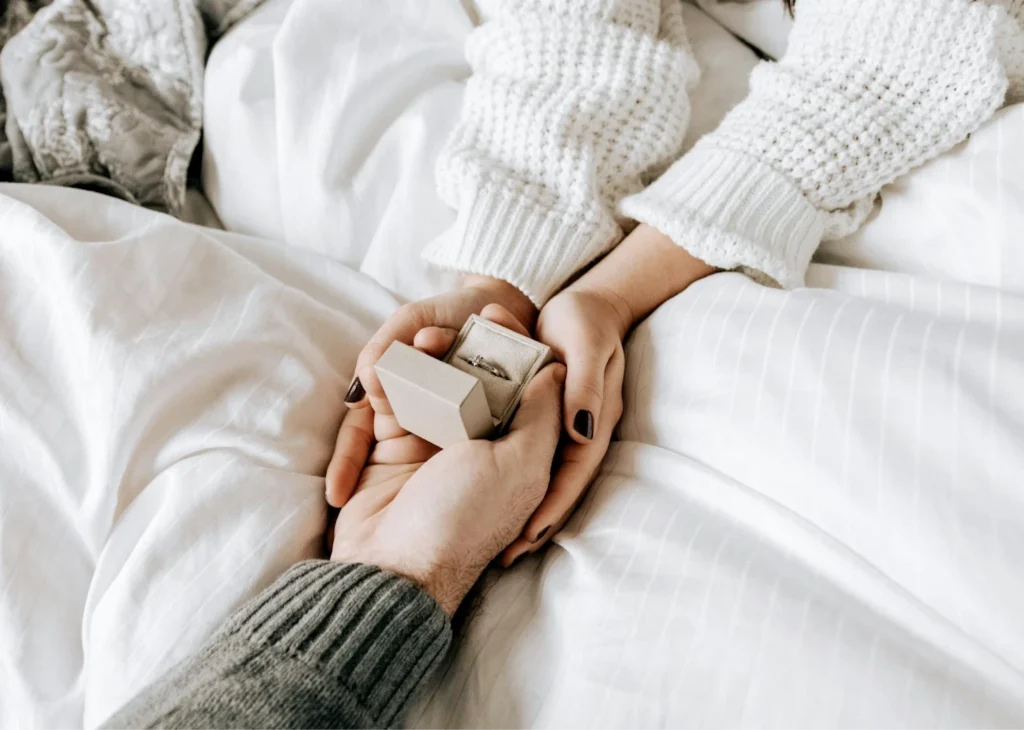
More and more couples are favoring simplicity and elegance in engagement rings. Clean lines, one stone, nothing extra.
The look is straightforward. The engineering behind it is less so, because a delicate band still has to survive thirty years on a hand that opens doors and carries shopping.
This covers the styles, and the specifications that decide whether a thin ring lasts.
Dainty Engagement Rings: A Subtle Statement
Dainty rings put the stone forward by taking everything else away. Thin band, minimal setting, nothing competing.
They go well with any fashion style precisely because there’s so little to clash with. They also cost less than heavier designs, since there’s less metal involved.
Where they need attention: band width.
| Band width | Gold | Platinum |
|---|---|---|
| 1.5mm | Bends permanently with daily wear | Workable but thin |
| 1.6mm | Still risky | Safe floor |
| 1.8mm | Safe floor | Comfortable |
| 2mm+ | Comfortable, required for pavé | Comfortable |
A 1.5mm gold band doesn’t hold shape through years of gripping steering wheels and pressing against countertops. It bends out of round, and it doesn’t spring back. Worse, the bend strains the setting, which loosens prongs.
Platinum is denser and stiffer, so it manages narrower widths. It costs more upfront but doesn’t need the rhodium replating white gold requires every year or two.
If you want the delicate look, 1.8mm in gold or 1.6mm in platinum is the floor. Below that you’re buying something that needs replacing rather than repairing.
Minimalist Wedding Bands: Perfect for Stacking

Simple bands stack well because there’s nothing on them to collide.
Mix metals across the stack if you want, since yellow, white, and rose gold sit together fine visually. What matters more is width consistency, as wildly different widths in one stack look accidental rather than designed.
One practical note on stacking: rings rubbing against each other wear each other down. Softer metals go faster. If you’re stacking daily, expect to have them checked and occasionally repolished.
Bands with no stones are the most durable thing in this category. Nothing to loosen, nothing to lose.
Unique Diamond Shapes for Tiny Bands

Shape changes how large a stone reads, which matters more on a delicate band where you can’t compensate with size.
Shapes that maximize apparent size: marquise, oval, and pear all run longer than they are wide, so they cover more finger for the same carat weight. Marquise is the most efficient of the three.
Shapes with clean geometry: emerald and Asscher use step cuts rather than brilliant faceting, so they read as glassy and architectural instead of sparkly. Both suit minimalist settings.
Shapes with pointed tips: marquise, pear, and princess all have corners or points, and those are the vulnerable spots. Pointed tips chip. They need prongs specifically covering them, usually a V-prong, and that’s worth confirming before buying.
Rounded shapes: oval, cushion, and round have no vulnerable points, which makes them the safer choice for anyone hard on their hands.
Cushion and radiant cuts sit between the two categories, with softened corners that reduce risk without going fully round.
Opal and Diamond Ring: A Distinctive Choice
Opal produces color no other stone does, that shifting play of blues and reds across a single piece.
It also needs different handling from a diamond, and this is worth knowing before buying one.
Opal sits at 5.5 to 6.5 on the Mohs hardness scale. Diamond is 10, sapphire is 9. More relevant: ordinary household dust and beach sand contain quartz at 7, which means everyday grit can scratch an opal.
Opal also contains up to 20% water by weight, which makes it sensitive to sudden temperature changes and to drying out.
None of that rules it out. It changes what setting works.
- Bezel settings surround the stone’s edge with metal, protecting it from knocks while leaving the color visible. This is the standard recommendation for opal.
- Low-profile designs sit closer to the finger and catch on fewer things.
- High prong settings look beautiful and leave the opal’s edges exposed.
Cabochon opals, the domed uncut shape, handle impact better than faceted ones.
Practical care: remove before swimming, avoid leaving it on a hot car dashboard, and take it off for anything involving sand or cleaning products.
An opal ring worn thoughtfully lasts. An opal ring treated like a diamond doesn’t.
Double Band Engagement Ring: Neat Choice
Two bands rather than one, either split at the setting or running parallel.
The design distributes weight across more of the finger, which some people find more comfortable than a single narrow band. It also gives more surface for engraving or for combining metals.
Where doubles get interesting is stone setting. Extra gemstones and add extra sparkle across both bands, though that raises the maintenance question, since every set stone is another thing to check.
Worth asking about the join. Double bands connected at the setting create a stress point where the two meet, and quality of that construction varies between makers.
What to Check Before Buying
Delicate rings are perfect for everyday wear when built properly, and disappointing when they aren’t.
- Band width. 1.8mm minimum in gold, 1.6mm in platinum.
- Prong count and metal. Six prongs hold more securely than four. Platinum prongs on a gold band is increasingly common, since platinum resists wear better at the contact points.
- Setting profile. Lower sits closer to the hand and snags less. Bezel is the most protective option available.
- Prong checks. Annually for the first three to five years. Worn prongs look flat at the tips instead of rounded, and a stone that rattles when tapped means the setting has loosened.
- Nickel content, if you have sensitive skin. Many white gold alloys contain it, and platinum doesn’t.