Walk around London right now and a fair few of the fresh-faced people you pass have probably had a little help, and more and more of that help is Baby Botox rather than the full strength Botox, because the whole appeal is that nobody can tell you’ve had anything done.
It seems to make sense that it began here, Londoners are busy and on camera and in back-to-back meetings and want to look rested without looking obviously worked on, and that’s the gap that Baby Botox fills. So it’s not so much a trend, but treatment finally coming around to what everyone was asking for the whole time.
Here’s what it actually is and why everyone won’t stop talking about it.
What “Baby Botox” actually means
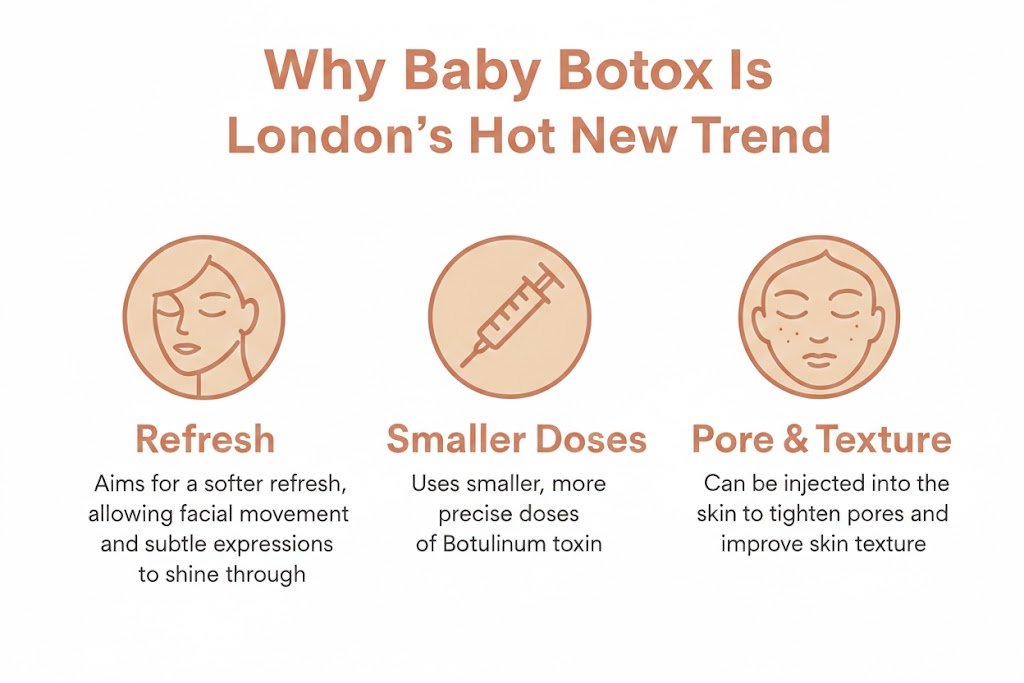
The name throws people, because it makes it sound like some different, gentler product, and it isn’t. It’s the same Botox, just less of it, somewhere around a third to a half of a normal dose spread across the same areas.
That tiny difference is the whole point, because a typical treatment usually freezes the muscle movement completely, while Baby Botox merely relaxes it. It’s like softening a movement instead of stopping it cold. The result is you get the smoothing effect without your face going stiff. That’s what people are actually paying for.
How it works in plain terms
The thing most people get wrong about Botox is that they think you have to freeze a muscle completely to stop it wrinkling your skin, but you really don’t.
Botox just partially blocks the signals from the nerve that tell your muscle to move, so crank it all the way up and the muscle basically stops, which is where that frozen look everyone dreads comes from. But Baby Botox is about turning that dial down instead of off, so a muscle is still moving, but with less intensity, and as it turns out that’s enough to keep lines from setting in while your face still moves like a face should.
Think of it as a way to just turn down the volume.
The muscle still works, you can still frown and smile and look surprised, the lines just don’t dig in the way they would at full strength, and honestly those tiny movements are everything, because they’re what make you look alive instead of stiff, which is the entire reason people go lighter in the first place.

Why people are choosing it
A few honest reasons it caught on:
- What you want is a natural result. No frozen forehead, just a fresher version of your own face, and this is the big one for most people.
- It works as prevention. A lot of people start younger, before deep lines set in, because easing the movement early stops those lines from ever really carving in.
- So there’s no downtime. You get it done and go back to your day, which matters when your schedule’s packed, and it’s a big part of why Baby Botox in London bookings continue to rise.
- It’s a good fit. Small dose means you can be more precise, and a good injector will adjust their technique to the patient’s face rather than just work from a plan, and it’s also easy to fit into a schedule with the other duty treatments people already build in.
How long it lasts
You will notice it starting within a few days, but it can take one to two weeks before you’re really feeling it, so don’t worry if you don’t feel it the morning after.
After that it usually holds for three to six months, and how long really comes down to you, your metabolism, the areas you had done, how expressive your face naturally is. Then it fades off gradually, which is honestly a plus rather than a downside, because nothing’s locked in and you can adjust it next time round.
Does that sound like a good fit?
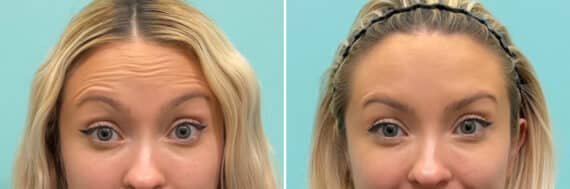
It’s very much suited to two types of patients. People who don’t want a meaningful change, or people who are nervous about Botox for the first time and want to start with a light touch as opposed to diving straight into a full-strength treatment.
The honest answer only really comes from a consultation though, where a good aesthetician actually looks at your skin and your face and what you’re trying to achieve before telling you whether it fits, because your facial movements and your goals are your own, and a decent practitioner won’t just nod you through to take the booking.
Finding the right person in London
This is the part that matters more than anything else, more than the brand and way more than the price, because with Botox the injector’s skill basically is the result, and no good product saves a bad hand.
London’s full of people properly qualified, but it’s equally full of people to avoid, so a bit of care goes a long way:
- Check they’re actually licensed. You want a medical professional trained in injectables, not just someone who did a weekend course and bought a certificate.
- Read real reviews and look at before-and-afters. Past patients tell you far more than any clinic’s own marketing ever will.
- Have a proper consultation. A good one listens and explains things, a bad one just rushes you into buying.
- Check for hygiene and safety. The second you administer needles, protocol is everything.
So, is Baby Botox worth it?
Baby Botox isn’t new, per se, just a much better way to do an old service, one that plays up the natural contours of your face instead of against them, and that’s why so many people who were too afraid of a frozen face to try Botox are trying it now. If you want to go deeper on the clinical side, journals like Dermatology Research cover it well, but baby Botox itself is pretty simple.
You need to go in with realistic expectations, find someone who knows what they’re doing, and treat it as an incremental fix. Do that and you’ll most likely walk out looking like a fresher, less tired version of yourself, which for most people is the whole point.