

Chemical peels were the third most requested cosmetic procedure after fillers and Botox, respectively.
The simple, centuries-old idea that you put a chemical on your face, neck and hands, and after a few days of peeling off the top layer of skin, the new skin is more beautiful, more intact, and with finer wrinkles and spots.
Everything else about peels comes down to depth. Depth determines what gets fixed, how long recovery takes, and how many treatments are required:
| Depth | Treats | Downtime | Sessions |
|---|---|---|---|
| Superficial | Dullness, minor acne | Days of mild redness | Often 4 to 6 |
| Medium | Discoloration, fine lines, wrinkles | A week or more | 1 to a few |
| Deep | Severe scarring, thickened skin | Up to a couple of months | Usually once |
Here’s each category, from weakest to strongest.
Lunchtime or Superficial Peels

You can book them on a lunch break; it’s an earned nickname.
Because only the top layer of skin is being exfoliated, the worst you carry back to work may be some redness and mild swelling, which disappears in days to a week.
One session might refresh your skin, but the depth of collagen and elastin-increasing, skin-changing process doesn’t happen until you’ve had a series of about six.
Glycolic Acid Peel
Glycolic acid molecules are small, and this allows the acid to penetrate the skin and exfoliate without causing too much irritation to most skin types.
Glycolic acid is a common solution for lunchtime peels, but some skin experts like Dr Sidhu can use a higher concentration of glycolic for deeper peels.
In lower concentrations, it’s the lunchtime peel. At higher concentrations, it can be pushed to medium depth.
Salicylic Acid Peel
This is your acid if you have oily skin or are prone to breakouts.
And because salicylic is oil-soluble, it follows your skin’s oils down into the pores instead of remaining on the surface, penetrating deeper than glycolic acid to clear out the very place where acne begins.
Medium Chemical Peels
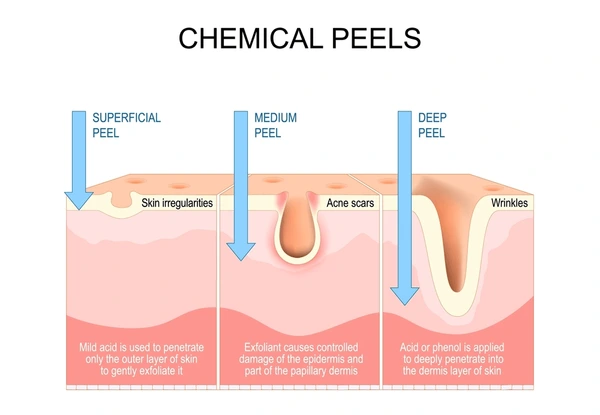
Stronger agents penetrate deeper into the middle skin layers.
That reaches discoloration, fine lines, and wrinkles in ways other treatments can’t touch, and results are stronger than any you would expect from a lunchtime peel.
The more you peel, the longer it will take to recover, but no pretending otherwise even so: a week or more.
Jessner’s Solution Chemical Peels
Three acids were combined: salicylic acid, lactic acid and resorcinol.
Mixed lighter, it works as a superficial peel, and mixed stronger, it works as a medium-depth peel. This adjustability is why practitioners keep it around.
Trichloroacetic Acid Peel (TCA)
TCA is increasingly used for pigmentation, deeper wrinkles and moderate acne scarring.
A correction to the common wisdom that TCA is safe for all skin types: a TCA deep peel on darker skin tones can lead to precisely the hyperpigmentation you came in to have removed.
Darker skin may tolerate lower concentrations of TCA or milder acids like mandelic or glycolic, and it is critical for the person performing the peel to be experienced in treating patients with higher melanin content. It’s a fair question, and a good provider expects it.
Deep Chemical Peels
One type involves phenol (carbolic acid), which penetrates all layers of your skin.
That’s what allows it to treat even the most severe atrophic scarring, give anti-aging results that no lighter treatment can match. One treatment can hold its results for years.
The price increases. Recovery can take a couple months. It is always a medical procedure, and is never an add-on to spa treatments.
Phenol Chemical Peel
The logistics tell you what you’re dealing with. Local anesthesia plus sedation, and monitoring throughout because phenol affects the heart.
Recovery is the real commitment:
- Initially, skin blisters, peels, swells, and reddens.
- Ointments and bandages applied for weeks.
- Antiviral medication while skin establishes itself.
What all that buys is the most dramatic resurfacing any peel offers. Major imperfections cleared, visibly younger skin, from one treatment.
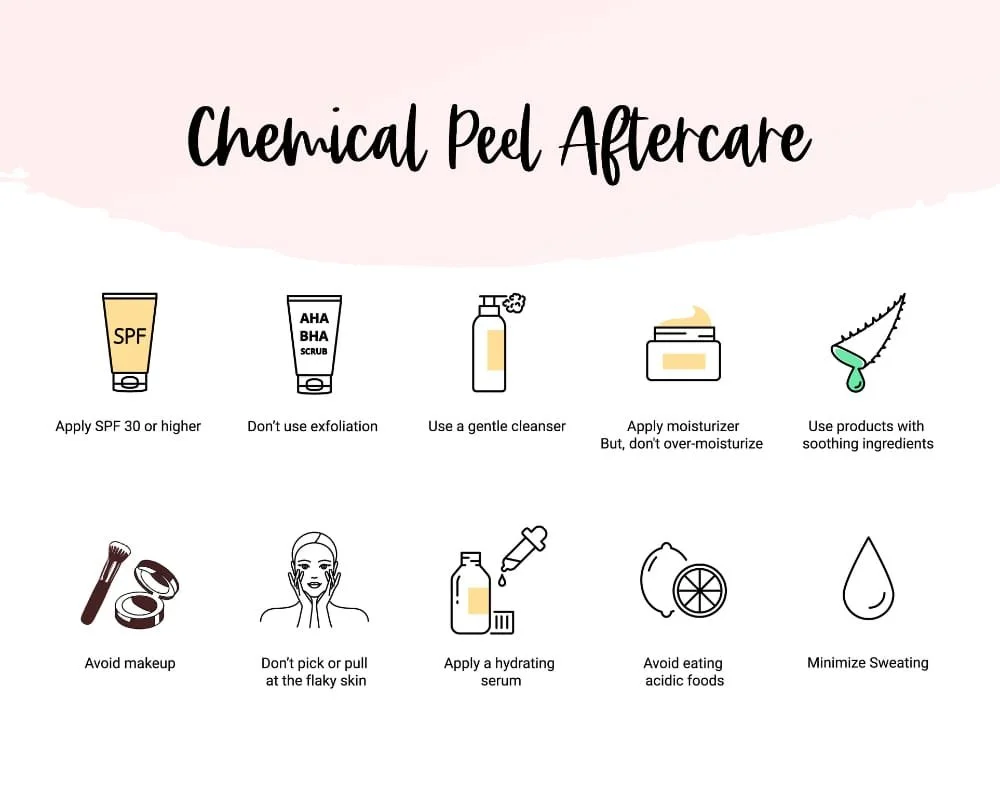
There are hard limits here too. Phenol can permanently lighten treated skin, so it’s generally ruled out for darker skin tones. And the results last years only if sunscreen becomes permanent, since the sun that did the original damage is still up there.
There is no one right peel for everyone. Your skin type, your skin tone, your skin concern, and the downtime you can tolerate should all be factors. That said, the person who knows how to do those calculations best is the board-certified doctor who sees your skin type at least once a week in their practice, if not more. Start there.