

The serum that worked for your friend did nothing for you. The dark patches on your skin and cheekbones haven’t moved in two years. And you’re starting to wonder whether the next step is something a professional performs rather than something you buy.
That’s the gap a med spa fills. Medical-grade treatments under clinical oversight, in a room that doesn’t feel like a hospital.
One thing to know going in. Oversight rules vary a lot by state, and so does who is legally allowed to hold the syringe. That detail matters more than anything else here, so it comes back later.
1. Advanced, Science-Backed Treatments Tailored to You

What actually separates this from a facial at a regular spa?
Equipment and permissions, mostly.
A day spa works the surface. A med spa can use devices and formulations that reach deeper, and the reason it can is that a licensed medical professional signs off on the practice.
Peels come in strengths a regular spa can’t touch. Laser resurfacing either removes or heats layers depending on whether it’s ablative or non-ablative. Microdermabrasion sits at the gentle end.
Now the part these articles usually skip. Downtime is not uniform, and anyone telling you it’s minimal across the board is selling.
- Microdermabrasion and light peels. Some redness. Back to normal same day or next.
- Non-ablative fractional laser. A few days of redness and mild swelling, makeup usually fine after 24 to 48 hours.
- Ablative resurfacing. Real recovery. Roughly one to two weeks of peeling, redness and strict sun avoidance. Plan around it.
One more distinction worth getting right: assessment is not diagnosis.
A med spa can evaluate your skin and build a plan around what it sees. With a physician, NP or PA involved, that extends to prescribing.
But a changing mole, a persistent rash, anything that looks like disease rather than a cosmetic concern? Dermatologist. A good med spa says so and refers you out.
2. Professional Expertise and Guidance for All Skin Types
Skincare is confusing partly because so many products make claims that sound clinical without being tested to a clinical standard.
Someone looking at your face and telling you what won’t work is most of the value here. Reactive skin especially, where the wrong acid at the wrong strength sets you back months. But “professional” covers a wide range. Ask rather than assume.
Before booking anything involving a needle or a laser:
- Who performs this, and what license do they hold?
- Is there a physician, NP or PA overseeing the practice, and are they on site?
- How many times have you personally done this procedure?
- What happens if something goes wrong during the appointment?
That last one matters more than it sounds. Injectables carry a rare but serious risk of filler entering a blood vessel, and the response is time-sensitive. A clinic with an answer ready has thought about it. A vague response is also an answer.
3. A Holistic Approach to Anti-Aging
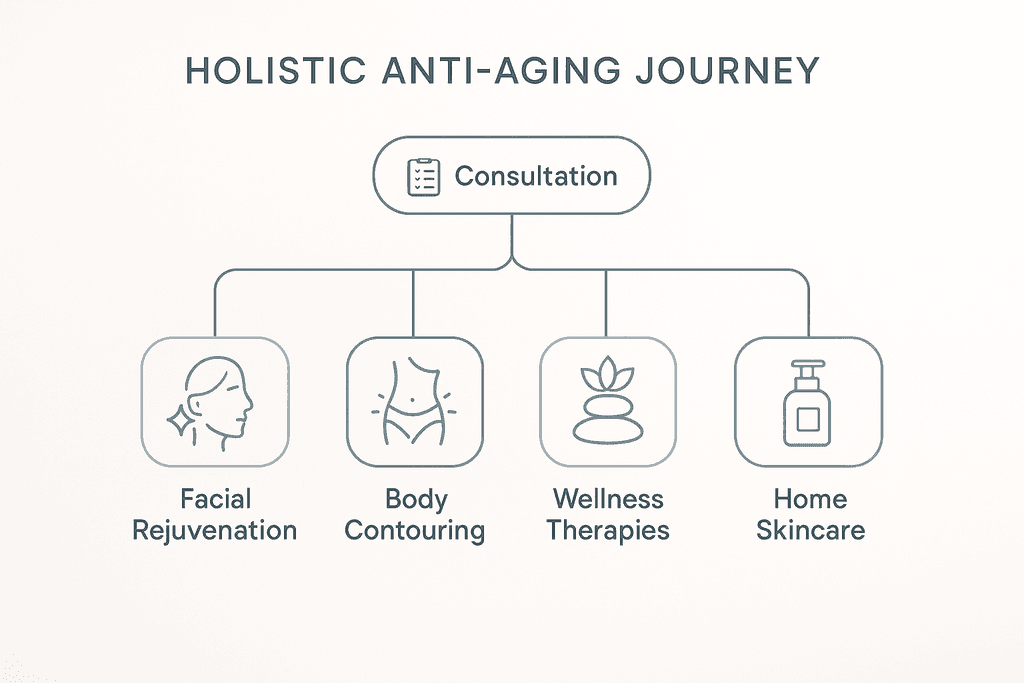
Skin loses collagen and elasticity, gets drier, holds onto sun damage from decades back. Not a flaw. Just what skin does.
Med spas come at it from a few directions
Botox relaxes the muscles that crease the forehead and the elevens, showing up around day three to seven and lasting roughly three to four months.
Fillers restore volume where the face has hollowed. Hyaluronic acid formulas typically hold six to eighteen months depending on product and placement. Tightening devices work on laxity across a series, not one dramatic appointment.
Bruising and swelling for a few days after injectables is normal, not a complication. It’s also why nobody books filler the week of a wedding.
Where med spas can help clients is the pacing. Small and regular reads as well rested. Waiting until something really bothers you and then going hard is what produces results that look done. None of it stops aging. It softens the visible part, temporarily, and it needs repeating.
4. Customized Plans for Comprehensive Skin Health
The plan is worth more than any single appointment.
Customized skin health plans account for your skin type, your concern, your lifestyle, and how much recovery time you can realistically absorb. Somebody outdoors constantly gets a different peel schedule, because sun exposure afterward is the fastest way to undo the work.
Melasma, rosacea and acne scarring are the clearest case for a plan over a one-off.
Melasma especially. It’s stubborn, it comes back, and heat-based treatments can worsen it rather than help. That needs someone who knows the difference.
These are series treatments. Three sessions, six, sometimes more, spaced weeks apart. The improvement is gradual and that’s the point.
Prevention is the other half of the same idea, and it beats correction by a distance. Regular light peels and facials keep pores clear and inflammation down, which heads off some of the common skin problems that get much harder to reverse once established.
Starting earlier and going gentler tends to beat waiting and going aggressive.
Home care carries more weight than most people expect. The retinoid you use nightly does more cumulative work than the appointment. Sunscreen does more than either, and any clinic worth visiting will tell you that without being asked.
If a clinic never mentions what happens between visits, the plan isn’t a plan.
You can Visit this Med Spa and run their treatment list against your own concerns before booking a consultation.
5. Mental and Emotional Well-being Benefits
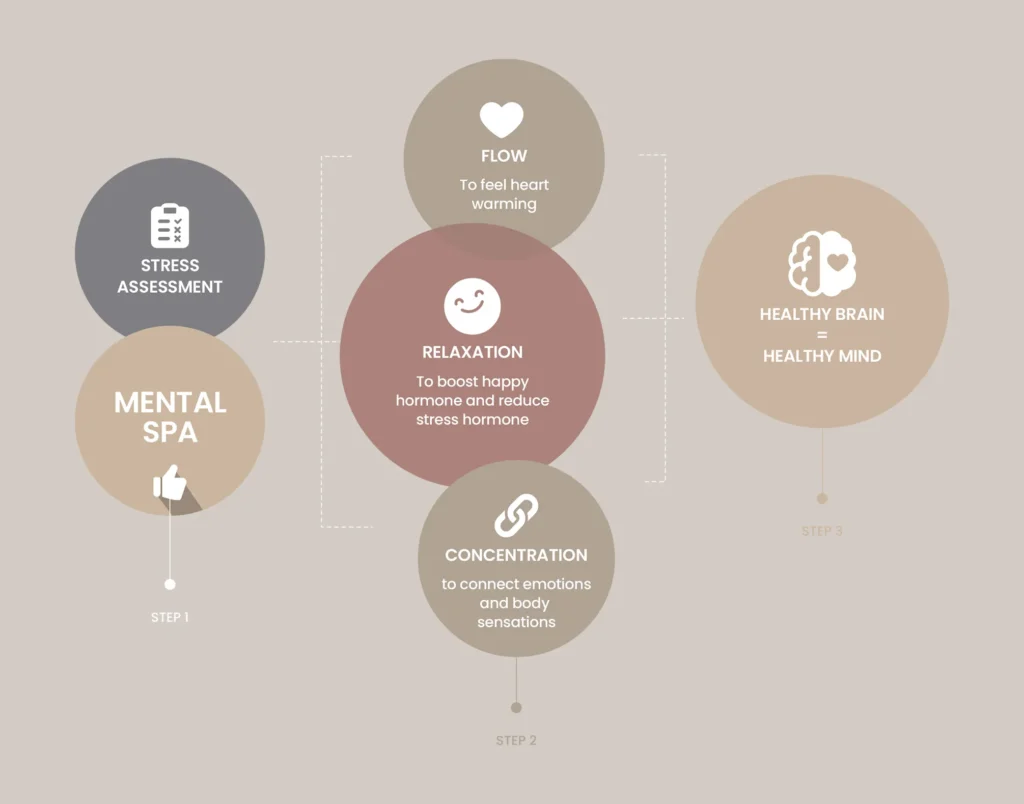
Stress genuinely affects skin. It’s a known aggravator for acne, eczema and psoriasis flares, so an hour somewhere quiet isn’t purely indulgent.
There’s an honest limit though.
Feeling better about your skin lifts your confidence, and that’s real. It won’t fix anything underneath it. A clinic that hears you describe your face in genuinely distressed terms should be slowing down rather than booking more treatments. The good ones do.
Experience the Benefits of a Med Spa for Yourself
A med spa earns its place when you’ve got a specific concern, a realistic sense of what the treatment does, and a clinic that’s straight with you about downtime and risk.
So start smaller than you were planning to.
Book a consultation instead of a procedure. Take the licensing and oversight questions with you. Ask what they’d do if you were their own family. The clinic that talks you out of something is usually the one worth booking with.