
Rosemary oil gets credited with fixing hair loss, acne, dandruff, stress, and sore muscles. One of those has a clinical trial behind it. The rest range from plausible to wishful.
Sorting out which is which is the point of this, because it’s still a natural product worth owning once you know what you’re buying it for.
- Whether you want to nourish your hair, improve your skin’s health, or simply find a natural alternative for holistic wellness, organic rosemary oil could be a beauty changer.
- I’ll explore the benefits of organic rosemary oil for your hair, skin, and overall well-being.
- With my focus on natural, sustainable living, rosemary oil has been a standout product that deserves a place in any eco-conscious beauty routine.
- Let’s dive into how you can easily incorporate this all-natural powerhouse into your daily regimen.
Why Choose Organic Rosemary Oil?

There’s something reassuring about knowing exactly what’s going on your skin. Organic versions skip the synthetic additives, and they’re grown with farming methods that support soil health and biodiversity.
One thing worth sorting out before you buy anything. Rosemary essential oil and rosemary-infused oil are different products. The essential oil is steam-distilled and highly concentrated, and it always needs diluting. The infused oil is rosemary steeped in a carrier like olive or jojoba, much gentler, ready to use.
Most research is on the essential oil. Most gentle daily-use products are the infused kind. Check the label, because the bottle rarely makes the difference obvious.
Hair Care Benefits of Organic Rosemary Oil

This is the one with the trial behind it, and it deserves better than the vague claims it usually gets.
A 2015 study published in Skinmed compared rosemary oil against 2% minoxidil in people with androgenetic alopecia over six months. Both groups saw a significant increase in hair count, and the results were comparable between them. The rosemary group reported less scalp itching.
That’s one study, not a mountain of them, and six months is exactly how long it took to show anything. Which brings me to the part I wish someone had told me earlier: nothing happens for months. I nearly gave up around week eight because I couldn’t see a difference. The change showed up somewhere past the four-month mark.
The mechanism is thought to be circulation, rosemary oil appears to improve blood flow to the scalp, delivering more of what follicles need. Its anti-inflammatory properties help too, since chronic scalp inflammation works against growth.
Rosemary Oil for Scalp Health
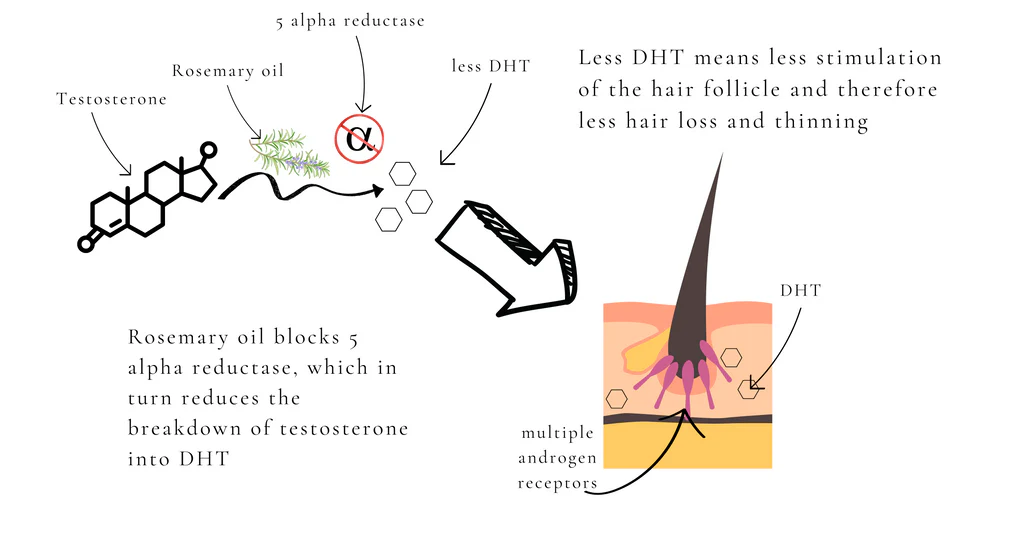
A healthy scalp is the foundation, and this is where I noticed a difference fastest.
The antimicrobial and antifungal properties help with the yeast overgrowth behind most dandruff, and the oil soothes the dry, tight itchiness that comes with it. Regular scalp massage with a few drops mixed into a carrier improved the texture and shine of my hair noticeably, and it took weeks rather than months.
Massage matters as much as the oil, honestly. Five minutes with your fingertips does real work on circulation regardless of what you’re using.
Rosemary Oil for Skin: A Natural Glow
Here I’d temper expectations, because this is where the claims outrun the evidence.
Rosemary oil is antimicrobial in laboratory conditions, and that’s genuinely interesting. But antimicrobial in a petri dish doesn’t automatically translate to clearing acne on a face, where hormones, sebum production, and inflammation are all involved. The oil also helps reduce inflammation, which is probably where most of the benefit people notice comes from, calmer skin rather than fewer breakouts.
It may help with mild spots as part of a routine. It isn’t an acne treatment, and anyone with persistent or cystic acne needs a dermatologist rather than an essential oil.
The sebum-balancing claim is similar. Plenty of people find diluted rosemary oil sits well on oily and combination skin. That’s a reasonable thing to try, not a proven mechanism.
I add a drop to my moisturizer and my skin likes it. That’s the honest size of the claim.
Holistic Uses of Organic Rosemary Oil

Aromatherapy is where rosemary has a longer track record than most people expect. There’s research suggesting inhaling rosemary vapor improves alertness and cognitive performance, which is why it turns up in so many focus blends.
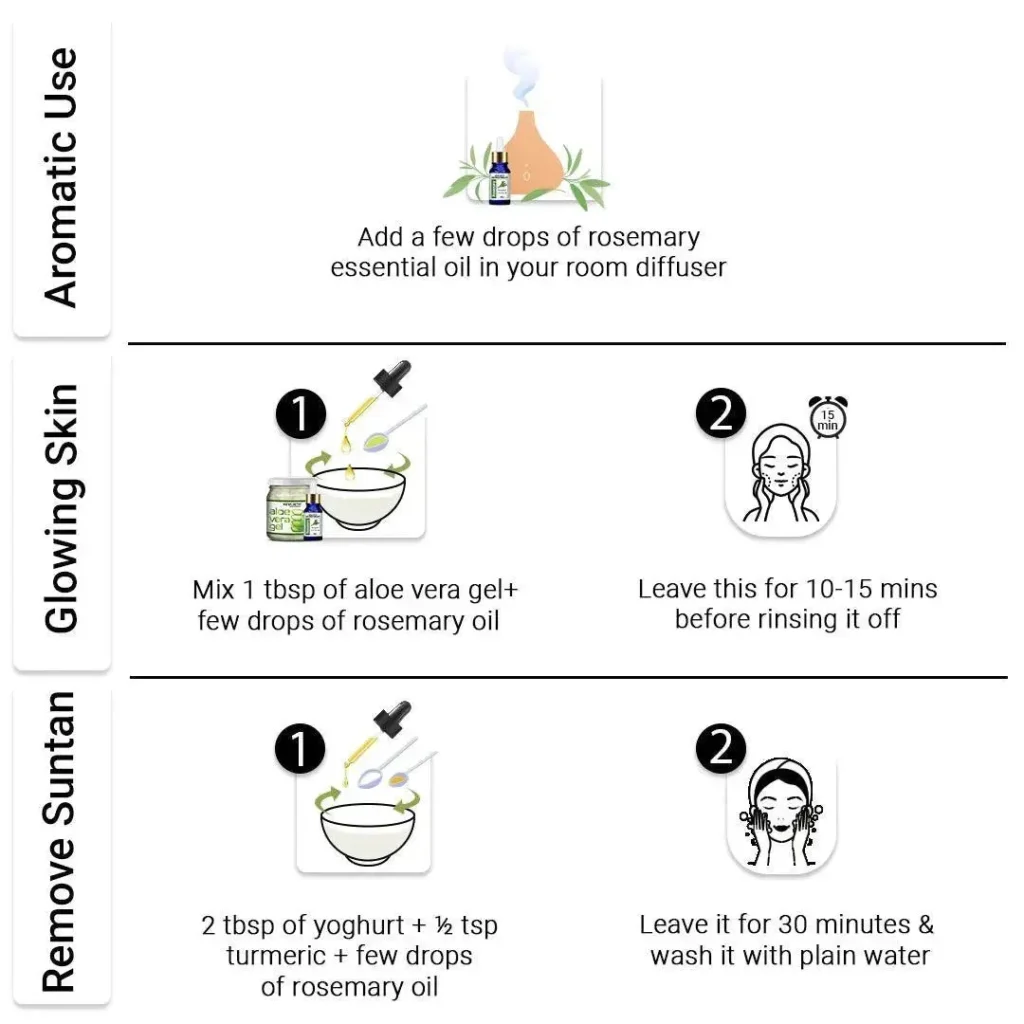
A few drops in a diffuser genuinely lifts the room. And after a workout, diluted rosemary oil massaged into tight muscles helps, its anti-inflammatory properties earning their keep there too.
How to Use Organic Rosemary Oil

Dilution is not optional. Undiluted essential oil on skin causes irritation and can trigger long-term sensitization, meaning your skin reacts to it permanently afterward.
If you’re buying, a straightforward single-ingredient organic rosemary oil is all you need. Blends and pre-diluted serums cost more and give you less control over the strength.
| Use | Dilution | Carrier |
|---|---|---|
| Scalp treatment | 2-3% (about 12-18 drops per ounce) | Jojoba, coconut, castor |
| Face | 0.5-1% (3-6 drops per ounce) | Almond, argan, jojoba |
| Body and muscles | 2-3% | Almond, sweet almond, olive |
| Diffuser | 3-5 drops in water | None needed |
For hair and scalp: mix with your carrier, massage into the scalp properly, and leave it 15 to 20 minutes before washing out. You can also add a few drops to shampoo, though leave-on beats rinse-off for anything you want working on follicles.
For skin: dilute low, patch test on your inner arm for 24 hours first, and apply where you actually need it rather than all over.
Who Should Skip It
Worth knowing, and rarely mentioned:
- Pregnancy. Rosemary essential oil is generally advised against during pregnancy, particularly in high doses.
- Epilepsy or seizure disorders. Rosemary contains camphor, and there’s caution around it for people with seizure conditions.
- Sensitive or reactive skin. Patch test without exception. Essential oils are among the most common causes of contact dermatitis in natural products.
- Children. Different dilution rules apply, and it’s worth asking a pediatrician rather than halving an adult recipe.
Natural doesn’t mean risk-free. It means the risks are different, and worth knowing before you start.