
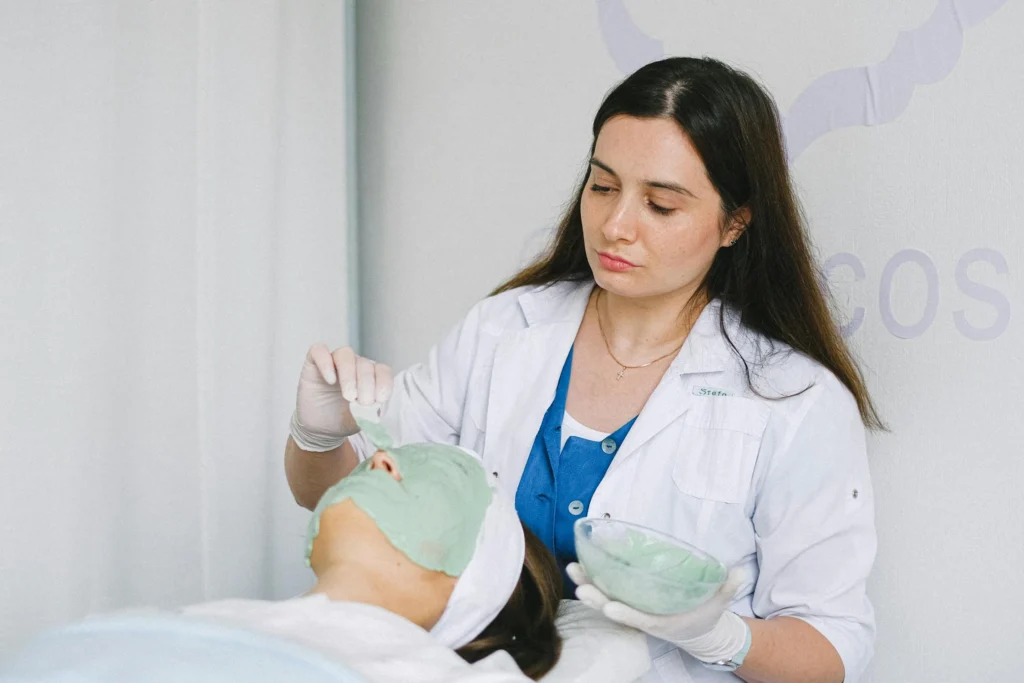
So, professional skincare wins over a whole closet of serums for one concrete reason: depth and concentration, safely controlled by a person who has been trained to do that. This is the whole case, and everything below is how it stands.
Most people start with the shelf. Serums, acids, whatever’s trending. This sometimes works, but more often than not, it’s a dead end, and the next step is often going to a professional’s office at DOLCEAESTHETICS.
Advanced Technology for Deeper Penetration and Results

Take chemical peels, which have a natural depth question, namely, how far do you need to go?
Glycolic acid or salicylic acid peels are usually superficial peels, meaning that they can only reach the epidermis (the outer layer of skin), the strongest strength that home peels reach. That’s where they plateau. A medium-depth peel using TCA in concentrations of 30 to 35% penetrates the papillary dermis, a truly different layer of tissue, changing the texture and pigmentation of the skin in ways that cannot be achieved with a superficial peel.
Phenol peels are deeper peels that reach the mid-reticular dermis, and that same depth is what makes them effective and what makes them risky without supervision, which is why cardiac monitoring and IV hydration are used in some protocols.
Three Depths at a Glance
- Superficial (glycolic, salicylic acid) – epidermis only, minimal downtime
- Medium (TCA 30-35%) – papillary dermis, slightly visible texture and pigment change
- Deep (phenol-based) – mid-reticular dermis, requires medical supervision
Laser and microneedling are both treatments which work on the idea that you have to go below the level of topical products and stimulate the skin to produce its own collagen. The laser and microneedling equipment that is available on dolceaestheticsny.com is all designed to work in this manner, and not simply to produce dramatic results in one treatment, gradually working to flatten wrinkles over a series of sessions.
Safe and Effective, With Real Limits Worth Knowing
The real difference in these models comes down to how they are trained, so let’s explore.
- Only a trained professional can match the percentage strength and depth of a peel to your skin type (and Fitzpatrick skin type, in this case) as darker skin types need lower percentage TCA peels to avoid pigmentation issues that an over-the-counter product cannot account for.
- They thus distinguish between a facial-level concern and a legitimate indication for laser resurfacing, and change their response rather than defaulting to the laser.
- Training minimizes the risk of complications, but some can still occur. Medium-depth peels may result in prolonged redness, changes in skin pigmentation, and occasionally infection.
- Working with someone qualified means that there is actually a plan if things go wrong with your skin during a treatment.
A good practitioner will be very upfront about all of this. Ask them who exactly will be doing the treatment, and what their backup plan is if your skin reacts. A practitioner who has a real, specific answer, however, is more valuable than a practitioner who just says that nothing will go wrong.
Resolving Specific Skin Problems With Precision

Fine lines, stubborn hyperpigmentation, and chronic acne each respond to a genuinely different mechanism, which is why treatments at dolceaestheticsny.com are built around that difference rather than treating all skin concerns as one category.
- Acne responds to treatment that has a direct effect on the bacterial/inflammatory component of the acne lesion and not simply drying the lesion topically (like many drugstore products) by acting against C. acnes bacteria and the inflammation that it causes.
- Aging responds to collagen stimulation over time and wrinkles are gradually flattened after multiple treatments rather than in a single visit.
- Melasma is in a category of its own. In a study comparing 15% TCA to 35% glycolic acid, both produced good results in around two-thirds of cases. Melasma is therefore treated with more caution than given a default of whatever peel happens to be the highest-strength.
None of these principles can be directly applied to one another, so an expert assessment is needed before making a choice. Expert skincare treatments are meant to accentuate your natural beauty, not to provide you a different face, but rather to keep you looking your best and to fix your problem areas.
The Long-Term Case
These immediate results are real, but the real case is for professional skincare over the long term.
Regularly scheduled peels or facials provide more gradual improvements, such as reducing fine lines and dark spots or an uneven skin tone, than a one-time intensive treatment. They can also be protective for the skin barrier, the outermost layer of skin that keeps moisture in and irritants and pollutants out, instead of damaging the skin barrier, as over-use of at-home peels often does.
Good skin that looks good for years is a long-term maintenance relationship, and it comes from a long-term commitment to expert skincare. It comes from working with someone who actually adjusts your regimen and treatment as your skin changes, not relying on a had-a-favored-treatment moment.