
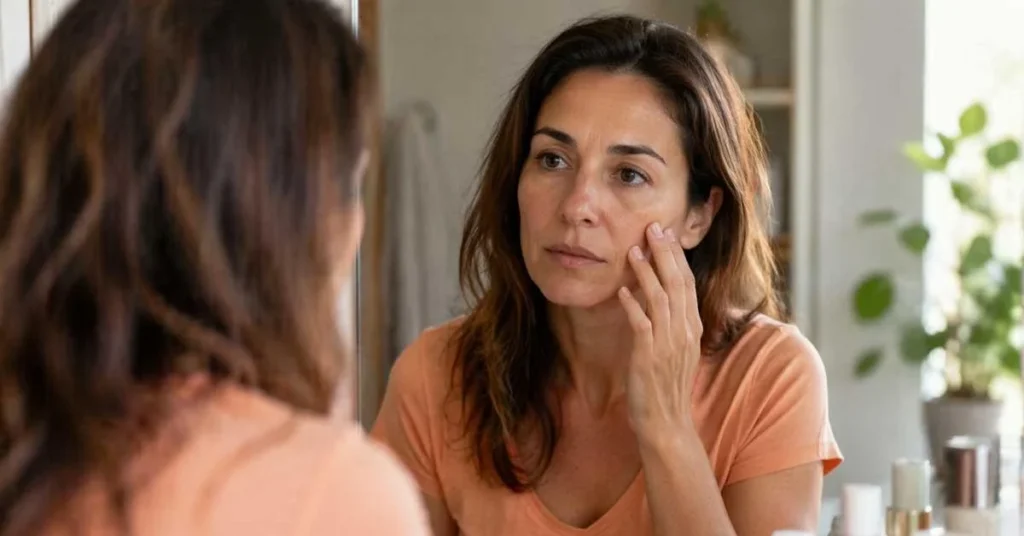
Perimenopause skin changes tend to start with something annoying, like a night cream that felt fine last month and burns now, cheeks that stay tight until lunch or a red bump on your chin for the first time since college, and the reason is estrogen going up and down for years before periods stop.
Perimenopause is the stretch before menopause, when the ovaries make less estrogen and the amount shifts from month to month. It typically starts in the mid-40s, sometimes earlier, and lasts about 4 years on average, though it can run anywhere from a few months to 10. It ends once 12 months go by without a period, and that point is menopause.
Estrogen helps your face make collagen, hold on to water and produce oil, which is why uneven levels show up there.
Uneven Estrogen Leaves Skin Dry, Sensitive And Slow To Heal
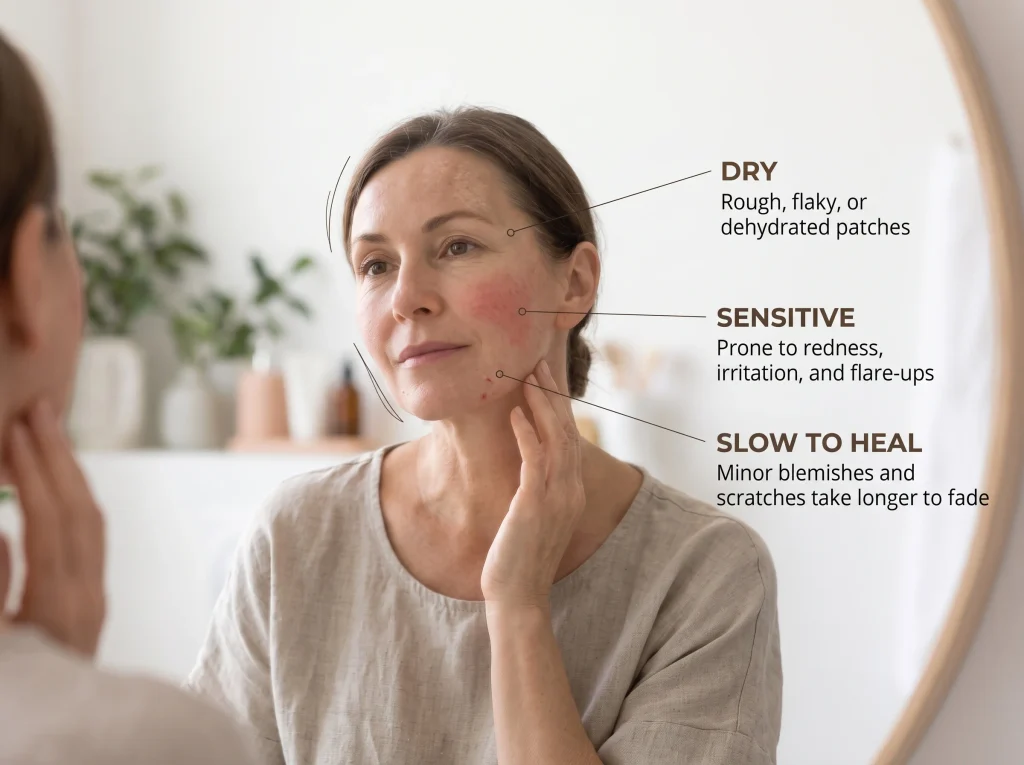
Dryness is the most common change. With less water and oil held in, your face feels tight after washing, gets flaky and may itch. A weaker outer layer also lets ingredients in faster, which is why a product you’ve used for years can start to sting or turn your cheeks pink.
Breakouts return for some women, mostly along the jaw and chin. One explanation is that male hormones make up a bigger share of the mix once estrogen drops, and that pushes oil production up.
Less collagen means fine lines deepen, firmness fades, bruises appear more easily and cuts heal slower. Years of sun catch up too, as dark spots and uneven color. Flushing is common, and rosacea or eczema may get worse. Which of these you get varies, and it can change from one month to the next.
Change Your Routine In This Order
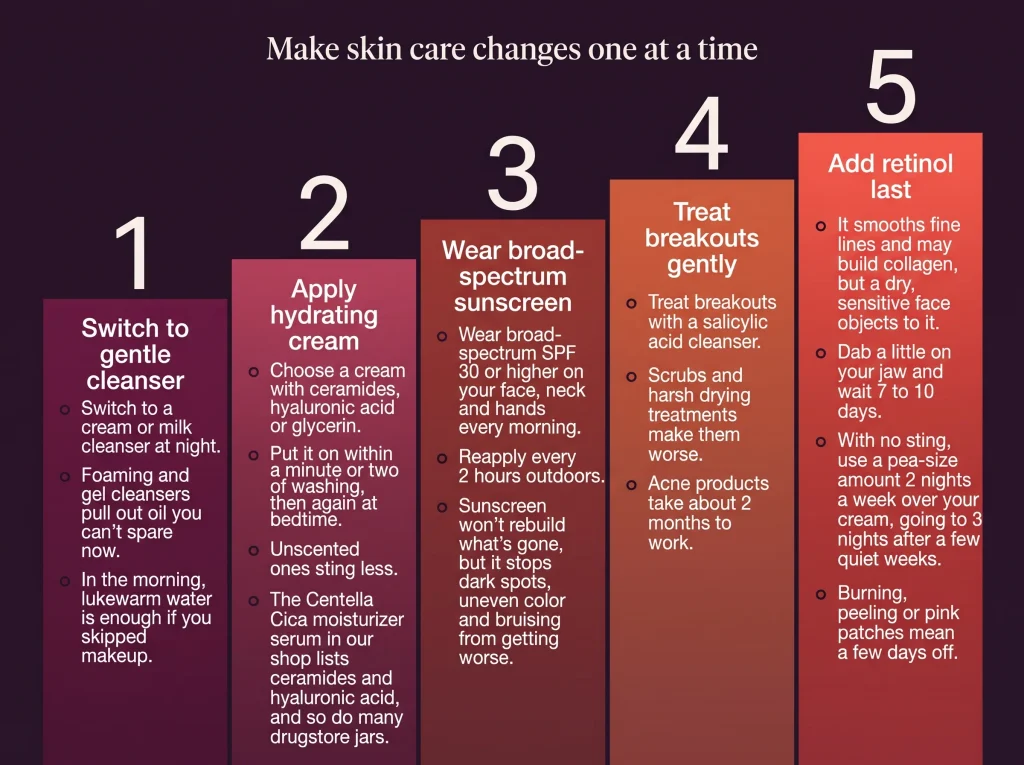
Make the changes one at a time:
- Switch to a cream or milk cleanser at night. Foaming and gel cleansers pull out oil you can’t spare now. In the morning, lukewarm water is enough if you skipped makeup.
- Choose a cream with ceramides, hyaluronic acid or glycerin, and put it on within a minute or two of washing, then again at bedtime. Unscented ones sting less. The Centella Cica moisturizer serum in our shop lists ceramides and hyaluronic acid, and so do many drugstore jars.
- Wear broad-spectrum SPF 30 or higher on your face, neck and hands every morning, and reapply every 2 hours outdoors. Sunscreen won’t rebuild what’s gone, but it stops dark spots, uneven color and bruising from getting worse.
- Treat breakouts with a salicylic acid cleanser. Scrubs and harsh drying treatments make them worse, and acne products take about 2 months to work.
- Add retinol last. It smooths fine lines and may build collagen, but a dry, sensitive face objects to it. Dab a little on your jaw and wait 7 to 10 days. With no sting, use a pea-size amount 2 nights a week over your cream, going to 3 nights after a few quiet weeks. Burning, peeling or pink patches mean a few days off.
Give a new product about 2 weeks before adding another. In a rough patch, drop the retinol and any acids, rinse with water in the morning and use moisturizer twice a day, then add things back once it settles. A moisturizing facial from our skin services team can help in a dry stretch too, as long as peels and hard scrubbing wait until the stinging stops.
See A Doctor If Any Of These Show Up
- Itching all over, or a crawling feeling under the skin, that lotion doesn’t touch.
- Flushing or redness along with hot flashes, or that sticks around.
- A new rash, or eczema or rosacea getting worse.
- A new or changing dark spot or mole, as skin cancer can look like one.
- Acne that hasn’t improved after about 2 months.
Hormone therapy questions go to your doctor too, and everything above is fair to mention at that visit.
Questions About Perimenopause Skin Changes
I. Is my face changing because of perimenopause or because I’m getting older?
You can’t always tell from the mirror, since skin changes with age anyway. What gives it away is everything else going on: periods that come early, late or skip a month, hot flashes, nights when you can’t sleep. If dry patches or jaw breakouts show up around the same time as those, hormones are a likely cause, and your doctor can check.
II. How long does this last?
About 4 years on average, though some women get a few months and others get 10. Estrogen stays low after menopause, so the dryness can hang around, and the routine above works then too.
III. Do I have to throw out my old products?
No. Pull whatever stings or burns, and stick with the cleanser and cream that still feel fine. Retinol and acids can come back later, slowly, once your face calms down.