
Marketing advice for beauty salons tends to arrive from every direction at once. Post daily, run ads, start a blog, print flyers, be on three platforms.
Most of it can work. The trouble is attempting everything at the same time with a small team, because that’s how a month of effort disappears without anything moving on the appointment book.
So this list runs in order of payoff. Keep the clients already in your chairs first, then make sure locals can find and book you, then spend whatever energy remains on reach.
Start with the clients already in your chairs
A new client costs money to win. Ads, promos, the discount that finally got them through the door.
A regular costs almost nothing to keep, and a color client on a six-week cycle brings in more over a year than a dozen one-time walk-ins.
Rebooking at the chair is the highest-return habit in the building. Before the client stands up, the next appointment goes on the books as an actual slot with a date, since a card in a purse tends to stay in the purse.
Small comforts help more than they should. A drink on arrival, a quick scalp massage with the wash, the details people mention when they describe the place to a friend.
Keep notes on each client too. Color formula, products they liked, how they take their coffee, which times suit them. A busy shop that remembers this stands out precisely because nobody expects it to.
Then reward the loyalty:
- A points system, or a free treatment after so many visits.
- Seasonal packages that pull regulars in off-cycle, a summer care bundle, a holiday prep slot.
- A client appreciation night once or twice a year. Refreshments, samples, a small discount. It costs little and gets talked about for weeks.
Happy regulars also refer friends on their own, and referrals arrive pre-sold.
Brand comes down to how the visit feels
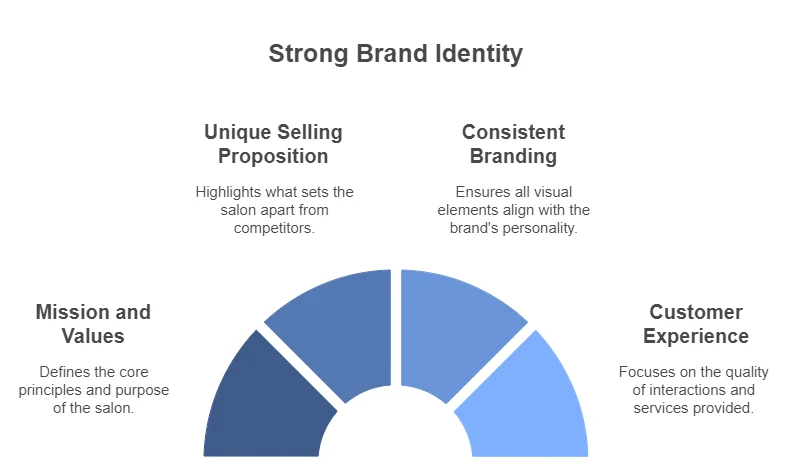
The logo matters less than the experience wrapped around it, greeting to chair to checkout.
Decide what the salon is honestly about. Eco products, luxury pampering, fast and affordable. Then building a strong brand identity becomes a matter of letting every detail agree with that answer, the decor, the music, how staff talk to people, what sits on the shelves.
Small physical touches do quiet work here. A drink served on custom coasters carrying your branding, a handwritten thank-you after a big color job. Clients register these things without quite knowing why the place feels put together.
Consistency carries all of it. A luxury salon with chipped mugs and a cluttered counter undercuts its own prices, so fix the small stuff before spending on campaigns.
Reviews decide who gets the local booking
When someone types salon near me, the results page picks the winner, and reviews shape that page more than anything a salon controls directly.
- Ask for reviews every week, from the clients who just left happy.
- Reply to the ones that come in, rough ones included, since every future client scrolling past reads the reply.
- And keep the business profile current. Hours, recent work photos, the booking link.
What a salon website actually needs
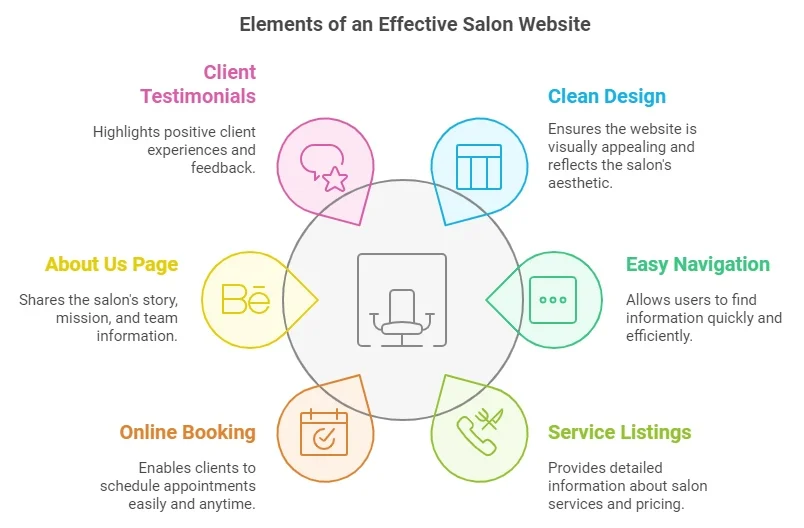
The site behind that search click has one job, turning a visitor into a booked appointment before they drift off. Everything here serves that:
- Clean, attractive design: A layout matching the salon’s aesthetic, real photos of the space and work, mobile-responsive since most visitors arrive on a phone.
- Easy navigation: Clear menu categories, Services, About, Contact, Book Now, arranged so nobody hunts.
- Full service listings: Full service listings: Every service described, prices or honest ranges, quality images of the work, with graphic design used for supporting visuals and promotional materials.
- Online booking: Usable at midnight, synced with the salon calendar so nothing double-books.
- An about page: The story and values, the team with faces and short bios, whatever you do that nobody nearby does.
- Testimonials and reviews: Real client words, before-and-after photos with permission.
- A blog or tips section: Updated regularly, it builds search rankings over time and feeds your email content besides.
- Contact details nobody can miss: Address, phone, email, embedded map.
- Social media woven in: Profile buttons, and an embedded Instagram feed if you want the latest work on the homepage.
- Book Now buttons throughout: Repeated, impossible to scroll past.
Social media works best as a portfolio

People follow salons for transformations more than promotions.
Before-and-after shots of haircuts, color corrections, and styling work earn the saves and shares, so post the work and let results do the persuading.
Pull clients into it. A branded hashtag, a tag when they show off fresh hair. A client posting her own color job carries more trust than anything the salon account says about itself. Process clips travel furthest, the foils going in, the reveal at the end, and increasing your TikTok views puts that work in front of local people already interested in beauty industry.
Then answer comments and messages, run the occasional giveaway, show some behind-the-scenes mess. Platforms favor accounts that talk back, and so do clients.
Email fills the six-week gap between visits
Six weeks is a long time to be forgotten. One useful email in the middle keeps the salon in mind without turning into noise.
Useful means tips they’d actually try, new services worth knowing about, a promotion worth the open. Address people by name. Where the booking system allows it, tailor by history, so color clients hear about gloss treatments instead of the generic blast.
Build the list at the front desk. Ask at checkout, offer a small incentive like a discount on the next visit or a giveaway entry, and put a signup on the site and socials.
Print works because clients sit in your space for an hour
That hour in the chair and the waiting area is where print earns its keep.
A well-made photo book on the waiting table, filled with your best transformations, does quiet selling. Someone flips through, spots a balayage they love, asks about it twenty minutes later in the chair. Brochures, business cards, and flyers still reach the clients who aren’t active online, or who simply prefer something they can hold.

Appointment cards, referral cards with a small reward attached, a thank-you note tucked in the bag after a first visit. Cheap, personal, and they hang around on fridges and in wallets for months.
Whichever of these you start with, give it six weeks and check the appointment book before adding the next one. One channel done properly will show up in the numbers. Five done at once usually won’t.