
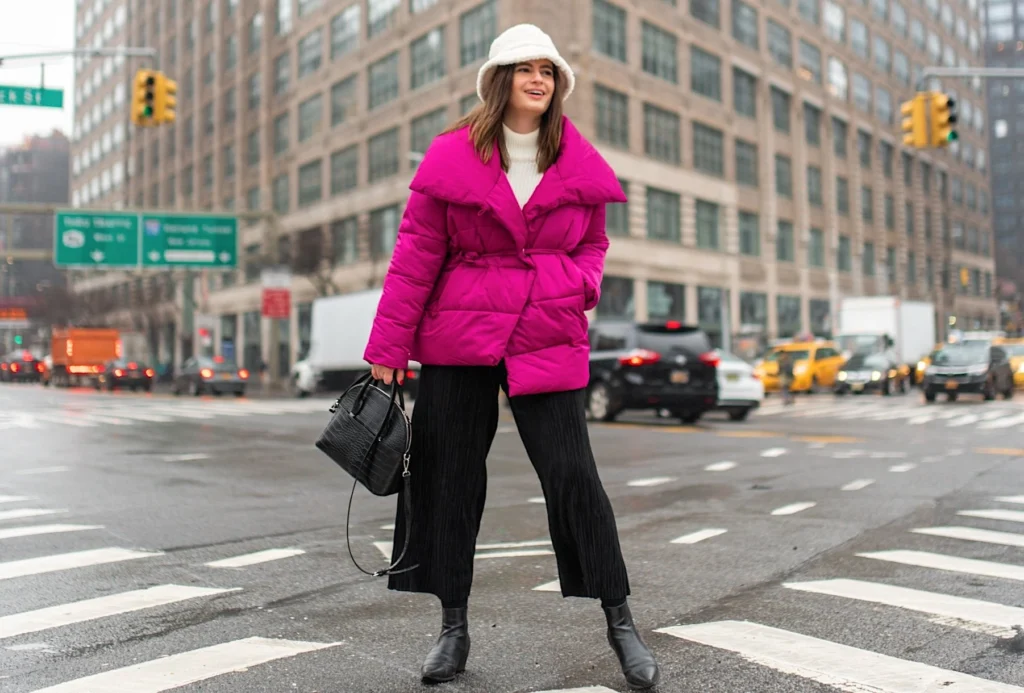
Your style should always reflect your inner beauty, and four months of cold shouldn’t get a vote.
Winter clothes do not have to be shapeless and ugly, and it’s your opportunity to shine with style and warmth. The two stop competing as soon as you figure out what warmth is and how it works.
The warmth comes from trapped air. The layers hold pockets of air, and three thinner layers are always warmer than one heavy coat.
Master Layering for Variable Weather
Layering is the secret weapon of winter fashion. Layers serve different purposes, and don’t all have to be warm.
Base layer: moisture, not warmth
This is where people get it wrong, wet fabric will pull heat away from your body about 25 times faster than air, so a wet base layer is a cold base layer. Merino and silk wick well, and cotton holds moisture against the skin, so a cotton undershirt is the worst possible starting point.
Mid layer: trapped air
Fitted wool or cashmere sweater or turtleneck. Neutrals like gray, black and beige can be paired with more possible pieces.
Outer layer: wind and water
A coat cut to allow movement without gaping open along the front.
| Item | Recommended Material | Style Tip |
|---|---|---|
| Base layers | Merino wool, silk | Thin and snug. Never cotton. |
| Mid layers | Fitted sweaters, turtlenecks | Neutral shades that layer across outfits |
| Outerwear | Wool, cashmere, down, leather | Tailored with a fitted waist |
| Footwear | Insulated boots | Sleek with reliable traction |
| Accessories | Cashmere scarves, knit beanies, leather gloves | Personality plus warmth |
Choose Fabrics That Love the Cold

Wool for wet winters: it retains ~70% of its insulating value when saturated (the fiber is crimped, so water doesn’t fill the air spaces), and its lanolin makes it somewhat water-repellent. Nothing else on this list is quite as rainproof as this.
Cashmere for warmth without weight. It insulates better than sheep’s wool per unit weight but feels much lighter and softer. Blend it with silk or merino since pure cashmere pills easily.
Down is the warmest thing per ounce you can wear when dry, but in wet conditions, it collapses and stops insulating. Do look for a fill power number on the label. 600-700 is good for walking around the city. 800+ does not justify the cost unless you will be outside for hours at a stretch.
If you expect rain at all, skip down to the wool/synthetics.
Opt for a Stand-Alone Outerwear Statement
Your coat gets more wear than anything else you own between November and March, so it should take the biggest chunk of your budget.
Three that hold up:
- Classic wool in navy, camel or charcoal. Goes with everything, doesn’t date.
- Trench-wool hybrids for the awkward transitional months, layering over a sweater without bulk.
- Leather with a shearling lining, durable in harsh weather, and with age develops patina.
Check two things before you buy:
- Read the wool content on the label. A coat labeled ‘wool’ may actually contain just 30%, and above 70% is where the warmth starts.
- Raise your arms and cross them. If the coat pulls, it doesn’t fit you, it just fits you standing still.
Step Up Your Shoe Game
Winter footwear is where practicality meets style, and that compromise has gotten a lot easier.
Knee-high or ankle boots made of smooth leather with rubber soles won’t look technical but will provide traction if you check the tread. Leather soles on ice are dangerous, so check the tread itself rather than trusting how the sole looks. Once you’re below freezing, insulation matters. Some brands publish a temperature rating that tells you where the boot stops working.
Heeled boots that use block or wedge heels can work in winter, since the heel contact area provides more traction than the heel height. Wool socks work better than cotton socks, same principle as base layers: feet sweat inside insulated boots more than you’d think, but don’t get as cold in wool as in cotton.
Accessorize With Flair
The truth is, you lose the most heat through your head, hands and neck, so these accessories actually do work.
In a coat, the cold enters at the neck. A scarf of silk or silk-cashmere will plug that hole, and give some character to a neutral coat. Higher up the head, wool and cashmere hats do the same, while berets provide structure and knit beanies keep the head warm.
The hardest compromise is gloves. Soft leather lined in cashmere is warm and looks better than anything bulky. Wool knit is appropriate for casual days. In fact, mittens are always better than gloves because your fingers warm each other. Get a touchscreen-compatible pair unless you’re willing to take them off every four minutes.
Jewelry works differently in winter; a turtleneck provides a long chain something to rest against, rather than fading into a neckline. This is the one time of year that a longer drop makes sense, and Pendants from LabGrown.com look lovely over knitwear.
Where to Start
- The coat is obviously first. If you’re only buying one thing, it’s the one thing you wear every day for four months.
- Merino base layers are second. They don’t cost as much as you think, and they change how everything you layer on top of them performs, which is why people who own them stop thinking about coats so much.
Winter is when people are most likely to hide your style under whatever’s warmest. Physics says you don’t have to: thin layers, the air between them, and coats that fit while moving. That’s the whole thing.