

Treatments for non-invasive body forming have become increasingly well-known as people strive to realize the perfect body shape. Ultrasonic cavitation, which guarantees a decrease in fat without requiring surgery, has become a prevalent choice among them.
- Security is continuously an issue with corrective methods.
- How secure is ultrasonic cavitation machine therapy?
- To reply to this inquiry, we must look at the procedure’s possible risks as well as its focal points.
Ultrasonic Cavitation: What Is It?

- Low-frequency sound waves pass through the skin into the fat layer. They make microscopic bubbles form inside the fat cells, the bubbles collapse, and the cells break open.
- Your lymphatic system carries the released fat away over the following days. No incisions, no needles, nothing under the skin.
- It’s used most on the belly, thighs, arms, and buttocks. The right candidate is someone near their normal weight with a specific stubborn pocket, not someone chasing overall weight loss.
A randomized trial of 50 women found cavitation with radiofrequency, alongside a low-calorie diet, significantly reduced waist and abdominal circumference compared to the diet alone. Another controlled trial paired focused ultrasound cavitation with aerobic exercise and cut waist size and both fat layers more than exercise by itself.
Both studies tested cavitation plus diet or exercise. That’s the honest frame for everything below.
Advantages of Ultrasonic Cavitation
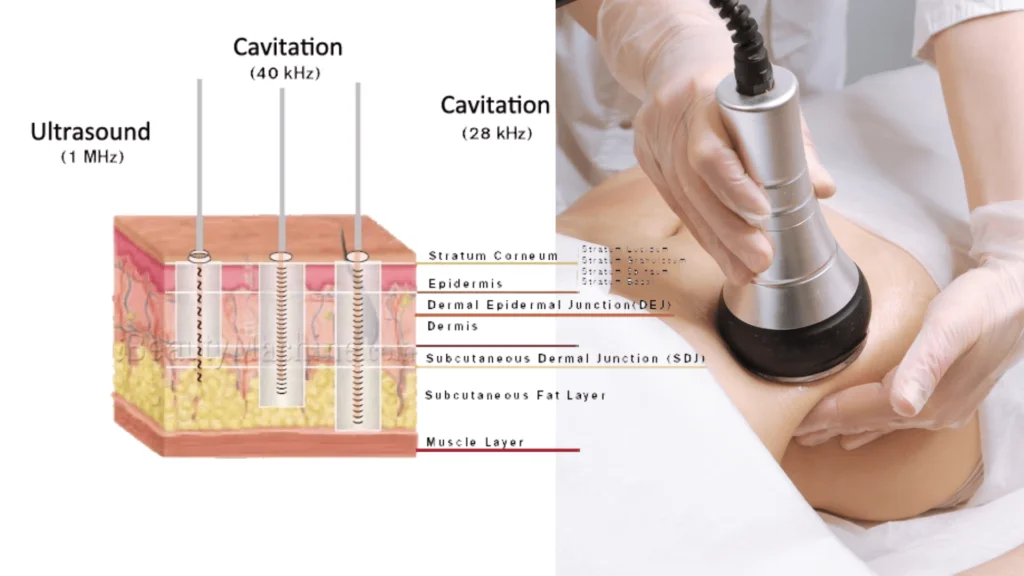
- Painless and non-invasive. No anesthesia, no cutting. Most people feel warmth from the handpiece and little else.
- No downtime. The session ends, your day continues. Work, errands, gym.
- Targeted fat reduction. The wand treats the exact spot, which is the whole reason to pick this for a localized pocket.
- Gradual, natural-looking results. The body clears the fat over days and weeks, so the change arrives the way slow weight loss does. In the trials, measurable differences came after a full course of sessions.
- Possible skin improvement. Some people notice mild firming, and many machines pair cavitation with radiofrequency to chase it. The evidence for cavitation alone tightening surface and tone of the skin, so treat this as a maybe, not a promise.
Risks and Adverse Responses to Ultrasonic Cavitation

- Temporary discomfort. Mild swelling, redness, or light bruising in the treated area, typically clearing within hours to a few days.
- Skin sensitivity. A tingling or tender patch afterward for some people. If it lingers, tell your practitioner so the next session’s settings come down. A few individuals may have more touchy skin within the treated area.
- It doesn’t work for everyone. The best responders are near goal weight with pinchable, localized fat. Someone with a lot of weight to lose sees little from it, and metabolism, hydration, and habits swing results between people doing everything the same.
- Dehydration effects. The lymphatic system needs water to move the released fat. Skip the drinking and you can collect a headache, fatigue, or dizziness after a session.
- Not suitable for every person. Pregnancy and breastfeeding. Serious heart conditions, including pacemakers. Metal implants in the treatment area. Liver or kidney disease, since those organs process what the treatment releases. Open wounds or infections in the area wait until healed.
- Long-term evidence is thin. Most trials measure results at weeks or a few months. One follow-up found circumference reductions held on average while some regression appeared in a majority of patients over time. Widely used, short-term data fine, long-term data sparse.
Making Sure Safety: Things to Think About
1. Select a trained professional
The hands matter more than the machine. Real training on this treatment, experience with it specifically, and a consultation that asks about your health before your goals.
2. Follow the pre- and post-treatment rules
Water before and after. 48 hours off alcohol and heavy food beforehand. Some daily movement after, to help the drainage.
The trials that showed results paired treatment with diet or exercise. The aftercare is where that pairing happens in real life.
3. Control your expectations
Multiple sessions before visible change. A supplement to eating well, never a substitute. Maintenance sessions after the first course.
4. Watch how your body responds
Anything past mild-and-brief goes to your practitioner promptly, even if just to adjust the next session.
The consultation is the real first session, so use it like one. Bring your medication list, mention any implants or conditions, and ask what result they’d realistically expect for your body. If the answer sounds like the studies, book. If it sounds like the ads, keep looking.