
Medically reviewed by Dr. Cesar, Dermatologist.

Is Cantu Bad for Your Hair, no it’s not. Not for most people, anyway, and not when it’s used on the kind of texture it was made for.
There’s a catch though, and the catch is why so many people end up googling this. Cantu products are rich and heavy and most of them have protein in them. Some people soak all that up and love it. Others can’t take it in at all, so it just sits there on top, one layer over the last, until everything feels coated and stiff and you figure the product must be bad.
Same bottle, two totally different results. And what separates those two people isn’t their curl pattern and it isn’t the brand. It’s porosity.
Porosity Is What Tells You If Cantu Will Work
Porosity is just how easily your hair soaks up water, and how fast it loses it again. It comes down to the outside layer of each strand and whether it’s lying flat or sitting open.
You don’t need a test for this. You already know, you just haven’t thought about it that way.
You’re probably low porosity if:
- Water sits on top and takes a minute to sink in.
- Products feel like they’re just sitting there.
- It takes forever to dry.
- Conditioner feels greasy instead of soaking in.
You’re probably high porosity if:
- It soaks up water right away.
- It also dries fast, sometimes too fast.
- It feels dry again a few hours after you moisturize.
- It tangles a lot and frizzes easily.
Almost every Cantu complaint comes from the first group. When that outer layer is lying flat, moisture doesn’t get in easily, which is great for holding onto what you’ve got but bad news when you put something heavy on it. There’s nowhere for it to go.
High porosity usually does fine with Cantu. It loses moisture fast and wants something rich to hold it in.
One more thing. Cantu sorts its products by curl pattern and I’d argue that’s the wrong way to pick. Your curl pattern tells you what shape your hair makes. It doesn’t tell you how much moisture or protein it needs, and that’s the part that decides if something works.
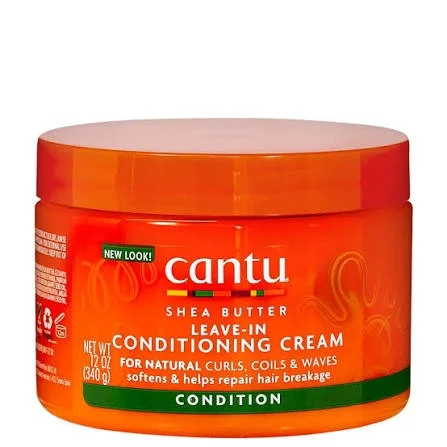
Three Different Problems Get Blamed on Cantu
People say “Cantu ruined my hair” and mean three completely different things. Different causes, different fixes.
| What you see | What it is | What to do |
|---|---|---|
| Limp, dull, looks thinner | Buildup. Coating on the strand, not loss. | Clarify, then use less of it. |
| Stiff, crunchy, snaps in the middle | Protein overload. More than your hair can take. | Cut the protein, deep condition. |
| Thinning at the temples | Traction alopecia. The style pulling, not the cream. | Loosen it. See a doctor if it sticks around. |
Buildup is really a washing problem, not a Cantu problem. Rich stuff needs a clarifying wash to come off properly. If you’re co-washing every time or using something gentle, it piles up. It looks thinner because it’s flat and coated, not because any of it fell out.
The AAD says to wash based on how oily your scalp gets, not on a set schedule. That’s the right way to think about it.
Your scalp is skin, and it doesn’t do well with heavy product sitting on it for days at a time. Moisturizing your ends is one thing. Packing it onto the roots is another.
Protein overload is the one people describe the most dramatically. Cantu has silk amino acids and hydrolyzed silk in it, which make the strand stronger. Good in small amounts. But if yours already doesn’t like protein, or you’re using Cantu on top of other protein stuff without realizing, you end up with straw that snaps when you run your fingers through it.
Here’s the part that trips everybody up. A strand snapping in the middle is not the same as one falling out from the root. It looks the same in the sink. It isn’t. If the pieces you’re finding are short, that’s breakage.
Traction alopecia is the serious one and it gets blamed on the wrong thing constantly. Someone wears tight buns or braids, uses Cantu to slick the edges down, sees their hairline thinning, and blames the cream. It was the pulling. A curl cream can’t reach down into your follicles and shut them off.
It also helps to know what normal looks like. The AAD puts regular shedding at 50 to 100 hairs a day. Most people have never counted and assume any hair in the drain is bad news.
Which Cantu Line Suits Which Texture
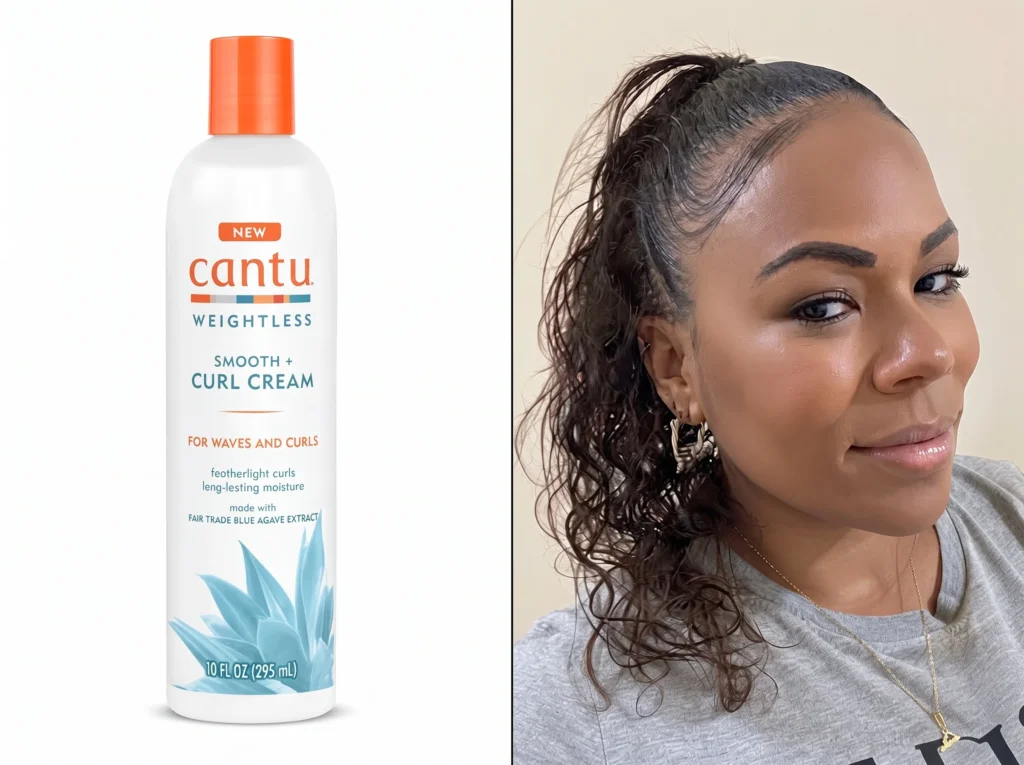
The brand isn’t one formula, and that’s where a lot of this starts.
The heavy stuff, the shea butter leave-ins and the curl activator creams, is made for high porosity, coarse or really dry textures. On that texture it does exactly what it’s supposed to.
The lighter lines and the gels work better on fine, looser curls. Even then, clarify every few weeks so nothing stacks up.
What’s in there and what it does:
- Shea butter locks moisture in. Great if you’re dry, heavy if you’re fine.
- Coconut oil is rich and can push you into protein overload if you’re sensitive to it.
- Silicones make it feel soft but need a clarifying wash or they build up.
- Isopropyl alcohol can dry you out over time.
- Glycerin pulls moisture out of the air, so it behaves differently depending where you live.
- Fragrance is in most of the line and bothers a lot of sensitive scalps.
None of that is unusual. Half the drugstore aisle has the same list. The question is what yours puts up with.
When to Stop Switching Products and See a Doctor
Changing brands is what everybody tries first, and sometimes it’s the wrong move. You can spend six months going through bottles while something else is going on.
Go see a dermatologist if you’ve got:
- Thinning at your temples or a hairline moving back.
- Little bumps along the hairline, sore or itchy.
- Patches rather than all-over thinning.
- Shedding that’s kept up for months no matter what you use.
- A scalp that stays irritated after you stop the product.
Real loss has real causes behind it. Genes, stress, hormones, thyroid, low iron, and health stuff that no shampoo is going to fix. A curl cream isn’t on that list.
So Should You Use It?
If yours is high porosity, coarse or dry, and feels soft instead of coated afterward, then go ahead. You won’t beat the price.
If it’s low porosity or fine, and the product just sits there, nothing’s wrong with you and nothing’s wrong with the brand. It’s a bad match. Something lighter will treat you better.
Either way, add one new thing at a time, see how it reacts over a few weeks, and clarify regularly if you’re using anything rich. That goes for every brand on the shelf, not just this one.