

Ballroom dancing is a mixture of movement, rhythm, and grace. Shoes can make or break your performance, whether you’re a beginner or a professional. Factors such as comfort, style, and function all work together to find the right ballroom dance shoes.
With so many options around, deciding is hard. Once you know the basic features and which styles suit your dancing, the choice gets simpler.
The Importance of Comfort in Ballroom Dance Shoes

Comfort is the most vital consideration. You’ll spend hours on your feet, and a shoe that hurts pulls your attention away from the dance and onto blisters, sore feet, or achy arches.
- Shoes need to fit snugly without being overly tight.
- Excessive pressure on the toes or too much room at the heel leads to sore spots and blisters.
- Shoes that are slightly too loose won’t let you feel any control.
Dance shoes fit closer than street shoes for a structural reason. Most contain a metal or steel shank running through the arch, supporting your foot through the pressure of turns and quick weight changes. In a loose shoe your foot shifts around and that shank stops doing anything useful.
They also run thinner underfoot, which is intentional. Feeling the floor is part of the technique.
The Role of Style in Ballroom Dance Shoes
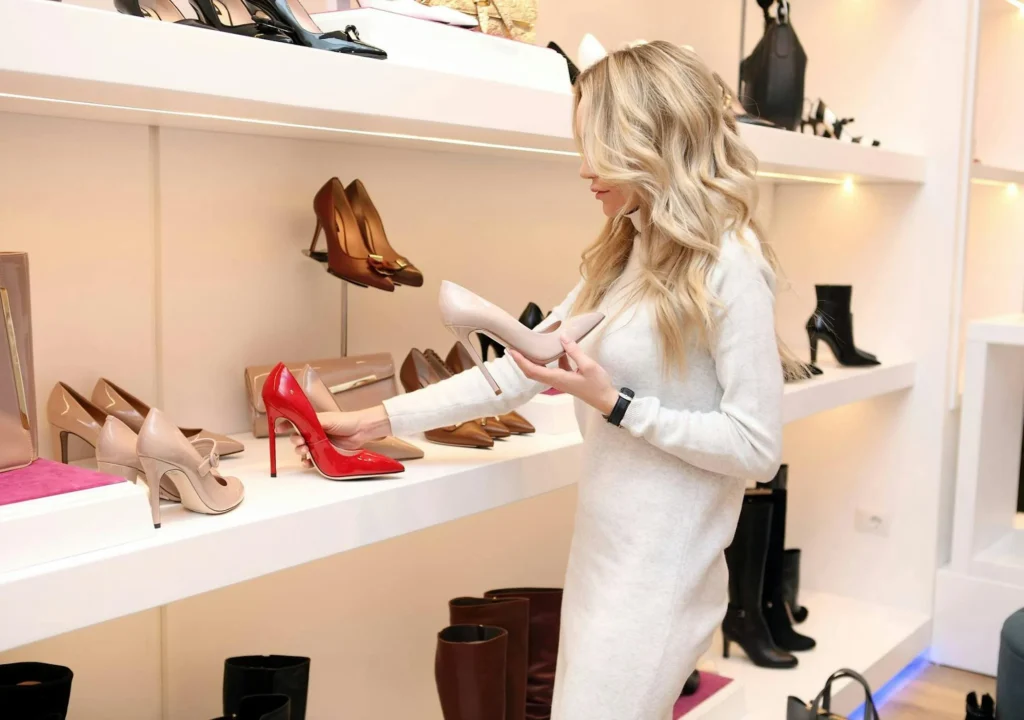
The shape of a ballroom shoe follows what the dance asks your body to do, so style and function aren’t really separable here.
Women’s ballroom and Standard shoes are closed-toe court shoes. That closed front protects toes during close partnering and produces the long leg line judges look for. Latin shoes go open-toed with an ankle strap, lighter through the front and more flexible.
For women, heel placement matters as much as height. A ballroom heel sits directly under your center of balance. A Latin heel sits further back on purpose, which pushes weight forward onto the ball of the foot where Latin technique needs it.
Men’s shoes differ less visibly. Standard is a patent leather lace-up oxford with a low heel built for gliding, while Latin runs taller and slimmer, often split-sole for more articulation through the foot.
Color is where taste finally gets a say. Black and tan dominate competition floors, though yellow shoes and other colors turn up constantly in social dancing and showcase work. Chasing a particular Fashion look for a brand is easier in social settings than under competition dress codes, which tend to be specific about what’s acceptable.
Heel Heights, and Why They Differ
| Shoe Type | Typical Heel | Purpose |
|---|---|---|
| Men’s Standard | 1 inch, flat | Stability for gliding movement |
| Men’s Latin | 1.5–2 inch Cuban | Positions weight over the balls of the feet |
| Women’s Ballroom | 2–3 inch, slim, centered | Balance for smooth traveling dances |
| Women’s Latin | 2.5–3 inch, set back | Drives weight forward for Latin footwork |
| Practice shoes | Lower, flared or Cuban | Stability for long rehearsals |
Start lower than you think you need. Two inches is plenty while you’re learning, and a lot of dancers stay there permanently. Height doesn’t make anyone a better dancer, and fighting a heel you can’t control just slows the learning down.
Dancing both styles on a budget? Ballroom shoes cope reasonably with Latin. Going the other direction works less well, since the taller Latin heel gets in the way of certain ballroom movements.
The Suede Sole Does More Than You’d Guess
Suede covers the entire bottom of a proper ballroom shoe except the heel.
What makes it work is that it grips or slides depending on how much pressure you put through your foot. Lean in for traction, ease off to pivot.
Your knees benefit from this more than your feet do. A rubber sole sticking to the floor mid-turn sends all that resistance up through your leg, and the knee absorbs it. Suede lets the foot release instead.
The trade-off is fragility. One walk across a parking lot ruins a sole. Carry them in a bag, change at the studio, brush the suede with a wire shoe brush when it starts feeling slick. Water, grease, and grit all cause damage you can’t undo.
Getting the Fit Right Before You Buy

Buy the first pair in person if you possibly can. Sizing varies enough between brands that ordering blind usually ends in a return.
Supadance, International Dance Shoes, Ray Rose, and Crown all fit differently from each other, and several offer width options if standard sizing doesn’t suit your foot.
While they’re on:
- Toes should reach the end without pressing hard against it.
- Your heel shouldn’t lift when you rise onto the ball of your foot.
- Rise and lower several times. Pinching gets worse across three hours, never better.
Break them in at home first. Short stretches, flexing and pointing, rolling through the soles. Trim your toenails before you start, and use a shoe horn rather than forcing your foot in, which wrecks the heel counter over time.
What Actually Determines Your First Pair
Buy for the dance you’re doing now, not the one you’re working toward.
A closed-toe practice shoe with a lower heel handles most social dancing across styles and stays forgiving while your technique is still forming. Suede sole, a shank supporting your arch, snug enough that the shoe moves when your foot does.
Color, brand, heel height, all of that is preference once those three are covered.