
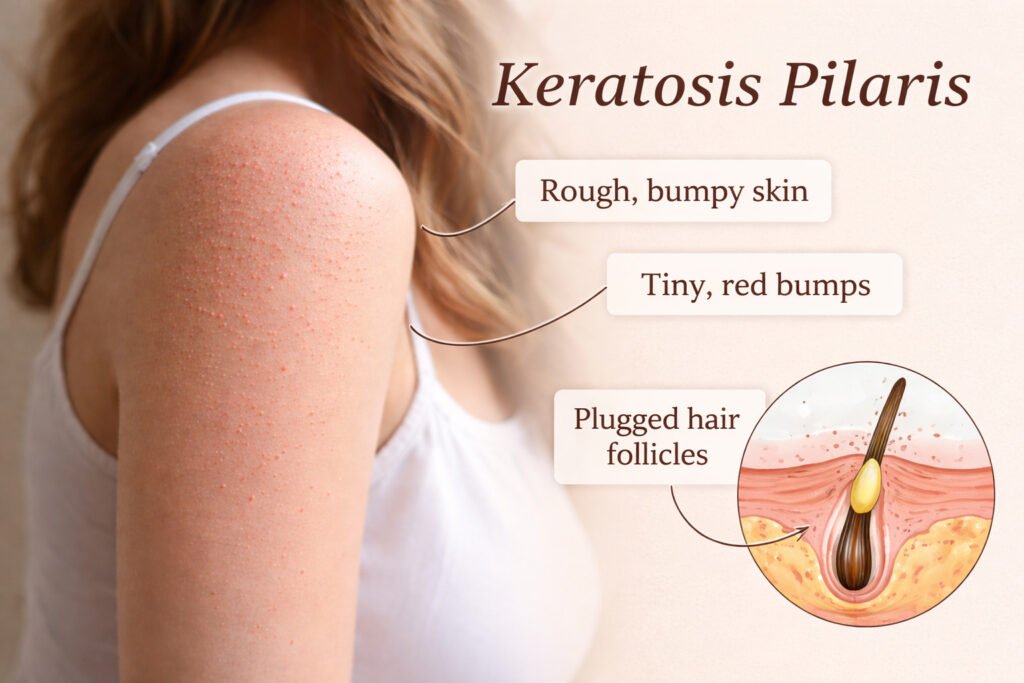
Keratosis Pilaris is the rough little bumps people call chicken skin. They turn up on arms, thighs and buttocks when keratin blocks the hair follicles instead of shedding the way it should.
Before you spend money on anything, there are a couple of things you should probably know. The condition is genetic, so it has nothing to do with how well you wash. And it can’t be cured, only managed, which sounds worse than it is, because well-managed KP feels close to normal skin. Touch Skin Care KP Exfoliating Lotion is built along those lines.
It also tends to settle down as you get older. Plenty of people notice a big difference by their thirties.
What is Keratosis Pilaris?
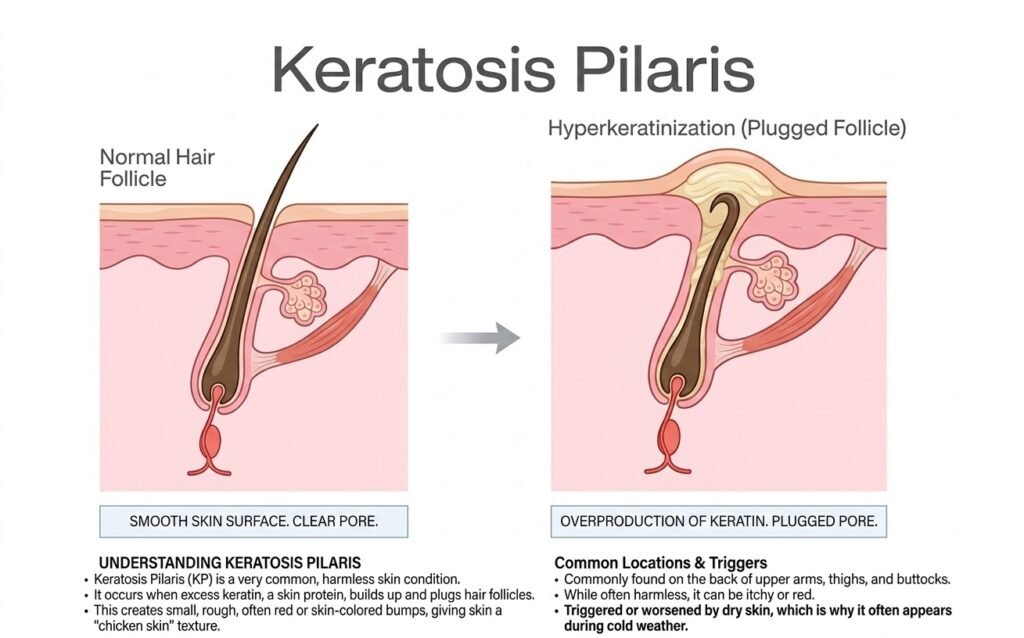
The follicle clogs with keratin and you get small firm bumps, usually the same color as your skin. Some people also get a red or pink flush around them. That version is called keratosis pilaris rubra and it tends to show up more on paler skin.
Upper arms and thighs are where it usually appears. It can also show on the buttocks and cheeks.
None of it is harmful or contagious, and it has nothing to do with acne, though people treat it like acne all the time. That mix-up is where the trouble starts, because they go at it with harsh cleansers and end up with worse skin than they started with.
What Makes It Flare
- Dry air and winter, especially once the heating goes on.
- Hot showers, which strip a barrier that’s already struggling.
- Harsh products, so sulfate washes, scrubs and stripping cleansers.
- A family history of eczema or hay fever, since they all share the same dry skin tendency.
Why Exfoliating Lotions are Key to Treating KP
Scrubs seem like the obvious answer and they don’t work. The plug sits down inside the follicle rather than on the surface, so all a scrub does is sand the healthy skin around a bump it can’t get to. You end up redder and the texture stays the same.
Chemical exfoliants get at it another way, by loosening the bonds that hold the dead cells together so the plug can clear from within.
Hydration counts for just as much as the acid does. Dry skin makes the whole thing rougher and easier to see, so the products that get results are the ones combining exfoliation with ingredients that smooth the skin and hold water in it.
Key Ingredients to Look for in a KP Exfoliating Lotion
| Ingredient | Type | What It Does | Best For |
|---|---|---|---|
| Lactic acid | AHA | Gently exfoliates, also humectant | Sensitive skin, first-timers |
| Glycolic acid | AHA | Faster cell turnover, smaller molecule | Tougher, thicker patches |
| Salicylic acid | BHA | Oil-soluble, gets into the follicle | Red or inflamed KP |
| Urea | Humectant + keratolytic | Softens keratin and hydrates | Very dry, rough skin |
| Ceramides | Barrier lipid | Repairs and holds moisture | Everyone, alongside the acids |
Salicylic acid deserves a mention on its own because it’s oil-soluble, so it can get down into the follicle where the AHAs are mostly working from the surface. That’s also why it settles the redness while exfoliating the skin around inflamed bumps.
Urea gets overlooked far more than it should. Anything at 10% or above does real work on keratin and most people have never tried it.
How to Use Exfoliating Lotions for Best Results

1. Apply to Clean, Damp Skin
Do it as you come out of the shower, patting yourself dry with a towel rather than rubbing. Damp skin takes it in better and the moisturizing side of the product has something to seal against.
2. Start Once Daily, Not Twice
Every acid product on the shelf tells you twice a day and most people’s skin won’t have it.
- Start with evenings only.
- Build up if things stay comfortable.
- Ease off if you get stinging or new redness.
3. Give It Eight to Twelve Weeks
Your skin cells take about a month to turn over and the KP has been building for years. Most people give up around week three, just before they’d have seen anything.
4. Don’t Stack Exfoliants
One acid product is your entire routine. Adding any of the following to the same patch of skin is how a mild case turns into an irritated one:
- Body scrubs or exfoliating mitts.
- Dry brushing.
- A second acid product.
- Retinoids on the same area.
5. Wear Sunscreen on Exposed Areas
AHAs make skin more sensitive to sunlight, and arms pick up a lot more sun than people tend to allow for.
Tips for Managing Keratosis Pilaris
1. Shorter, Cooler Showers
Hot water pulls its natural oils out of your skin, and dry skin makes every bump stand out more.
- Keep it under ten minutes.
- Warm water instead of hot.
- Moisturize within about three minutes of getting out.
2. Change Your Body Wash
A sulfate-heavy foaming wash is working against everything else you’re doing. Swapping to a cream or oil cleanser leaves the barrier alone and doesn’t cost you anything extra.
3. Wear Breathable Fabrics
Tight synthetic fabric traps sweat and rubs against the areas where KP likes to sit.
- Cotton where you can.
- Looser fits over upper arms and thighs.
- Get out of gym clothes reasonably soon after.
4. Don’t Pick or Scratch
Everyone knows this one and almost nobody manages it, so here’s what’s actually happening when you do.
- The plug is bonded to the follicle wall, so squeezing damages the tissue around it and doesn’t release anything.
- You can be left with a dark mark that hangs around for months after the bump has gone, and that shows up more on deeper skin tones.
- Going at the same follicle repeatedly can leave a small permanent pit.
- Picking makes the bumps redder, and redder bumps make you want to pick, so it feeds itself.
If you do it without noticing, the fix is a physical one. Sleeves in the evening, short nails, and keep the lotion wherever you usually sit, so you reach for that instead.
5. Run a Humidifier in Winter
Putting some moisture back into heated indoor air will do more for you than another product, and it helps every other dry skin problem you’ve got at the same time.
What to Realistically Expect
You’re looking at improvement rather than the bumps disappearing altogether. Smoother texture, fewer of them visible, less redness, skin that feels normal when you run a hand over it.
It’ll come back if you stop, and it’ll come back some winters regardless. That’s just how a genetic condition behaves, and knowing it in advance will save you a lot of frustration along with the money people burn chasing the next miracle lotion.
When to See a Dermatologist
- If it’s badly inflamed or spreading onto your face.
- If three consistent months have changed nothing.
- If you’ve got scarring or dark marks that bother you.
There are prescription-strength urea preparations and topical retinoids for cases like those.
Day to day, a steady skincare routine will do more for you than any single product does. And when you want rough skin to look better today rather than in two months, a decent primer covers the gap while the lotion works on the slower job.