
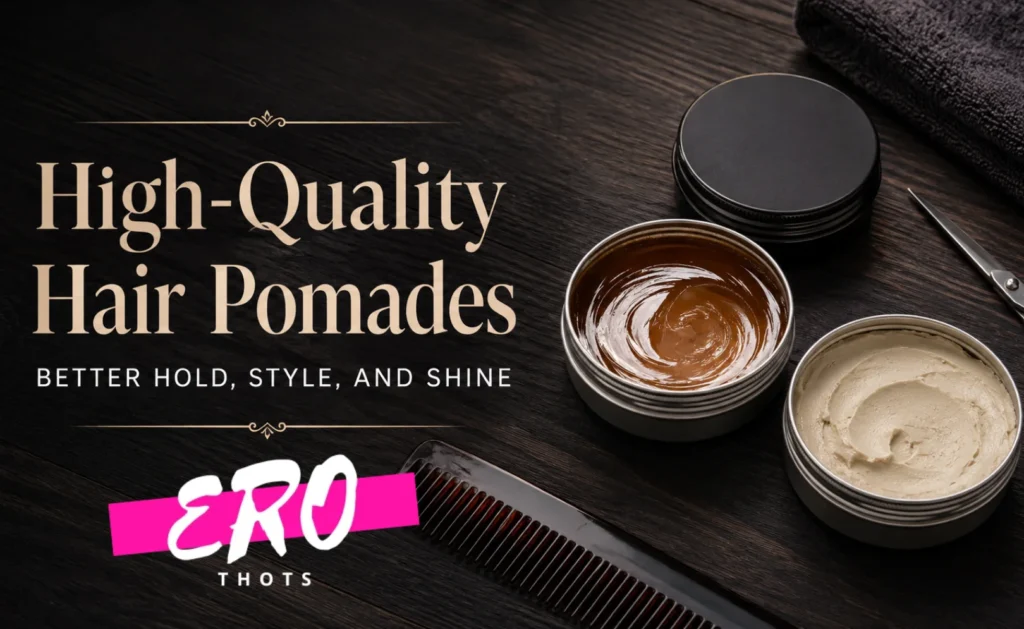
A good Pomades earns its price in three places. It warms clear in your palms instead of staying grainy. It holds all day without going crunchy or flaking. And you can still put a comb through it at six in the evening.
Reuzel, Layrite and Suavecito all clear that bar. Each makes both a water-based and an oil-based version, and that single choice shapes your result more than the brand name does.
| What you want | What to buy |
|---|---|
| High shine, medium hold | Oil-based, light to medium |
| Firm hold, low shine | Water-based or a heavy wax |
| All-day restyling | Oil-based, any weight |
| Easy washout | Water-based, no exceptions |
| Hold and shine together | Medium oil-based, applied damp |
That last row is the one most people want, and it’s achievable. It just needs three things lined up: the right base, the right weight, and damp hair.
1. Water-Based or Oil-Based Decides Everything Else
This is the first fork, and most people take it by accident.
Water-Based Pomade
Water sits first on the ingredient list and the texture runs closer to a gel.
- Rinses out with water. No special shampoo, no second wash
- Sets firmer as it dries, then holds
- Restyling is limited once it’s set
- Far less likely to cause breakouts
Oil-Based Pomade
Petrolatum, mineral oil, or sometimes beeswax and lanolin carry the formula.
- Never fully sets. Stays pliable all day
- Restyle whenever, including next morning without reapplying
- Higher shine, the classic slick finish
- Difficult to wash out. This is the real cost
Regular shampoo won’t shift a petrolatum pomade in one pass, and that catches people out constantly.
If you shampoo daily and don’t want a routine built around it, buy water-based. The hold is genuinely comparable now.
2. Why Hold and Shine Pull Against Each Other
Here’s the formulation fact that explains every tin on the shelf.
Pomades get shine from oils and hold from waxes. Add more wax and you gain hold while losing gloss. Add more oil and you gain gloss while losing structure.
| Weight | Wax content | Shine | Best for |
|---|---|---|---|
| Light | Low | High | Loose styles, natural texture, thin hair |
| Medium | Balanced | Moderate | Side parts, pompadours, most hair |
| Heavy | High | Low to matte | Thick or coarse hair, structured styles |
How to Get Both Anyway
Medium weight, oil base, damp application.
A medium oil-based pomade carries enough wax to hold a shape and enough oil to shine. Applying it to damp hair then adds gloss without adding product, which is the part that costs nothing and gets skipped.
Damp hair distributes product evenly and gives you noticeably more shine from the same amount.
The same principle explains why a professional finish lasts longer than a home one, and it’s most of what’s happening during a blowout too.
Reading Hold Labels
Nobody regulates what “strong hold” means, so the ratings on tins are marketing rather than measurement. The weight and the base tell you more than any number printed on the lid.
3. Most People Use Three Times Too Much
Start with a fingertip. Genuinely, a fingertip.
Warm It First
Rub it between your palms until it goes clear and loses its texture. Cold pomade sits in clumps, and clumps are what make hair look separated with scalp showing through.
Then Apply
Towel-dry until your hair stops dripping. Work back to front with your palms, then bring in a comb for the shape.
Adding more is easy. Getting excess out means starting over in the shower.
The diagnostic: if your hair looks stringy or your scalp shows between sections, that’s too much product rather than the wrong product. It’s also worth remembering that product can only do so much with a shape that isn’t there, so if you’re fighting your hair every morning, the cut is usually the problem rather than the tin.
4. Getting It Back Out
Water-based washes out with warm water and a normal shampoo, and that’s the entire procedure.
Oil-based takes a method, and the one that works comes from barbershop practice rather than product marketing. Work a tablespoon of olive oil or coconut oil through dry hair first, which sounds backwards and isn’t, because oil dissolves oil in a way shampoo alone can’t manage. Let it sit a few minutes. Then shampoo with warm water, and a clarifying or dedicated pomade shampoo moves faster than your regular one. Expect to repeat it once. If your hair still feels coated after two rounds, that’s normal for a petrolatum product rather than a sign you did something wrong. Follow with conditioner, since the degreasing strips more than just the pomade.
5. Pomade Acne Is Real and It Shows Up on Your Forehead
This belongs in a salon conversation and almost never makes it into a product roundup.
What It Is
Pomade acne is a recognized form of acne cosmetica. It appears as small bumps along the hairline, forehead, temples, and sometimes the cheeks and ears, and it happens because product migrates from hair onto skin and blocks the follicles underneath.
Why It Happens
The ingredients responsible are the ones that make pomade work.
Petrolatum, mineral oil and lanolin are all comedogenic, and they’re the backbone of most oil-based formulas.
Two things make it worse than people expect:
- Your pillowcase. Product left in overnight transfers to fabric, then your face spends seven hours pressed against it
- Sweat. A workout runs product down your forehead and neck
It’s more common in people with curly hair and people of African descent, largely because product use is more frequent. In deeper skin tones it can leave post-inflammatory hyperpigmentation behind after the bump itself clears.
What Actually Helps
- Keep pomade back from the hairline. Half an inch of clearance does a lot
- Wash your face after applying, not before, with a gentle cleanser rather than anything stripping
- Shower after any workout where you sweated with product in
- Change pillowcases more often than feels necessary
- Switch to water-based if breakouts persist
How to Confirm It
Stop using the product for two to three weeks.
If the forehead bumps clear, you have your answer. If they don’t, something else is driving it, and that’s a conversation for a dermatologist. Our team includes one working across clinical and aesthetic dermatology, which is part of why we’d rather flag this than sell you another tin.
6. What Actually Signals Quality
Price tells you very little. A twenty dollar tin and a nine dollar tin can perform identically.
Signals worth trusting:
- Short ingredient list with the base ingredient named first
- Consistent texture that warms evenly instead of staying grainy
- Scent that fades within an hour
- A tin that reseals properly, since dried-out pomade is wasted pomade
Signals worth ignoring:
- Hold ratings out of ten
- “Barber-approved” with no barber named
- Anything claiming maximum hold and maximum shine in the same sentence
Because Reuzel, Layrite and Suavecito each make both bases, you can test the same brand across water and oil versions and isolate exactly what’s changing. Whatever you land on, the rest of your hair shelf matters as much as the tin does, since a stripping shampoo undoes a good pomade by the end of the week.
7. Matching the Tin to Your Hair
- Fine hair, wanting shine? Light oil-based, damp application, tiny amount.
- Thick hair, wanting structure? Heavy water-based, and accept the matte finish.
- Curly hair? Water-based first given the breakout risk, and keep it off the hairline.
- Somewhere in between, like most people? Medium oil-based on damp hair. That’s the combination that delivers hold, style and shine at once.
Not sure which category you’re in? Ask whoever cuts your hair, since they’ve had their hands in it and they’ll tell you in about four seconds. If that’s us, book in and ask during the cut, or have someone come to you if you’re inside thirty miles of Columbus.