
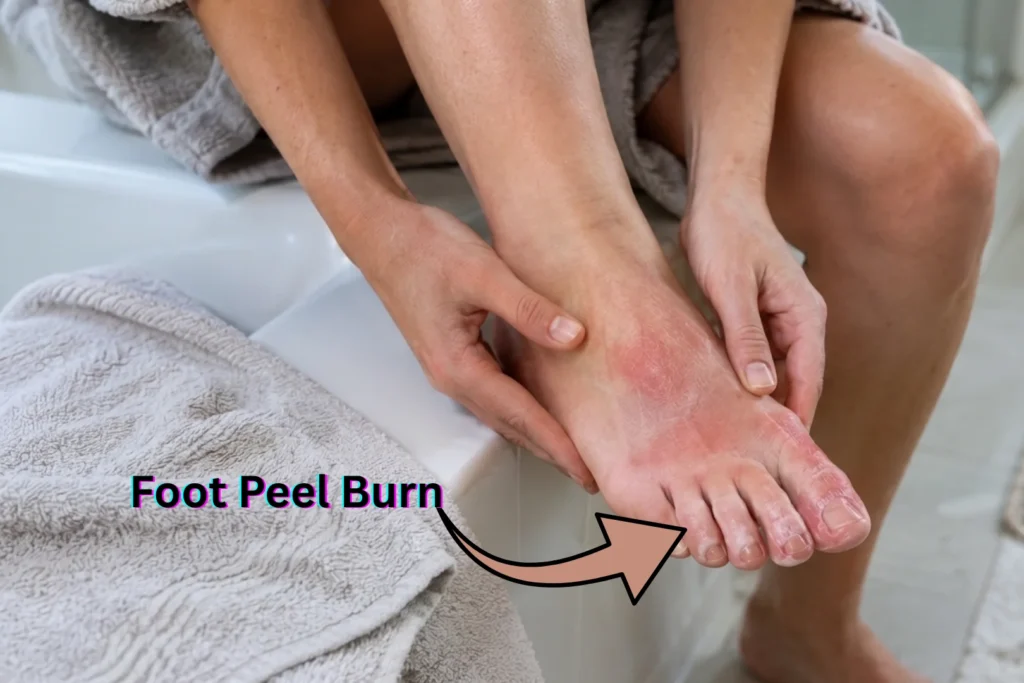
Most foot peel burn show up on the top of the foot and between the toes, that surprises people, since they bought the peel for their heels. The reason is what the bootie does for that hour. It holds one acid liquid against every part of the foot at the same strength. The heel is thick enough to take it, but the skin on top of the foot is much thinner and sits closer to the skin on your face. The plastic also keeps the liquid sitting there the full hour instead of letting it dry off.
Most of the time the peel does what the box promises, and about a week later the dead skin comes away in sheets. Sometimes it goes further than that. If you are reading this with a sore, red foot, the first thing to work out is which of the two has happened to you.
Foot Peel Burn Symptoms Compared With The Normal Sting
A peel is supposed to tingle. A little warmth while the booties are on is usually the acid working on the dead layer, and most brands mention it on the box. Faint pinkness after the rinse is normal too, and so is dry, tight skin for a few days before the peeling starts.
A burn is different because it gets worse after you rinse instead of easing off.
These are the signs that the peel has gone past the dead skin:
- Burning that keeps building after the booties come off.
- Bright red, hot or swollen skin on top of the foot or between the toes.
- Blisters, raw patches or skin that weeps.
- Pain when socks or bedsheets touch the foot.
The timing catches a lot of people out. With milder chemicals like the acids in a foot peel, the damage skin barrier can take hours to show, the way a sunburn does. So a foot that looked fine at seven in the evening could have blisters by the morning.
Itching is a slightly different story. If the foot itches more than it burns, you could be reacting to one of the fruit or plant extracts most peels carry, and an allergy like that is worth showing to a doctor because it gets treated differently from a burn.
Foot Peel Burn Treatment Starts With Plain Water
The first fix is water, and more of it than most people expect. Get in the shower and run cool water over both feet for at least 20 minutes. That is the standard first aid for any chemical burn, and it matters here because some acid can still be sitting in the skin after the quick rinse you gave it earlier. If your feet still sting after 20 minutes, keep going for a few more.
Let the skin cool down before you put anything on it. Once it has, a thin layer of petroleum jelly two or three times a day will stop it drying and splitting, which matters on a foot that bends with every step you take. A nonstick bandage over any raw patch will protect it while it heals.
Leave the blisters alone, and don’t pull the peeling skin off, even the loose bit hanging from the little toe. Torn skin over a burn lets bacteria in, and it will take longer to heal.
For the next few days you can put away the foot file, the scrubs and any acid lotion, and skip the long hot soaks as well. Loose cotton socks and roomy shoes will make walking around a lot easier.
When A Foot Peel Burn Needs A Doctor
Burns that cover the feet are counted as major burns in standard first-aid guidance, and they need medical care. A burn across most of the top of your foot should be seen by a doctor, even though it came out of a box from the drugstore.
Go to your doctor or an urgent care clinic if:
- The burned area is bigger than about 3 inches across.
- There are large blisters or lots of small ones.
- The skin looks white or leathery.
- Redness spreads, you see pus or you get a fever.
- You have diabetes or poor circulation, whatever the size of the burn.
Take the box with you. The doctor will want to know which acids were on your skin and for how long, and the ingredient list is easy to forget once the box is in the trash.
How To Prevent A Foot Peel Burn Next Time
Most of these burns come down to three things: the time the peel stays on, broken skin, and acid sitting on the thin skin of the toes.
Time is the easiest one to control. The time printed on the box is the most the product should spend on your feet, and leaving it on longer won’t get you softer heels. It only gives the acid more time on the top of the foot. Set a timer, take the booties off when it goes, and never fall asleep in them. If the stinging grows during the hour, take them off early and rinse.
Broken skin comes next. Cracked heels, small cuts and athlete’s foot between the toes all let the acid reach raw skin, so wait until those have healed before you use a peel. It also helps to put the pumice stone away for a few days beforehand, because scrubbing first leaves the skin more sensitive.
Thin skin is the one you can do the least about. A thin layer of petroleum jelly over the tops of the toes and between them can keep most of the liquid off the spots that tend to burn first, and the heel will still get the full treatment.
The strength of the product is harder to judge. Many foot peels don’t list their acid percentage at all, and an unlisted strength can be enough to cause a burn that needs medical care. For a sense of scale, cosmetic safety guidelines suggest keeping home products to 10% AHA and leaving stronger peels, up to 30%, to trained professionals in a salon.