

Ever spent forever scrolling through beauty makeup tutorials just to end up with foundation that’s too light, too dark, or somehow both? Shade roulette, amusing for two seconds and frustrating after that.
I remember swatching random products on the back of my hand in store aisles, then realizing my hands were a completely different tone from my face. All that guesswork bought me wasted cash, half-used bottles, and a lingering sense of “maybe I just don’t get makeup.”
Turns out the problem wasn’t me. It was testing in the wrong place, in the wrong light, without knowing my undertone.
Defining Personalized Makeup Matching
Personalized matching means tailoring shades and formulas to your skin tone, texture, and preferences rather than guessing from a shelf.
It sounds like marketing language. In practice it’s just using tech tools, professional guidance, or color analysis quizzes instead of hoping.
You don’t have to be some makeup artist to benefit. One concealer stick or a full palette collection, the process is the same.
The Part Nobody Explains: Undertone vs Depth
These get confused constantly, and confusing them is why so many matches fail.
Depth is how light or dark your skin is. Fair, light, medium, tan, deep.
Undertone is the color underneath, and it doesn’t change when you tan. Warm skin has yellow or golden hues. Cool skin has pink, red, or blue. Neutral sits between the two. Olive reads slightly green.
A shade can match your depth perfectly and still look wrong, because the undertone is fighting your skin.
Three tests, done together
| Test | Cool | Warm | Neutral |
|---|---|---|---|
| Wrist veins in daylight | Blue or purple | Green | Mix of both |
| Jewelry against skin | Silver looks better | Gold looks better | Both work |
| White paper next to bare face | Skin reads pink | Skin reads yellow | Neither dominates |
Do all three. One on its own isn’t reliable, and the vein test especially gets misread. If two agree and one doesn’t, go with the majority.
Once you know, brand shade codes get easier. C or P means cool or pink. W or Y means warm or yellow. N is neutral. O or G is olive.
Why Personalized Shades Make A Real Difference?
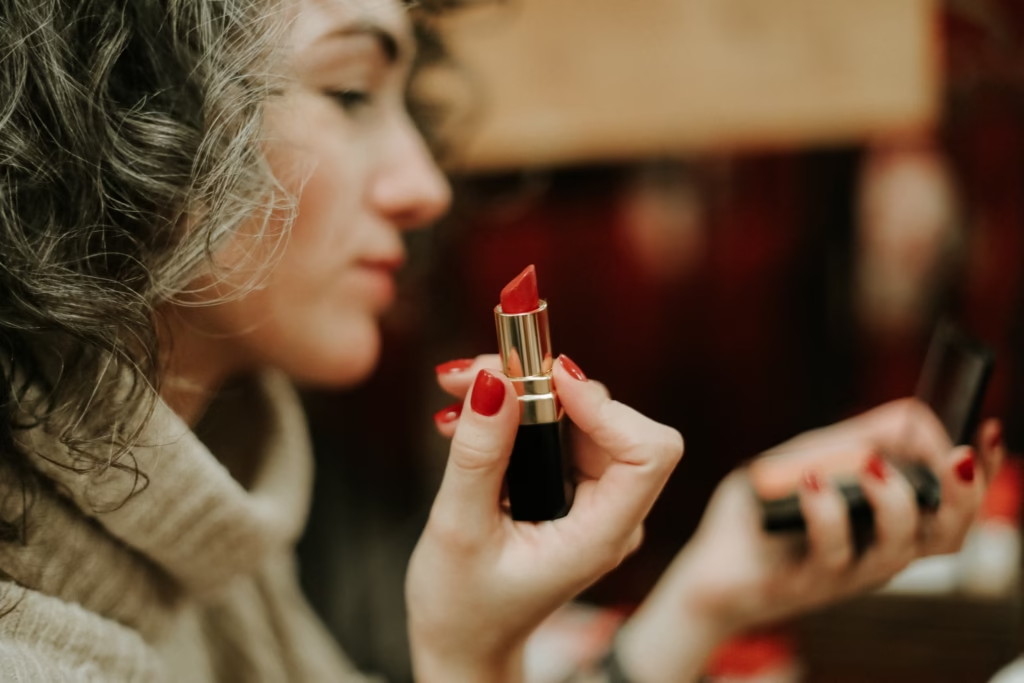
That moment in the mirror where the finish is seamless, no patchiness, no odd discoloration around the jaw.
When the base is right, everything on top of it works better. Blush, bronzer, and highlighter read as natural instead of applied.
Trying different make-up looks gets easier too, since you’re building on something that already sits correctly.
And the photo problem disappears. Flash photography exposes mismatched foundation ruthlessly, which is where the face-and-neck-two-different-species effect comes from.
Confidence, Expression & Self-Esteem
The confidence part is real and it’s specific.
Not worrying about a foundation line at your jaw changes how you sit in a conversation. Not checking your reflection every hour frees up attention for other things.
The right base also makes experimenting less risky. Bold lips and adventurous eyeshadow feel worth trying when you trust what’s underneath them.
Tools & Tech That Make It Happen
Apps analyze a selfie and return shade suggestions. Online quizzes factor in skin type and undertone. Some brands have in-store devices you hold against your skin to generate a custom blend.
They work reasonably well as a starting point. What they can’t fully account for is lighting in your selfie, temporary redness, or how a formula behaves after four hours on your skin.
If you’d rather consult a professional makeup artist, many can custom-mix foundation on the spot and will tell you things a quiz won’t, like whether a matte formula will emphasize dry patches you didn’t know you had.
Practical Tips For Your Own Matching Journey
- Swatch on the jawline, never your hand. Your hand is usually a different tone entirely. Jawline shows where face meets neck, which is where mismatches show.
- Test three adjacent shades at once. The right one disappears. Comparing side by side works better than judging one alone.
- Use natural daylight. Store lighting distorts color badly. Step outside before deciding.
- Wait 10 to 15 minutes for oxidation. Foundations react with skin oils and air, and many darken. A shade that looks perfect at swatch can look orange within the hour.
- Blend past the jawline. Test down onto your neck. Face and neck are often different depths, and matching only the face is how you get a visible line.
- Ask for samples. A day or two of real wear tells you more than a swatch, especially with oily or dry skin.
- Re-match twice a year. Sun exposure, skincare actives, and hormonal changes all shift skin tone. The shade that worked in January often doesn’t in July.
Getting It Right Without the Guesswork
Depth first, undertone second. That order alone solves most matching problems.
Test on your jaw, in daylight, with three shades at once, and give it fifteen minutes before you decide. Whether you get there through an app, an artist, or your own swatching, the process is the same and it costs a lot less than another shelf of half-used bottles.