
The lob haircut style is what people ask for when they want a change but don’t want to lose everything. It became especially popular in the early 2010s and never really went away, which is kind of funny for something people still call a trend.
Thing is, it isn’t one length. It’s a range. And the same cut can look pretty different depending on where your hair lands in that range and what it does once it dries. Figure that out before you sit down and you’ll probably be happy with it. Skip it and you might not.
What a Lob Haircut Looks Like
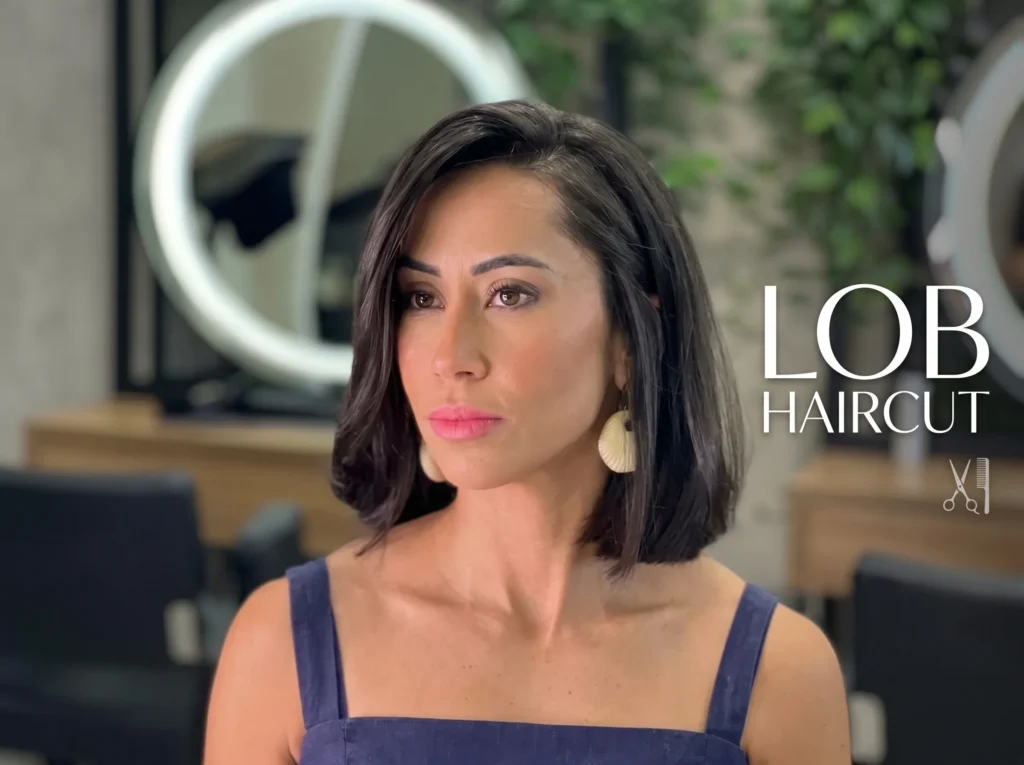
The length lands somewhere around the shoulders or collarbone, some a bit above, some a bit below, and it keeps the same clean outline a bob has.
The length is why people go for it. You get the shape of a bob hairstyle without going properly short, so it works if you want a change but aren’t ready to chop it all off. It’s also a good middle step if you’re heading from long to short in stages.
And you can still put it up without much trouble. It’ll go into a ponytail, a bun or a half-up. At bob length that gets harder, and if you’ve never had short hair, you probably don’t realize how often you reach for it.
Lob vs. Bob: What’s the Difference?
A bob usually ends around your jaw or higher. The longer version sits down around your shoulders or collarbone.
Those few inches change where the line hits your face. A bob cuts straight across at the jaw. Going longer drops it below that, which is part of why a lot of people find this easier to wear than a short bob.
There’s a shorter one too. The mini version sits right above the shoulders, so it’s in between: shorter than the standard length, longer than a bob.
Lob Haircut Variations
The version you pick changes the outline more than the length does. Six of them cover most of what you’ll see at the salon, and each one works for a different kind of hair. How thick your hair is, the shape of your face, and how much time you spend on it in the morning will tell you which one fits.
1. Blunt Lob
One length, cut straight across, with no layers. It has a hard line at the bottom and looks the sharpest of the six.
Since there are no layers, all your hair ends at the same spot, and that makes the ends look fuller. If your hair is fine or thin, a blunt cut makes it look thicker. It looks best on straight hair, where you can really see that clean line. If your hair is very thick or curly, skip this one, because all that weight can puff out at the bottom. You’ll want a trim every 6 to 8 weeks to keep the edge neat.
2. Layered Lob
Layers run through the middle and the ends, so the shape moves instead of sitting in one solid line. It’s softer than a blunt cut and usually easier to air-dry.
Layers take weight out of the hair, which is exactly what thick or wavy hair needs. If your hair is heavy, layers keep your lob from turning into a triangle. It’s not a great pick for fine hair, though, since taking out weight can leave the ends looking thin. It also grows out nicely, so you can usually go 8 to 10 weeks between trims.
3. Angled or A-Line Lob
Shorter in the back and longer in the front, so the line slopes down toward your face.
That slope pulls the eye down to your jaw, which helps a round or square face look a little longer. The back stays light, so there’s less bulk at the neck. The angle shows up best on straight or slightly wavy hair, since curls tend to hide it. As it grows, the slope starts to flatten out, so you’ll need regular trims to keep the shape.
4. Textured or Shaggy Lob
Choppy layers that are meant to look a little messy, with ends that separate instead of lying flat.
This cut is made for hair with natural wave or curl. The choppy ends give your hair movement, and since the messy look is the whole point, a few weeks of growth barely show. This is the lob for anyone who wants to wash it, scrunch it and go. Very fine, straight hair is the one type that has trouble here, because the choppy ends can look stringy.
5. Mini Lob
It sits just above the shoulders, for when you want to go shorter than a regular lob but still stay longer than a bob.
A regular lob often flips out when the ends hit your shoulders, and the mini lob stays clear of that. It’s the easiest way to try shorter hair without going all the way to a bob. It shows off more of your neck and jawline, so it looks great on oval and heart-shaped faces. If you don’t love it, it grows back into a regular lob in a couple of months.
6. Lob Haircut With Curtain Bangs
This adds soft bangs parted in the middle that frame your face and take some weight off the front. You can add them to any of the cuts above.
The bangs help cover a high forehead and soften strong features, and the middle part lets you push them to the side on days you don’t want them in your face. Curtain bangs are the easy bangs to try, because they grow out to the sides instead of into your eyes. The catch is a second trim schedule, since the bangs need a quick cut every 3 to 4 weeks between full haircuts.
How to Choose the Right Lob Length for You
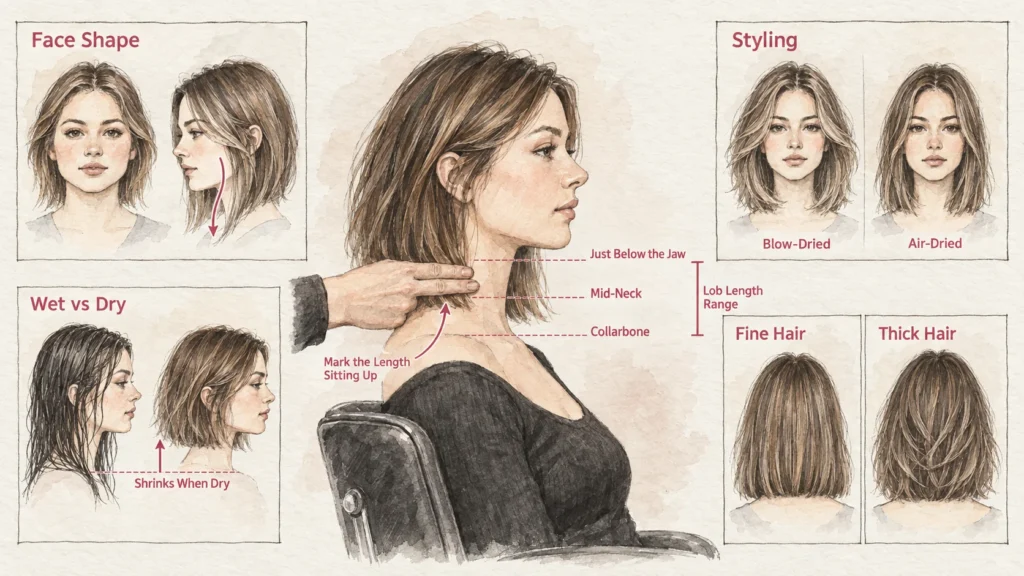
A lob can be cut anywhere from your jaw to your collarbone, so pick the length first. These aren’t rules, just the things stylists look at.
- Your Neck: Some people like the ends a little below the jaw, others go shorter. It comes down to what you like seeing in the mirror.
- Your Face Shape: An angled lob, longer in the front, is often suggested for round or square faces because it makes the face look a bit longer. Treat it as a tip, not a rule.
- How much you’ll style it. A blunt lob at collarbone length looks great blown out but can fall flat if you let it air-dry. If you never use a round brush, tell your stylist before the cut.
- How Your Hair Dries: Wavy, curly and oily hair often looks shorter once it’s dry. Let your stylist know so they can check it dry or leave a little extra length.
- Your Hair’s Thickness: Fine hair usually looks fuller with blunt ends, while thick hair may need some weight taken out underneath. Talk about it at the consultation instead of just showing a photo.
How to Maintain a Lob Haircut
Most stylists say six to eight weeks for a trim. That’s a guideline more than a rule, though. How often you need one comes down to how fast yours grows and how sharp the cut was to begin with.
Growing the whole thing out isn’t bad either. It’s one of the easier shapes to take back to long hair, and adding longer layers or a fringe smooths over the awkward stage. If you want hair services you must need to talk the length through before you commit to it.
Whatever you go with, show up knowing two things: where you want it sitting when it’s dry, and how much styling you’ll really do. Those two help more than any photo you bring in.