
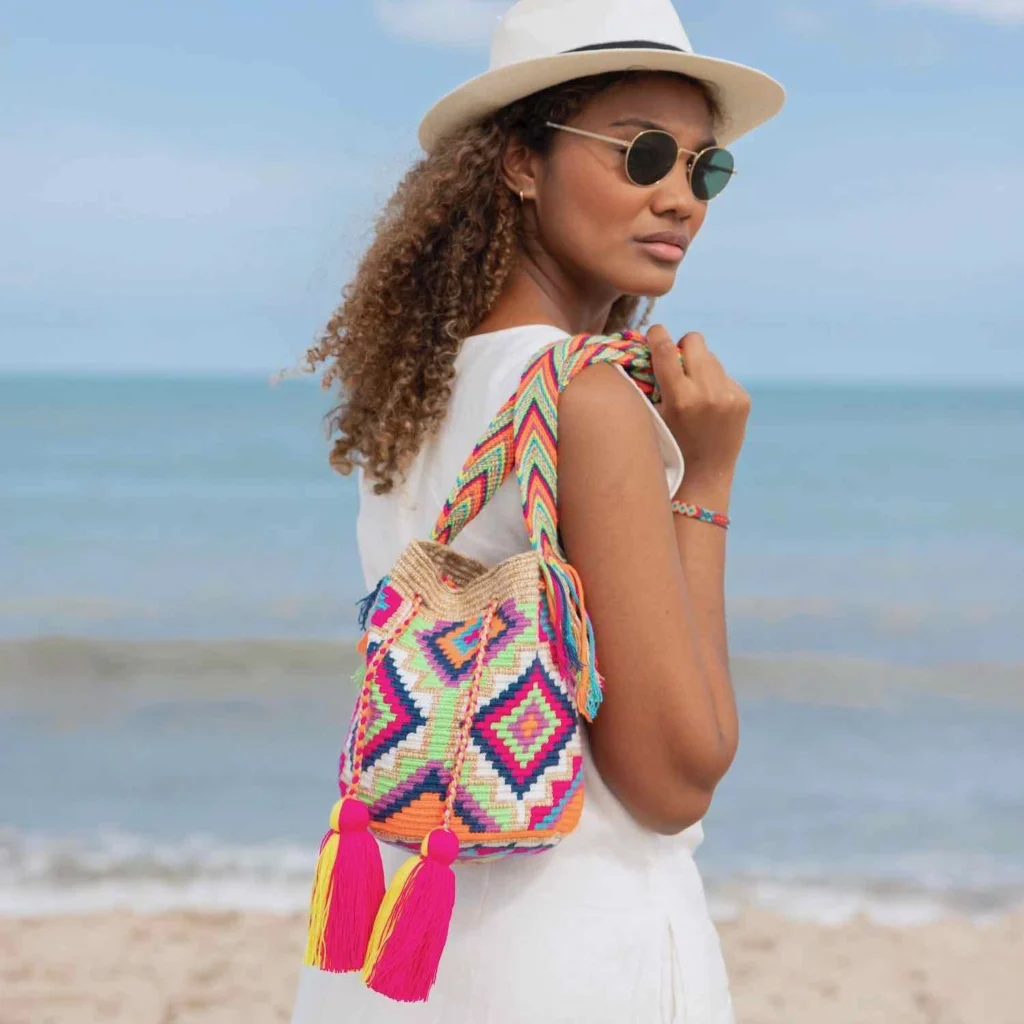
A Wayuu mochila takes between seven days and several months to make. One woman, one crochet needle, one continuous thread, working a pattern from memory rather than a template.
As you seek to boost your style with authentic, handcrafted accessories, look no further than the exquisite Wayuu bags from Colombia. These vibrant, intricately woven creations are more than mere fashion statements; they are living testaments to centuries of cultural heritage. Crafted by skilled artisans of the Wayuu tribe in La Guajira, each bag tells a unique story through its bold colors and intricate patterns. By choosing a Wayuu bag, you’re acquiring a versatile and durable accessory, supporting fair trade practices, and preserving traditional craftsmanship.
Discover how these remarkable bags can transform your wardrobe while making a positive impact on artisan communities.
That time difference is how you tell a real one from a machine-made copy. Here’s what the craft involves, and how to check what you’re looking at.
The Enduring Artistry of Wayuu Bags
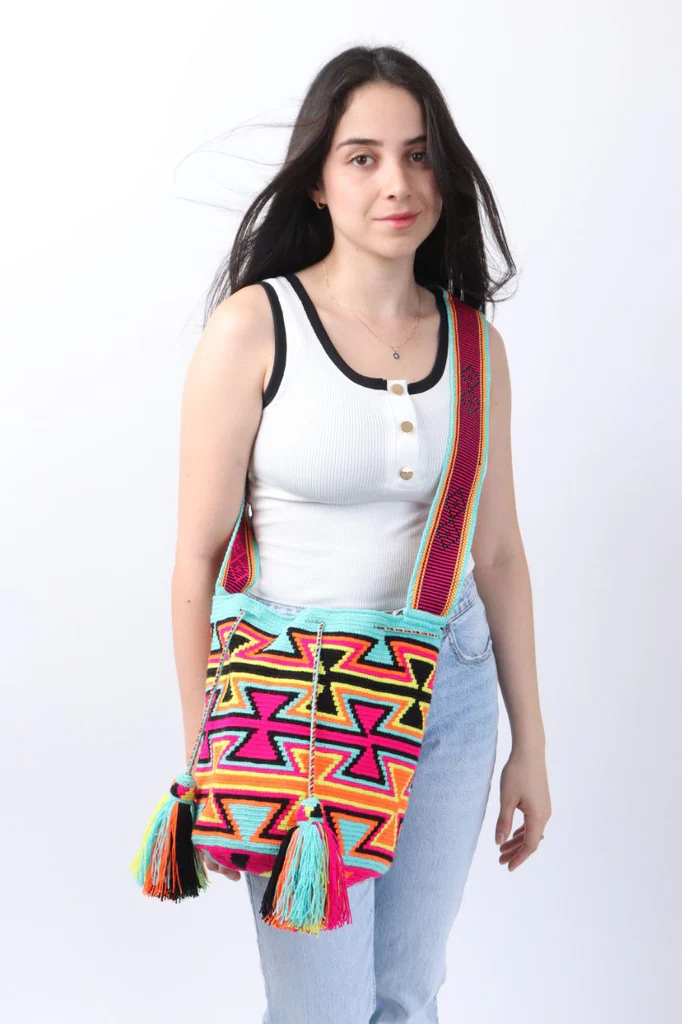
The Wayuu are a matriarchal indigenous community in La Guajira, the desert peninsula where Colombia meets Venezuela.
Weaving there is cultural identity and income at the same time, and the tradition is passed down through generations of Wayuu women, mother to daughter. The Wayuu have a saying about it: to be a woman is to know how to weave.
In their oral tradition, the skill came from Wale’kerü, a spider who taught the first women to turn thread into pattern. Mochilas were made to carry tools across the desert. The durability came from that use.
Kanaas: The Patterns Aren’t Decoration
The geometric designs have a name, kanaas, and each one carries meaning.
A pattern can record clan lineage, animal tracks, celestial bodies, plants, or elements from dreams. Weavers interpret them individually rather than copying a fixed set, which is why no two authentic bags match.
So a bag with a perfectly repeating, machine-regular pattern usually means it wasn’t made by hand.
Single Thread vs Double Thread
This distinction determines price, texture, and how long the bag took to make.
| Single thread (una hebra) | Double thread (dos hebras) | |
|---|---|---|
| Weaving time | 28+ days, up to several months | 7+ days |
| Texture | Dense, smooth, canvas-like | Thicker, ribbed |
| Pattern detail | Sharp, almost pixel-precise edges | Larger, blockier shapes |
| Typical price | $150–$300 | $80–$150 |
| Bottom of bag | Often patterned | Usually plain |
Both are genuine. Single thread suits anyone who wants fine detail and a bag that holds its shape for decades. Double thread suits daily errands and a more rugged look.
You’ll also find hybrids, double thread bodies with single thread straps or drawstrings. Those cost more than straight double thread, since the strap alone adds days of work.
How to Spot an Authentic Bag
Each bag is meticulously handwoven using traditional techniques, and there are checks anyone can do by hand:
- Hold it up to light. You shouldn’t see through the stitches easily. Loose weaving means rushed work.
- Check the pattern lines. Straight and even means a skilled weaver. Wobbling lines don’t.
- Check the pattern runs all the way around. Experienced weavers complete the design across the whole bag, not just the front.
- Feel the fabric. Dense and smooth, not stretchy or saggy. It should hold shape when empty.
- Count the drawstring holes. An even number is standard.
- Look for small irregularities. Handwork has slight variations. Machine-perfect uniformity means machine-made.
Price tells you something too. Below $75 usually means either a mass-produced imitation or an artisan who wasn’t paid fairly, since the hours involved don’t allow for it.
Authentic thread is produced in Colombia and blends plant fiber with cotton and polyester. It holds around 99.5% color fastness, so the colors stay bright for years. A bag that feels like cheap industrial acrylic isn’t the real thing.
What You’re Actually Buying
Fair trade matters more here than in most categories, because the labor is so intensive and the artisans so remote.
A woman spending a month on one bag needs that bag to be worth a month’s income. Buying from sellers who price accordingly and pay artisans directly is what keeps the tradition viable.
The wayuu bags sold through Cosecha come from Wayuu artisans working traditionally, and the pricing reflects the hours involved.
Choosing a Style
Mochilas come in several formats now, some traditional, some adapted:
- Classic mochila. The round bucket shape with a long strap and drawstring top.
- Tote. A modern rectangular version, good for work and travel.
- Crossbody. Smaller, hands-free, easier for daily use.
- Mini. More statement piece than carrier.
For a first bag, a double thread classic mochila gets you the real thing at the lower end of the price range. For something you’ll keep for decades, single thread is worth the extra.
Wearing It
A Wayuu bag is a bold fashionable accessory, so it works best with simple clothing around it.
Neutral colors let the pattern show. Other prints compete with it.
Care is straightforward: spot clean with mild soap and cold water, air dry out of direct sun, and skip the washing machine, which distorts the shape.