
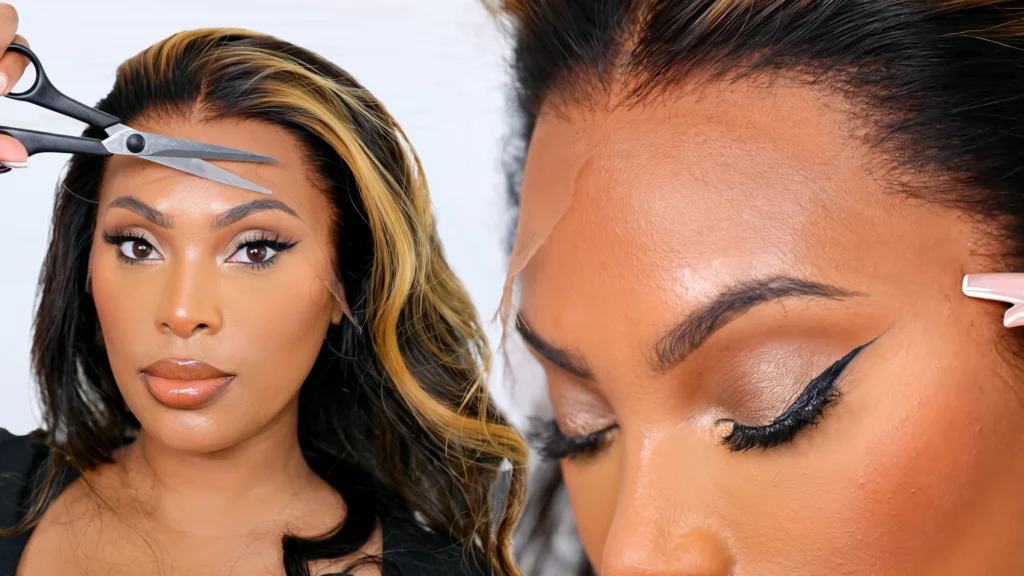
Wearing a lace wig for the first time can feel a little intimidating. You might have already chosen the perfect length, colour and texture, only to discover that getting the wig onto your head is just one part of the process. There’s lace to trim, a hairline to check and the question of whether everything will stay in place once you leave the house.
For beginners, cutting the lace is often one of the more nerve-racking steps. Trim too far back, and you risk damaging the appearance of the hairline. Leave too much lace in front, and the edge may become noticeable against your forehead.
That’s where pre-cut lace wigs come in. By removing one of the more delicate preparation steps, they promise a less complicated first installation.
But does having the lace trimmed in advance actually make a wig easier to wear? In many cases, yes, although there are a few details worth understanding before choosing one.
Why Cutting Lace Can Be Difficult for First-Time Wig Wearers
Traditional lace front wigs often arrive with extra lace extending beyond the hairline. This material gives the wearer or stylist room to trim the front edge according to the desired fit.
For someone with experience, that process may be fairly straightforward. For a beginner, however, it can be surprisingly easy to make a mistake.
The main difficulty is deciding how much lace to remove. Cutting too close to the hair knots can affect the hairline, while an uneven cut may create an edge that is harder to conceal.
It’s also difficult to judge the result when the wig isn’t positioned correctly on the head.
Some beginners try to solve the problem by repeatedly trimming small sections. That can work, but it requires patience, steady hands and a clear understanding of where the natural-looking hairline begins.
The pressure is greater because lace trimming is largely irreversible. Once the material has been cut away, it cannot simply be restored.
A pre-cut design removes much of that uncertainty.
What Pre-Cut Lace Actually Changes
A pre-cut lace wig arrives with the excess lace already trimmed by the manufacturer.
Instead of beginning with scissors, the wearer can focus on preparing their natural hair, positioning the cap and checking how the front edge sits against the skin.
This can make the first installation feel more manageable.
However, pre-cut lace doesn’t mean that every part of the wig has been prepared.
Some products include additional features such as pre-plucked hairlines or pre-bleached knots, while others only have the lace trimmed. These details should be checked separately.
A pre-plucked hairline is designed to create a more gradual transition in hair density near the front. Bleached knots may help make the points where hair is attached to the lace less noticeable, although results depend on the hair and construction.
Pre-cut lace addresses a different issue: the shape and length of the material extending beyond the hairline.
Together, these features can reduce preparation, but none of them guarantees a perfect fit.
Does Pre-Cut Lace Look More Natural?
It’s easy to assume that a pre-cut lace wig will automatically look more realistic than one that needs trimming.
The reality is more complicated.
A natural-looking hairline depends on several factors, including lace colour, material thickness, hair density, knot visibility and how well the cap fits.
This is where HD lace becomes relevant. High-definition lace is typically designed to be fine and relatively sheer, helping the material blend with the appearance of the scalp when the colour, fit and installation are suitable.
The thinner construction can make the front edge less noticeable, but it also requires careful handling.
Pre-cut lace and high-definition lace serve different purposes.
One describes how the front edge has been prepared. The other describes the type of lace used in the wig.
A wig can have HD lace that still needs trimming, just as a pre-cut wig can use another lace material.
For a beginner, the most convenient option may combine several features, but it’s important to understand what each one contributes.
Even a beautifully prepared hairline can look unnatural if the cap is too large, the lace doesn’t suit the skin tone or the wig is positioned incorrectly.
Pre-Cut Doesn’t Always Mean Glueless
Another common misunderstanding is that a wig with pre-cut lace can automatically be worn without adhesive.
These are separate features.
A glueless wig is designed to be secured without relying on traditional lace glue, often through adjustable straps, elastic bands or other cap features. The exact construction varies between products.
Pre-cut lace simply means the front material has already been trimmed.
Some pre-cut wigs are also designed for glueless wear, which can be particularly appealing to beginners who want to avoid learning adhesive application immediately.
Others may still require glue, tape or another securing method to achieve the intended fit.
This distinction matters when shopping.
If you want a wig that can be put on and removed without an adhesive installation, look specifically at the cap construction rather than relying on the words pre-cut alone.
A secure fit is especially important if you plan to wear the wig for a full day.
What Your First Installation Might Look Like
One of the clearest advantages of pre-cut lace is that it can simplify the order of preparation.
With a traditional lace wig, you may need to position the wig, assess the hairline, remove it or secure it for trimming, and then make further adjustments.
A pre-cut design allows you to begin closer to the final fitting stage.
Start by arranging your natural hair so that it lies as flat and comfortably as possible beneath the cap. Braids, twists or another low-profile style may work depending on your hair length and texture.
Next, place the wig on your head and check that the front edge follows your natural hairline without sitting too far forward.
Adjust the straps or other securing features according to the manufacturer’s instructions. The wig should feel stable without creating uncomfortable pressure.
Once the fit is correct, use your fingers or a suitable brush to arrange the hair into the intended style.
Before heading out, check the appearance from the front and both sides in natural light.
The process may still take practice, particularly if you’ve never worn a wig before. But removing the lace-cutting stage gives you one less thing to worry about.
How Pre-Prepared Wigs Fit Into a Beginner’s Routine
Convenience has become an important consideration in wig design, especially for people who want to change hairstyles without spending a long time on installation.
Some manufacturers now offer wigs with several preparation steps completed before delivery.
WowAngel, for example, has a Pre-Everything Wig collection that includes designs described as having pre-cut lace, pre-plucked hairlines and pre-bleached knots.
These features address different parts of the installation process, from reducing visible knots to eliminating the need for initial lace trimming.
For someone new to wigs, the appeal is understandable.
Instead of learning multiple preparation techniques at once, the wearer can concentrate on getting comfortable with the cap, understanding how it fits and practising basic styling.
That doesn’t mean a pre-prepared wig requires no attention.
You may still need to adjust the cap, manage the natural hair underneath and maintain the wig between wears. Different styles and constructions also have different care requirements.
The real advantage is reducing the number of unfamiliar steps involved in the first few installations.
When a Traditional Uncut Lace Wig May Be Better
Despite the convenience of pre-cut lace, some wearers may prefer receiving a wig with the extra lace intact.
The main reason is flexibility.
An experienced stylist can trim the lace according to the wearer’s forehead shape, preferred placement and intended attachment method.
This can be useful when the standard pre-cut shape doesn’t suit the individual particularly well.
Someone who frequently works with professional wig installers may also prefer the freedom to customise the front edge.
Uncut lace can provide additional material during the initial fitting process, although it still needs to be handled carefully.
For beginners, the decision often comes down to confidence and priorities.
If you want to minimise preparation and aren’t comfortable trimming delicate lace, a pre-cut option may be appealing.
If you plan to have the wig professionally installed and want more control over the final hairline shape, an uncut design may be worth considering.
Neither option is automatically better for every wearer.
What to Check Before Buying Your First Pre-Cut Lace Wig
The first thing to check is the cap size.
Even a carefully prepared hairline won’t look or feel right if the wig is too loose or too tight. Measure your head according to the seller’s instructions rather than assuming that a standard size will fit.
Next, look at the lace area.
A closure wig generally has a smaller lace section than a full frontal design. That can influence parting options, styling flexibility and the amount of lace that needs attention.
Consider the hair texture and length as well.
Long, straight styles can require regular detangling, while curly wigs may need a different maintenance routine to preserve their shape.
It’s also worth checking which preparation steps have already been completed.
A product described as beginner-friendly may have a pre-plucked hairline but still require lace cutting. Another may arrive with the lace trimmed but need additional adjustments before wearing.
Finally, review the return policy before making permanent alterations.
Some retailers restrict returns once lace has been cut or a wig has been worn or modified. Understanding those conditions beforehand can help you avoid an expensive mistake.
Is Pre-Cut Lace Worth It for Your First Wig?
For many first-time wig wearers, pre-cut lace can make the experience easier by removing one of the most delicate parts of installation.
It reduces the risk of cutting the hairline incorrectly and allows beginners to spend more time learning how the wig should fit and feel.
However, it doesn’t solve every installation challenge.
Cap sizing, lace appearance, hairline density and attachment methods still influence the result. A pre-cut wig that fits poorly may be less comfortable than a traditional lace wig that has been carefully adjusted.
The best choice depends on which part of the process you find most intimidating.
If trimming lace is your main concern, having that step completed in advance can make a meaningful difference. If your priority is avoiding adhesive, pay closer attention to whether the wig is genuinely designed for glueless wear.
Your first wig doesn’t have to involve mastering every technique immediately.
A style that feels comfortable, looks appropriate for your preferences and gives you room to learn is a much better starting point than one that makes the experience unnecessarily complicated.