
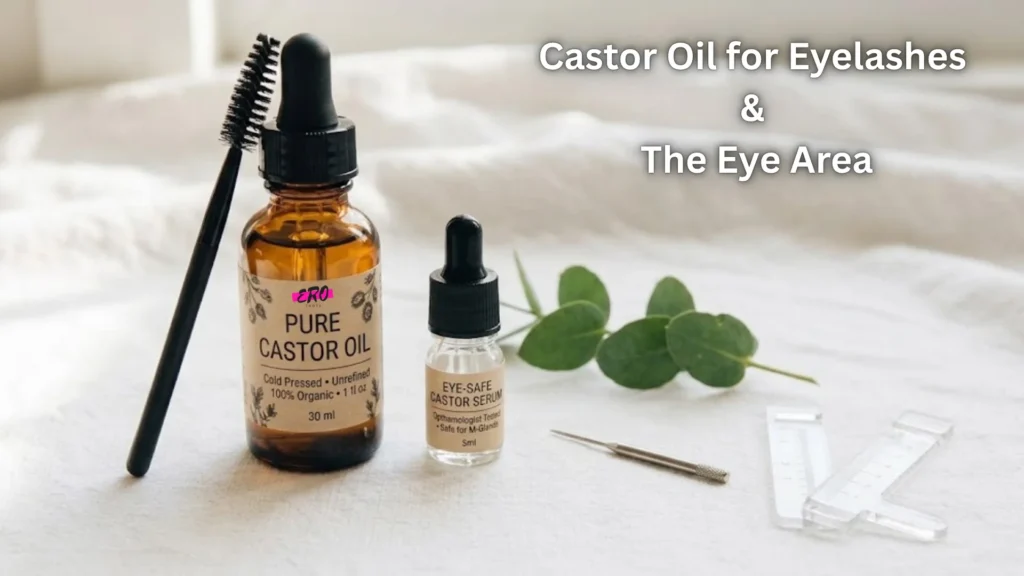
Castor oil is now a familiar part of many beauty routines, particularly for eyelashes and brows. People are drawn to its thick texture and glossy finish because it can make lashes look smoother and more defined without requiring several additional products. That appeal has helped fuel interest in using castor oil around the eyes, especially among those asking whether it offers benefits beyond improving the look of their lashes.
Although castor oil is common in cosmetics, applying it near the eyes calls for extra caution. Because eyelashes are so close to the eye, a product placed on them can readily reach the eye’s sensitive surface. Knowing what castor oil might do cosmetically and what it should not be expected to do can help prevent avoidable problems.
Can Castor Oil Improve the Appearance of Eyelashes?
Castor oil is often discussed as a natural choice for making eyelashes look healthier. By coating the lashes, it may leave them looking smoother and shinier, which can make them stand out more, especially when they are naturally dry or lack definition.
That visible effect helps explain why castor oil is still common in homemade beauty routines. Some people brush a small amount onto their lashes before bed. Others opt for commercially prepared lash products that contain castor oil. With a formulated product, following the application instructions may be simpler, and there may be fewer unnecessary ingredients.
Claims about eyelash growth are harder to substantiate. Castor oil for eyes is often promoted online as a way to make eyelashes longer, thicker, or fuller, but conditioned-looking lashes are not the same as newly stimulated growth. Evidence that castor oil can produce the dramatic results sometimes claimed in beauty posts remains limited.
The skin around the eyes is another place where castor oil may offer cosmetic benefits. Because it has a rich consistency, it can help limit moisture loss, leaving dry patches feeling softer. For someone mainly concerned with dryness on the eyelids, a product made specifically for the eye area may be useful.
Cosmetic benefits should not be mistaken for treatment of an eye condition. Moisturizing the skin around the eyes or conditioning the eyelashes does not, by itself, improve vision, treat dry-eye disease, or relieve irritation within the eye.
Nutrition also comes up in discussions of beauty routines. Dietary supplements containing ingredients such as hydrolyzed collagen peptides are formulated to support the skin and connective tissue. They are separate from topical castor oil and should not be described as treatments for eyelash or eye conditions.
Precautions to Take When Using Castor Oil Near Your Eyes
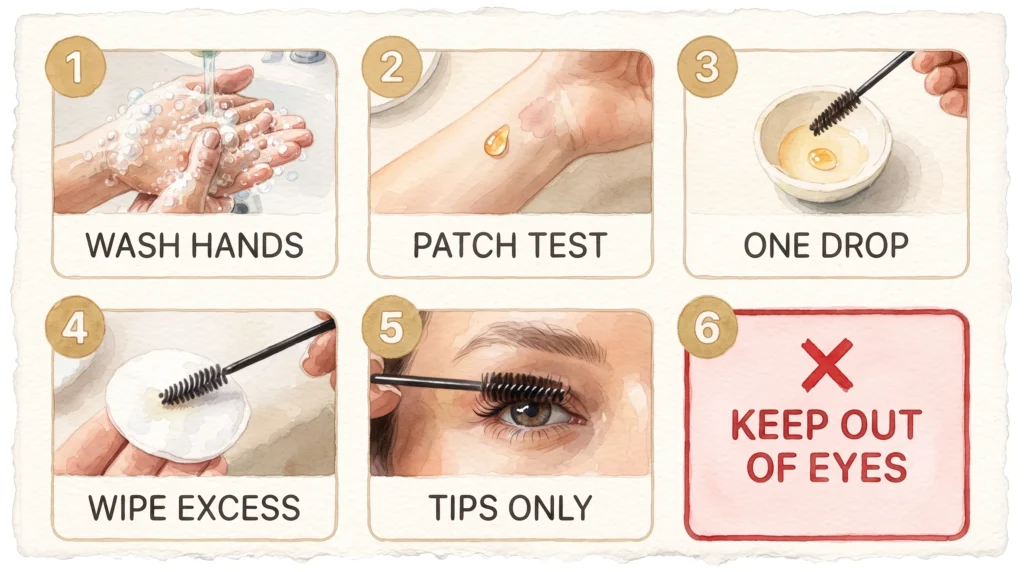
The main precaution is simple: keep ordinary cosmetic castor oil away from the eyes. A product sold for skincare or eyelashes is not necessarily safe to apply directly to the eye. Ocular products must meet different safety requirements and be formulated specifically for that use.
If you use a castor oil-based lash or eye-area product, check the label first. Apply only the recommended amount, and keep it away from the inner edge of the eyelid. More product does not necessarily improve cosmetic results. It may simply make it more likely to spread into the eye.
Clean hands matter too. Wash them before you touch your eyelashes or the skin around them. Brushes and applicators should be kept clean, and never shared with anyone else. That matters even more around the eyes, where contamination may lead to avoidable irritation.
If your skin is sensitive, be cautious when trying a new product. Apply a small amount to another area first. This can reveal a reaction before you use it near your eyes. Stop using it if itching, burning, swelling, excessive watering, or persistent redness occurs.
Your eyelashes deserve attention too. Sudden loss, thinning, crusting, swelling, or irritation that does not go away may stem from causes unrelated to skincare. Rather than trying one oil or beauty product after another, have unusual or persistent symptoms evaluated by an appropriate professional.
Good habits matter too. Try not to rub your eyes, take off eye makeup gently, and replace older cosmetics once they have passed their recommended use period. Regular screen breaks and protection from excessive sunlight also belong in a sensible daily eye-care routine.
Castor oil may fit into a cosmetic routine, especially in products designed to condition eyelashes or moisturize the skin around them. That reputation as a natural beauty ingredient, though, is not evidence that castor oil treats eye conditions or causes dramatic eyelash growth. Around the eyes, safer use means keeping it out of the eye, following the directions, and watching for any unusual reaction.