
A glycolic peel sounds pretty harmless until you actually get one done and realise your face suddenly feels tight, hot and weirdly shiny. Then comes the next problem: you’ve got work tomorrow, dinner plans tonight or at the very least a camera you’d rather avoid for the next 48 hours.
So naturally, people start wondering how soon makeup can go back on. The annoying answer? It depends less on the clock and more on what your skin looks and feels like afterwards.
Some people use a mild at-home glycolic peel and barely go pink. Others get a stronger professional treatment and spend the next few days looking like they stood too close to a bonfire. Those are not the same recovery process, even if both technically count as “glycolic peels”.
Still, one thing stays fairly consistent across dermatology advice: piling makeup onto freshly peeled skin too soon is usually a bad idea.
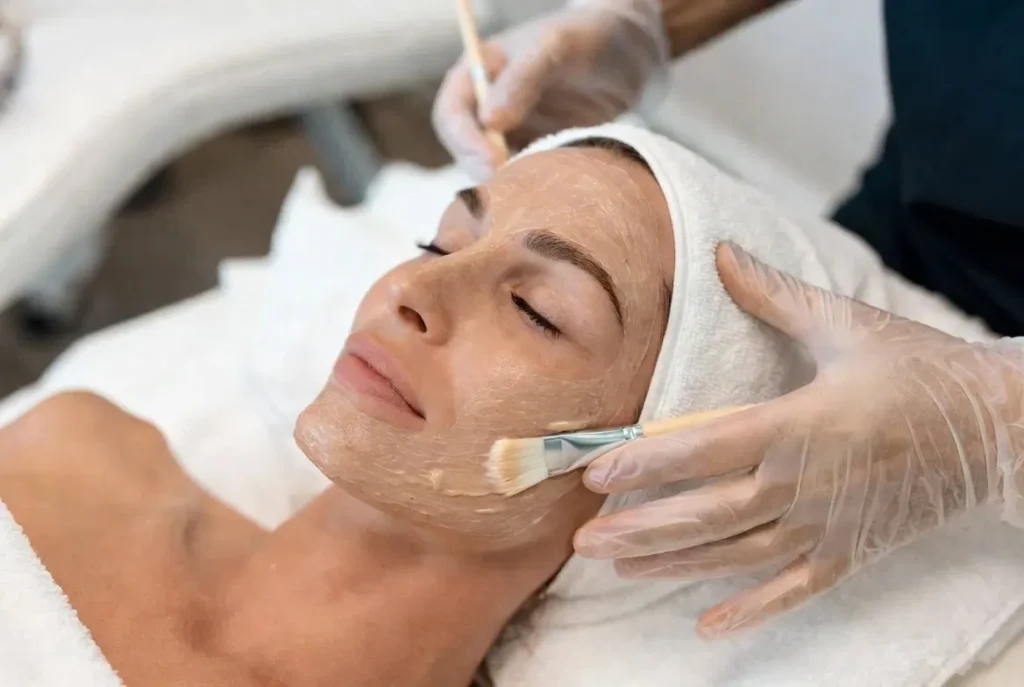
Why Skin Gets So Reactive Afterwards
Glycolic acid is an alpha hydroxy acid, or AHA. It exfoliates by loosening the bonds holding dead skin cells together so they shed more easily. That’s why glycolic peels are commonly used for dullness, uneven texture, acne marks and fine lines.
The downside is your skin barrier takes a temporary hit afterwards.
That outer layer of skin normally helps hold moisture in while keeping irritants out. Right after a peel, it’s more vulnerable than usual. Even products your skin normally tolerates perfectly fine can suddenly sting or leave you blotchy for hours.
This is also why dermatologists usually tell patients to keep skincare very simple after chemical peels. The skin is recovering, not asking for a 12-step routine.
The American Academy of Dermatology notes that chemical peels can cause temporary redness, dryness and irritation while skin heals. Stronger peels can also lead to visible peeling for several days.
Can You Wear Makeup the Same Day?
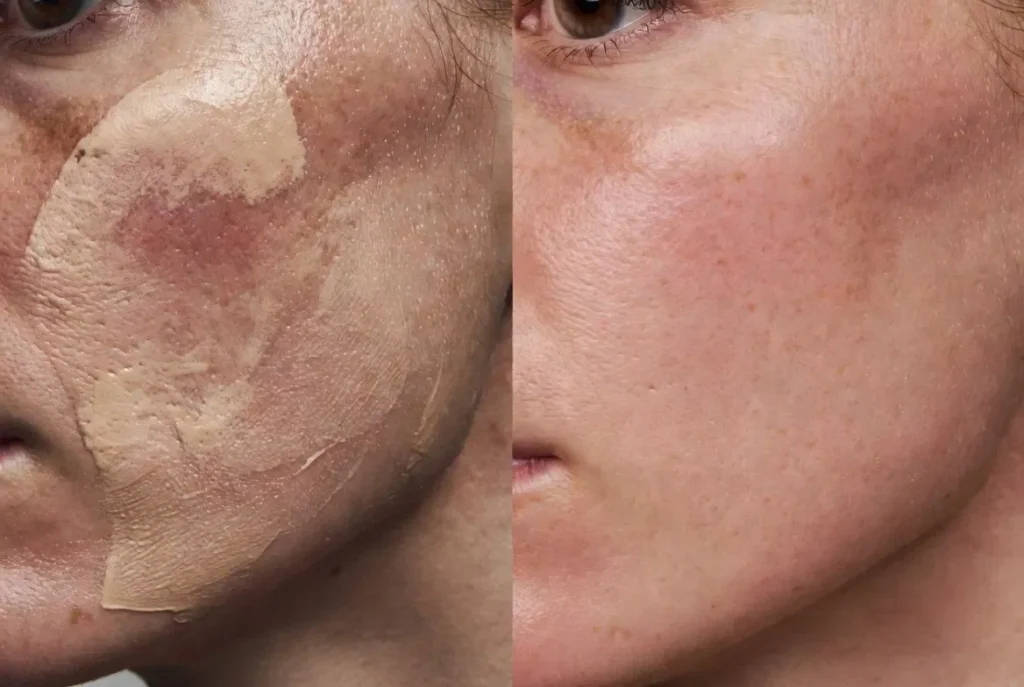
Usually not recommended.
Most clinics performing glycolic peels advise patients to avoid makeup for at least the rest of the day, especially after medium-strength or professional treatments. Freshly exfoliated skin is more prone to irritation, and rubbing foundation into it with brushes, fingers or sponges does not exactly help.
There’s also the practical side of it: makeup tends to look terrible on skin that’s actively peeling.
Foundation catches on flakes. Concealer separates around dry patches. Powder somehow makes everything look worse. You spend 20 minutes trying to fix it and end up wiping most of it off anyway.
If your skin still burns when you apply moisturiser, that’s a pretty obvious sign it’s not ready for makeup yet.
What About the Next Day?
This is where things split depending on the type of peel.
Mild At-Home Glycolic Peels
If you used a lower-strength glycolic product at home and your skin only feels mildly dry or slightly pink, light makeup the next day is often tolerated reasonably well.
Light is the important word there.
A tinted moisturiser, lightweight concealer or mineral makeup usually makes more sense than thick matte foundation that sits heavily on the skin for 10 hours straight. Skin recovering from exfoliation generally reacts better to simpler formulas without strong fragrance or harsh active ingredients.
Still, if your face feels hot, itchy, tight or unusually sensitive, forcing makeup onto it just because 24 hours passed is probably pushing your luck.
Stronger Professional Peels Are Different
Professional glycolic peels can use much higher acid concentrations than over-the-counter products. Recovery also varies depending on how aggressive the treatment was and how sensitive your skin naturally is.
Some dermatology practices recommend waiting at least 24 to 48 hours before applying makeup after stronger superficial peels. Others advise waiting until visible irritation settles down completely.
If your skin is:
- peeling
- very red
- tender
- shiny and tight
- sore when touched
…then covering it with makeup is probably not helping the healing process.
Honestly, this is usually the stage where moisturiser and sunscreen matter a lot more than cosmetics.
Mineral Makeup Gets Mentioned a Lot — But Don’t Treat It Like Magic
You’ll see mineral makeup recommended all over the place after peels because it’s often lighter and less irritating than heavier traditional formulas.
| Mineral Makeup Type | Usually Better After a Glycolic Peel? | Why It’s Often Preferred |
|---|---|---|
| Loose mineral powder foundation | Yes, once irritation settles | Lightweight and less likely to feel heavy on recovering skin |
| Tinted mineral moisturiser | Often yes | Adds light coverage without clinging as badly to dry patches |
| Fragrance-free mineral concealer | Sometimes | Can work for small areas if skin is no longer stinging or peeling |
| Heavy full-coverage mineral foundation | Not always | Thick formulas can still sit badly on flaky skin |
| Mineral products with shimmer or glitter | Best avoided early on | Can highlight peeling, texture and irritation |
| Mineral makeup with fragrance or added actives | Usually not ideal | Freshly exfoliated skin reacts more easily to irritating ingredients |
That part is broadly true.
Some mineral products contain fewer potential irritants and sit more comfortably on recovering skin. But “mineral” does not automatically mean gentle. Certain formulas still contain ingredients that sensitive skin can react badly to after exfoliation.
If something stings the second it touches your face, don’t overthink it. Your skin is telling you no.
Clean Makeup Brushes Matter More Than People Think
This part gets ignored constantly.
Freshly peeled skin is more vulnerable to irritation and bacteria, which means using dirty makeup brushes right after a peel is asking for trouble. Brushes and sponges collect oil, dead skin, old makeup and bacteria surprisingly quickly.
Normally your skin barrier handles that reasonably well. After a peel, not so much. If you absolutely need makeup once your skin has calmed down enough, at least start with clean tools.
The Products Worth Avoiding for a Few Days
A lot of people accidentally wreck their skin after peels by combining too many harsh products at once.
Your face does not need “extra exfoliation” after being exfoliated already.
For a few days afterwards, most dermatologists recommend going easy on:
- retinoids
- scrubs
- benzoyl peroxide
- strong vitamin C serums
- salicylic acid
- additional exfoliating acids.
Simple cleanser. Moisturiser. Sunscreen. That’s usually enough for the short term.
Sun Protection Suddenly Matters More
This part is backed pretty well medically.
Chemical exfoliants like glycolic acid can increase sensitivity to ultraviolet radiation because they remove part of the outer protective layer of skin. Research published in The Journal of Dermatological Treatment found that glycolic acid use can increase sun sensitivity, which is why sunscreen gets pushed so heavily after peels.
The American Academy of Dermatology also recommends broad-spectrum SPF protection after chemical peels to help reduce irritation and lower the risk of post-inflammatory hyperpigmentation.
And honestly, hyperpigmentation is one of the bigger reasons people regret being careless after peels, especially deeper skin tones that are naturally more prone to pigment changes after inflammation.
Signs You Started Wearing Makeup Too Early
Your skin usually makes this fairly obvious.
Watch for:
- stinging
- increased redness
- burning
- itchy patches
- worsening flaking
- tiny bumps
- irritation that suddenly gets worse after makeup application
That doesn’t necessarily mean you caused serious damage. More often, it just means your skin barrier needed more recovery time than you gave it.
The Bottom Line
You can usually wear makeup after a glycolic peel once your skin calms down and no longer feels irritated — but the timeline varies a lot depending on the strength of the peel and how reactive your skin is afterwards.
A mild at-home peel might only need a day before light makeup feels comfortable again. Stronger professional peels can take longer, especially if there’s visible peeling or lingering redness.
The main thing is not rushing it just because you’re tired of looking slightly shiny and annoyed at the world.
Your skin heals faster when you stop messing with it.
Sources
- American Academy of Dermatology: Chemical peel aftercare guidance
- Journal of Dermatological Treatment: research on glycolic acid and photosensitivity
- Cleveland Clinic: chemical peel recovery recommendations
- Mayo Clinic: alpha hydroxy acid and skin sensitivity information