
Most people pick the leg mehndi designs first and then try to find time for it. That’s backwards, and it’s why so many brides end up with orange feet in their own photographs.
The stain needs about forty-eight hours to reach full color. The application itself runs anywhere from twenty minutes to seven hours depending on what you’ve chosen. Work back from your function date and the design almost picks itself.
Four days out: decide by the hours you have, not the picture you saved
This is the point where the choice is still open, so be honest about your schedule before you fall in love with a reference image.
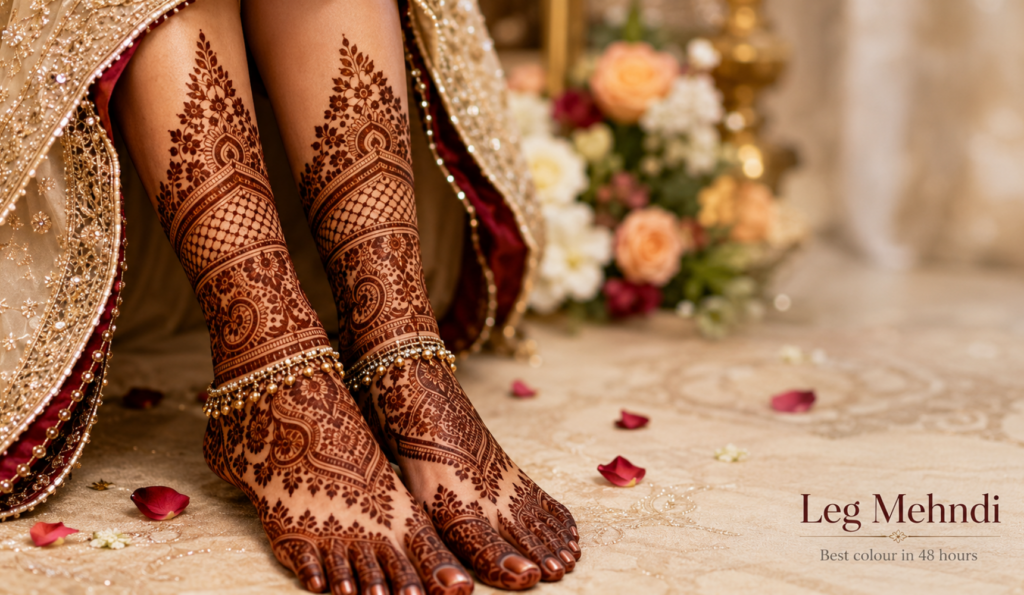
If you can spare under an hour, you’re looking at an ankle band or a small anklet motif, maybe a chain effect dropping toward the foot. Twenty to forty minutes for both legs, Rs. 500 to 1,500, and plenty of artists fold it into a hand mehndi booking without charging separately. Ask, because it varies.
An afternoon gets you feet and toes. Toe rings, a motif across the top of the foot, sometimes reaching the ankle bone. Forty-five minutes to ninety, mostly depending on how much detail goes onto the toes, which are slow and fiddly work. Rs. 1,000 to 3,000 for the pair.
Half a day is mid-calf, two to three hours per leg, Rs. 3,000 to 8,000.
A full day is knee-down coverage, three to five hours per leg, Rs. 6,000 to 15,000, and the range is that wide because a semi-filled design and one with no negative space left take very different amounts of time to execute.
Full bridal leg is its own category. Five to seven hours per leg, sometimes above the knee to mid-thigh, and bridal artists usually work in teams because one person alone doing both legs plus hands is a fourteen-hour day nobody wants during a wedding week. Rs. 15,000 to 50,000, with no real ceiling above that in major cities.
One thing to confirm while you’re still negotiating: whether the quote is per leg or for the pair. Artists use both conventions and the difference matters.
Three days out: book the artist, and ask the questions that change the price
Cost moves on things that have nothing to do with how the design looks.
- Density of fill. Negative space is faster and therefore cheaper. Fully packed designs cost more because of chair time, not difficulty.
- One artist or a team. Teams cost more per hour and finish in a fraction of the time. For bridal work this is usually worth it.
- Travel, if they’re coming to you.
- Season. Wedding season is a different market from an ordinary weekend.
- Reference versus original. Bringing an image is standard and expected. Asking the artist to design something from scratch costs more.
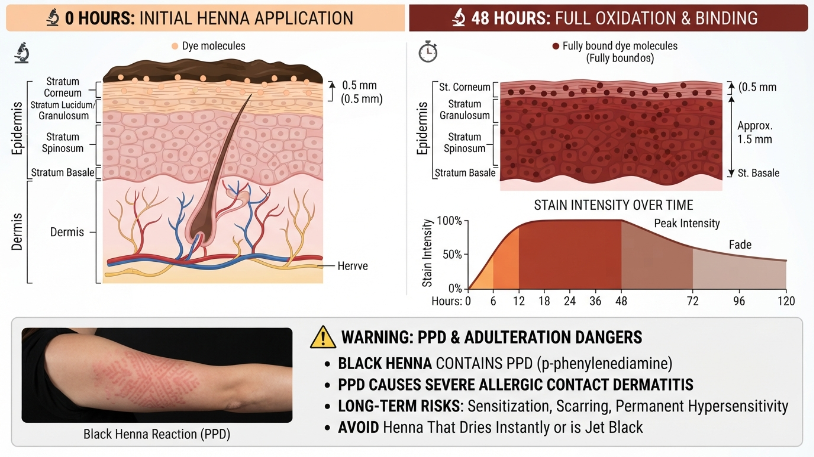
Ask about the paste too, specifically when it was mixed. Fresh paste stains better than anything you can do afterward, and an artist who mixed that morning is worth more than one who didn’t, regardless of what aftercare they recommend.
If anyone offers you something that stains jet black immediately, decline it. That’s not henna. Black henna containing PPD causes chemical burns and permanent scarring in a meaningful number of people and it’s banned for skin use in a lot of countries. Real henna is brown-red and it develops slowly.
Two days out: this is the application window
Thursday application for a Saturday function is the sweet spot, and if you take nothing else from this, take that.
The stain peaks around forty-eight hours after the paste comes off, then holds its darkest for another day or two before it starts fading. Applying two days ahead means the color is at maximum exactly when the photographs happen.
Block out more time than the application needs. Mid-calf work and above means you cannot sit normally afterward, legs extended, feet touching nothing, for another two to three hours while it dries. A three-hour application is really a six-hour commitment, and that’s the miscalculation that catches people out.
Have someone available to help you. You will not be able to do anything for yourself for several hours, and that includes eating, going to the bathroom, and answering your phone.
The twelve hours after: what actually darkens it
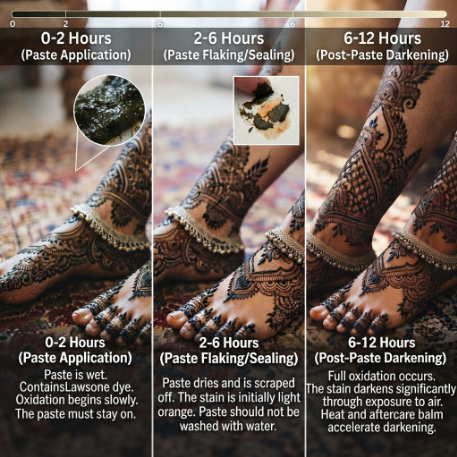
Leave the paste on as long as you can stand, six hours minimum, overnight if you can manage sleeping with it.
Scrape it off, don’t wash it off.
- Water in the first twelve hours after removal is the single most common way people end up with a weaker stain than they paid for.
- Heat helps. Sitting somewhere warm while it develops does more than most of the tricks people swear by.
Skin thickness explains most of the color variation you’ll see. Soles stain far darker than the tops of feet because the skin is thicker and holds more dye, which is worth knowing when you’re choosing placement, though sole work also wears off fastest since you’re walking on it. Two days of proper color there, then patchy.
One day out: still workable, slightly compromised
You can still get away with it. The color at the function will be slightly under its peak, more red than deep brown, and in photographs the difference is noticeable if you’re looking for it.
Keep the design smaller than you would have with more time. A dense knee-down design applied the day before will be visibly under-developed, whereas ankle and foot work at eighteen hours looks close enough to fine.
The morning of: only feet, and only if you must
Same-day application above the ankle is a mistake. The mehndi will photograph orange, and no amount of aftercare speeds up the chemistry.
If you’re out of options, keep it to toes and a small foot motif, use the freshest paste you can find, and accept the color for what it is.
The other thing to sort on the morning of is footwear. Anything closed will smudge a fresh foot design on the way to the venue, so if you’re wearing shoes rather than sandals, the ankle band from four days ago was the right call and this is why. Ankle work sits above the shoe line and survives the day.