
The palm takes the darkest stain of anywhere on the body. Thicker skin, better grip on the dye, so a thin pattern that fades to nothing on a forearm comes up deep red brown here. Which changes the math. One clean idea connected across the hand will beat an hour of dense filling, and it’ll photograph better too.
This guide is arranged by situation rather than a numbered catalog, because your outfit, your time, and your jewelry pick the right style faster than scrolling photos does.
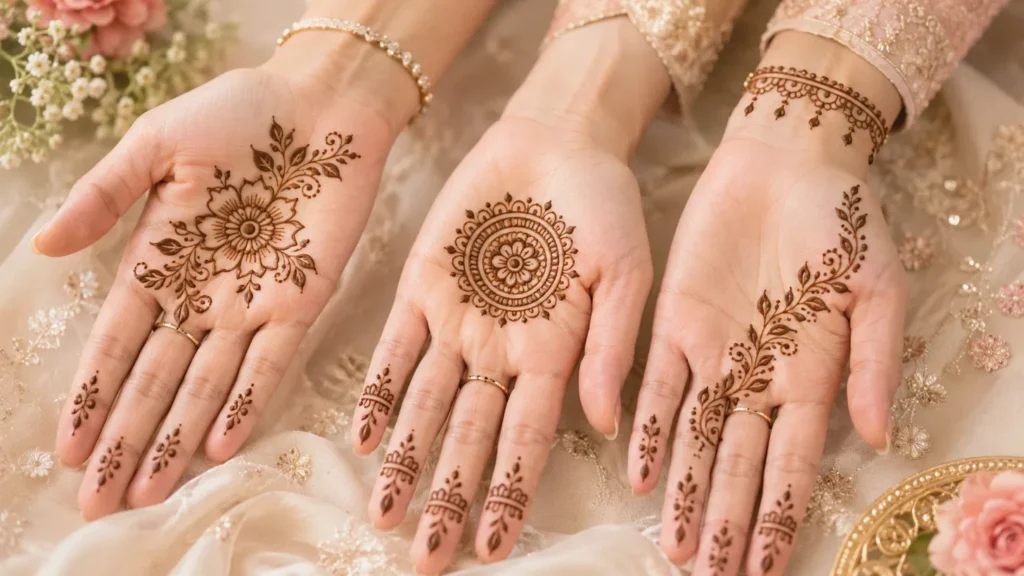
What counts as simple on a front hand
Three zones: fingers, palm, wrist.
A design that connects at least two of them looks planned. A flower here, stray dots there, a band at the wrist with nothing linking them reads unfinished, and scattering is the most common way simple mehndi goes wrong.
So one main focus. Light support from the other zones. Bare skin left around the pattern on purpose.
Start with one flower if you’re not sure
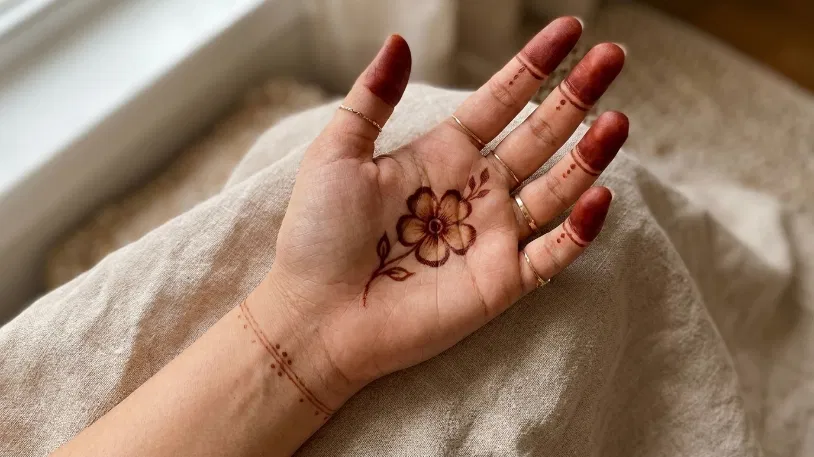
One medium bloom in the center of the palm, a few leaves around it, soft tips on the fingers. Flowers follow the way a hand curves, which is why this stays the default for Eid, Diwali, and bridesmaid duty.
The mistake is petal greed. A crowd of tiny filled petals looks busy and hides the depth of the stain. One clear flower with a couple of leaves does more.
Mandalas for Traditional Henna Design’s
A circular mandala centered on the palm gives the eye one anchor, and it sits with traditional clothes better than anything else on this list.
Fingers stay light, just dots or thin bands. The wrist can stay bare or close with a single thin line.
It forgives a beginner’s hand too, since the repeating segments give you a rhythm to follow as you draw. Just keep the circle even, and size it to what your hand can keep neat. A small crisp mandala over a big shaky one, every time.
Arabic style covers a third of the hand and still looks full
Bold outlined flowers and curved vines flowing on the diagonal, one finger down across the palm toward the wrist.
The open skin between the shapes is part of the design. Fill those gaps and it drifts into heavy bridal work, so when your hand keeps wandering toward the bare spots, stop earlier than feels natural.
This is the engagement and party favorite, mostly because it looks bold in photos without the weight.
Fingers only, when time is short or the ring is the point
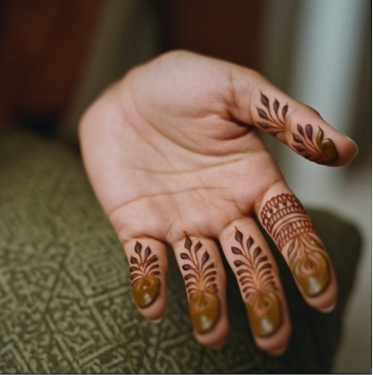
Detail on the fingers, palm nearly bare or carrying one tiny motif. Fifteen minutes, give or take.
It also quietly makes the best engagement photos, because it frames a ring instead of competing with it.
One rule holds it together: every finger gets the same treatment. Bands on all of them, or dots on all of them. The moment each finger has its own idea, the hand looks accidental.
The bracelet style, drawn where bangles won’t sit
Thin bands at the wrist with dots and small hanging drops, maybe one light trail toward the palm. Done well it reads as jewelry from a few feet away.
Placement decides whether it survives the evening. Set it slightly above or below where your actual bangles will rest, because stacked in the same spot the metal hides the work and rubs the fresh stain all night. Offset, the henna and the bangles layer together instead.
Plan for a useless hand while it dries
Feet forgive mistakes while the paste dries. Hands don’t.
The paste needs hours on the skin, and palm creases crack it the moment you grip anything. For all of those hours, that hand is out of service.
So apply after dinner, not before you need to do things.
Doing your own hands? Draw the non-dominant one first while your good hand still works. For the second hand, either recruit someone or give your dominant hand the finger design, since there’s less surface to wreck.
Keep the fingers relaxed and slightly curled while it dries. Not fisted.
And put the phone somewhere else. Every scroll smears a petal. Some people tape a loose tissue over the design before sleeping, which works as long as it stays loose.
Getting the dark stain
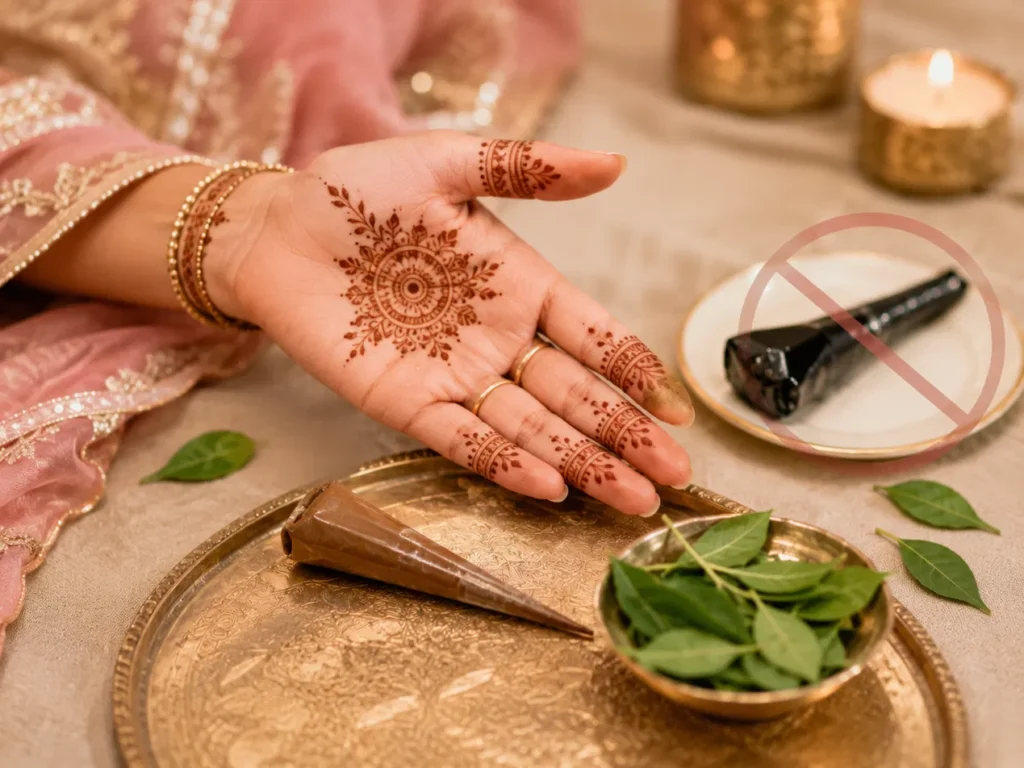
Clean, dry skin first. No lotion or oil beforehand, because the paste grips bare skin and slides on anything greasy.
Draw slower than feels necessary. Light designs have no dense filling to hide a wobble.
For the color itself:
- Hours on the skin, and longer runs darker.
- Scrape the dried paste off instead of washing it, then keep the hand away from water for the rest of the day.
- Warmth deepens the stain. Cold hands develop lighter.
It lifts off orange and ripens to red brown over a day or two, so judge the color tomorrow, not tonight.
One thing worth knowing about palms specifically: deepest color on the body, fastest fade, because you wash your hands all day. Expect one to two weeks from a design you love.
Skip anything promising black
Natural henna stains orange through red brown, never true black.
Cones sold as black henna usually get there with PPD, a hair dye chemical that doesn’t belong on skin, and the FDA has logged adverse reactions to temporary tattoos including black henna, some severe enough to blister and scar.
Fresh natural cones from a source you trust. A dramatic color claim is the signal to walk away.