

Your hair speaks volumes about your overall health and confidence, yet countless people find themselves frustrated with their hair care routine simply because they haven’t cracked the code of their unique hair type. The secret to achieving those coveted salon-worthy results at home lies in understanding both proper technique and having the right tools at your disposal modern innovations like a hair styler can elevate your routine when paired with solid technique and knowledge. But here’s the thing: truly effective hair care goes much deeper than just picking the right products. It’s about understanding your hair’s texture, porosity, and individual quirks, then building a consistent, personalized approach that actually works for you.
Understanding Your Hair Type: The Foundation of Effective Care
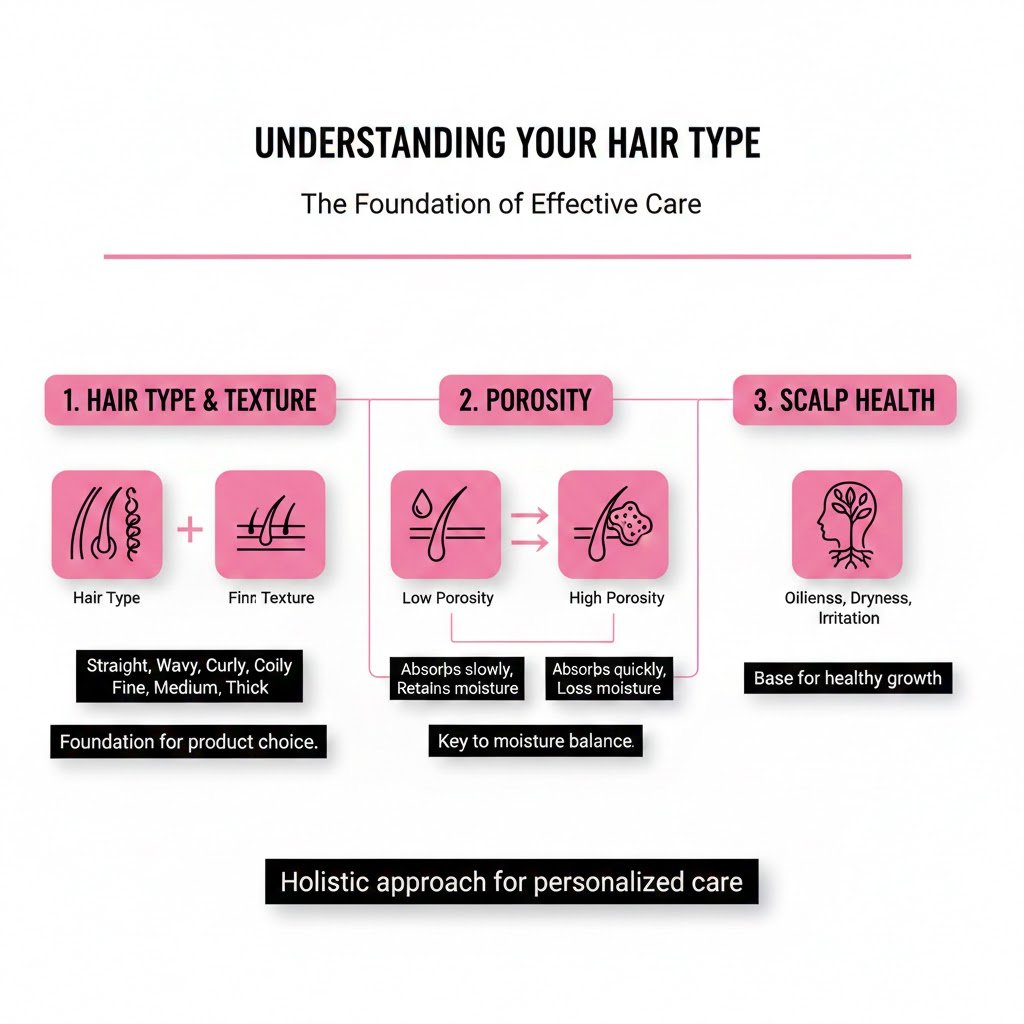
Think of identifying your hair type as laying the groundwork for everything else you’ll do. It’s a two-part puzzle: hair type (whether you’re dealing with straight, wavy, curly, or coily hair) and hair texture (fine, medium, or thick strands). Once you understand these distinctions, it becomes crystal clear why those one-size-fits-all approaches rarely deliver the results you’re hoping for.
- Here’s where things get really interesting: porosity essentially how well your hair absorbs and holds onto moisture—can make or break your entire routine.
- If you have low-porosity hair, moisture tends to bead up on the surface at first, but once it gets in, it stays put. High-porosity hair, on the other hand, drinks up moisture like a sponge but loses it just as quickly.
- This explains why your friend’s holy grail product might leave your hair looking flat or frizzy.
Don’t overlook your scalp in all of this. It’s literally the soil from which healthy hair grows, so maintaining a balanced scalp environment sets the stage for everything that follows. When your scalp is out of whack, you’ll likely see the effects in excessive oiliness, stubborn dryness, or persistent irritation.
The Core Hair Care Routine: Cleansing, Conditioning, and Protection
Cleansing: More Than Just Washing
There’s actually some fascinating science behind what happens when you wash your hair. The surfactants in your shampoo are busy molecules that grab onto dirt, oil, and product buildup, allowing water to wash it all away. But how often should you be doing this? That depends entirely on your hair type—those with oily hair might need daily washing, while anyone with dry or chemically-treated hair could probably get away with washing just twice a week.
Clarifying shampoos are like the heavy-duty cleaners of the hair world they’ll strip away stubborn buildup, but they can be pretty harsh. Moisturizing cleansers offer a gentler approach for regular use. The trick is matching your cleanser to what your hair actually needs right now, not what worked for you five years ago or what works for your sister.
Conditioning and Deep Treatment
Conditioners are essentially smoothing out your hair’s outer layer (the cuticle) and wrapping each strand in a protective coating. Most hair types need this step, but the intensity can vary. Your everyday conditioner handles the basics, while deep conditioning treatments are like sending your hair to a spa they provide intensive repair for hair that’s been through the wringer.
- The magic happens in something called the protein-moisture balance.
- Hair that’s feeling weak and stretchy probably needs more protein, while hair that’s dry and brittle is crying out for moisture.
- Get this balance wrong, and you might end up with over-conditioned hair that looks limp and lifeless definitely not the goal.
Protective Styling and Heat Management
Let’s talk about heat damage for a moment. When you expose your hair to temperatures that are too high, you’re literally changing its protein structure and that damage is permanent. Heat protectant products work like a shield, reducing direct heat exposure, but they’re not miracle workers. They can’t completely eliminate damage.
- Protective styling is all about being gentle with your hair and minimizing how much you manipulate it.
- Air-drying whenever possible eliminates heat exposure entirely, though there’s nothing wrong with heat styling as long as you’re using appropriate tools and temperatures.
- It’s all about finding that sweet spot.
Customizing Your Routine: Addressing Specific Hair Concerns
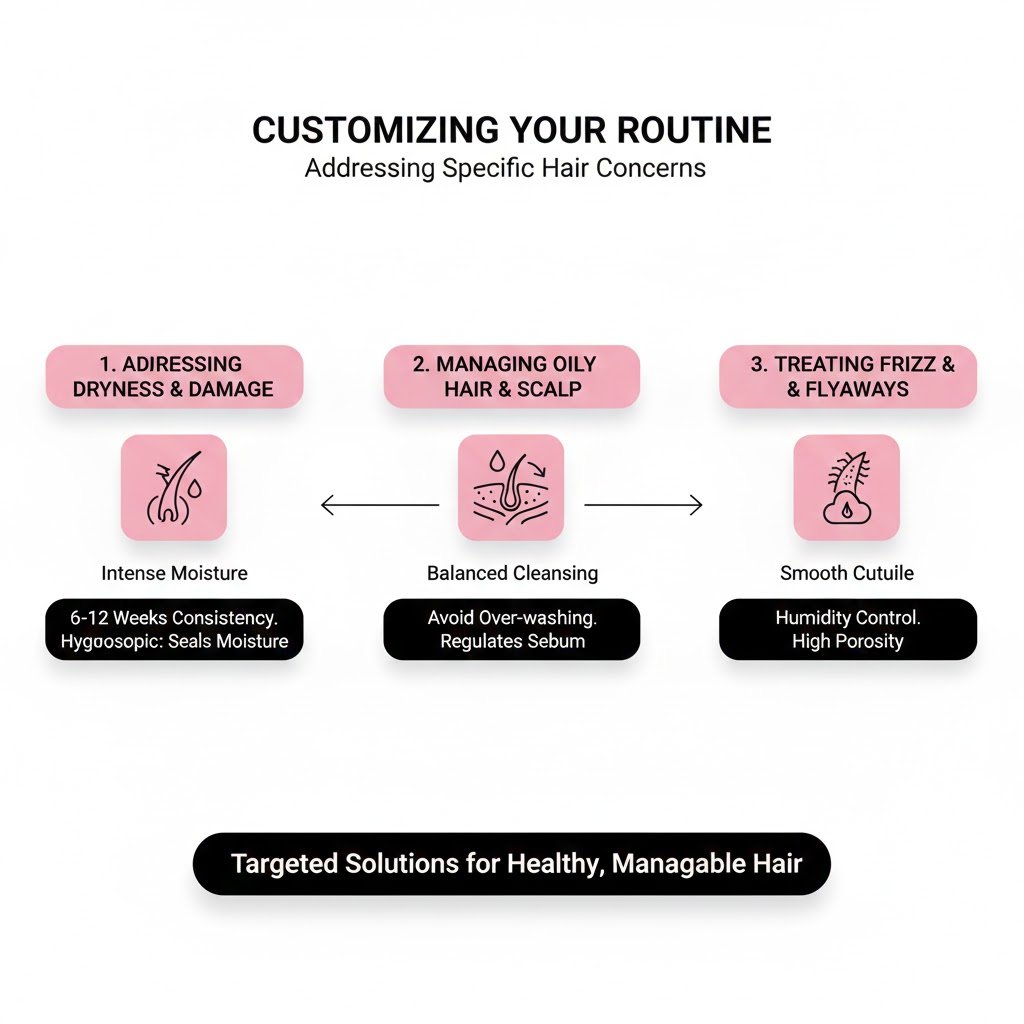
Addressing Dryness and Damage
When your hair is dry and damaged whether from sun exposure, chemical processing, or too much heat styling recovery becomes a marathon, not a sprint. You’ll need intensive moisture treatments and realistic expectations. Significant improvement usually takes anywhere from 6 to 12 weeks of consistent care, so patience is key.
Here’s something interesting: hair is hygroscopic, meaning it naturally pulls moisture from the air around it. This is why humidity control and moisture-sealing techniques become so important for maintaining healthy hydration levels.
Managing Oily Hair and Scalp
Dealing with oily hair can feel like a losing battle, especially when overactive sebaceous glands are pumping out excess sebum. Here’s the kicker: over-washing or using harsh products that strip away natural oils often triggers your scalp to produce even more oil. It’s like your scalp is saying, “Oh, we’re out of oil? Better make more!”
The solution lies in balanced cleansing that removes excess oil without completely stripping your scalp bare. Over time, this approach helps regulate your natural oil production.
Treating Frizz and Flyaways
Frizz happens when your hair’s outer cuticle layer lifts up, usually due to moisture imbalance or damage. If you have high-porosity hair, you’re especially vulnerable to humidity-induced frizz because your hair readily absorbs moisture from the environment.
Moisture-sealing techniques and strategic product layering can help create barriers against frizz formation. However, addressing the underlying porosity issues will give you more lasting results than just treating the symptoms.
Building Consistency: Creating a Sustainable Hair Care Routine
Here’s a truth that might surprise you: consistency trumps individual product quality every single time when it comes to building healthy hair habits. Most routine changes need a solid 6 to 12 weeks before you’ll see noticeable results, which means patience isn’t just helpful, it’s essential.
- Consider keeping a simple photo diary or notes about what you’re doing and how your hair responds.
- This helps you identify what’s actually working for your specific needs.
- The biggest obstacles to consistency?
- Unrealistic expectations, overly complicated routines, and the temptation to switch products before giving them time to work.
Final Thoughts
Effective hair care boils down to five fundamental principles: understanding your unique hair type, cleansing appropriately, conditioning consistently, protecting from damage, and making seasonal adjustments. Remember, hair care is deeply personal—what transforms your friend’s hair might do absolutely nothing for yours, and that’s completely normal.
When you understand the science behind each step, you’re more likely to stick with your routine long-term. Approach your hair care journey with curiosity rather than frustration, and give yourself permission to experiment and adjust as needed.
Your hair care routine is really an investment in yourself—in how you feel and how you present yourself to the world. With a solid understanding of your hair’s unique needs and consistent application of the right techniques, you can achieve healthy, beautiful hair that truly enhances your confidence and self-expression.