

Colored box braids are the one style I never talk anyone out of
Most people come in nervous about the color part. They shouldn’t be. You get all the protection of a normal braid, plus you get to actually have fun with it. Quiet or loud, both work.
So here’s the whole thing. What they are, where they come from, and how to keep a set looking good instead of dry and frizzy by week two.
What Colored Box Braids Actually Are

Box braids are a protective style. Small square sections, each one braided down with synthetic hair added in. The square parts across your scalp are where the name comes from.
The color version is no different to braid. You just feed in colored hair instead of black or brown. That’s really it. The technique doesn’t change. Only the hair does.
Where the Style Comes From
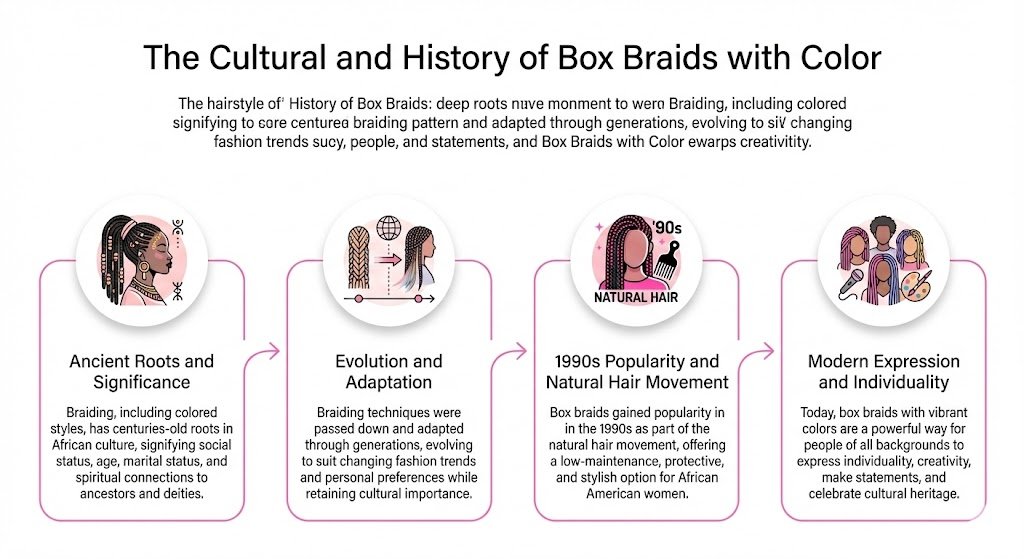
People think colored braids are new. The braiding under them is anything but.
This goes back thousands of years in Africa. The oldest known images of the style sit around 3500 BCE, out of southern Africa, and you see box braids again later in ancient Egypt. Five thousand years, give or take.
And it was never just about looking good. Braid patterns meant something. Your age. Whether you were married. Your wealth, your rank, the group you came from. On some Caribbean islands the patterns were even used to map escape routes during slavery, which still gets me every time I think about it.
The version most of us picture now blew up in the 90s. The natural hair movement was a big part of it, women stepping away from relaxers. Then Janet Jackson wore them in Poetic Justice and that was that.
That’s the short version. The point is you’re wearing something with real history behind it, which makes it a lot more than a trend. It’s a proper protective hairstyle, and part of why this hairstyle has become so popular is that it protects your hair and looks good doing both at once.
The Ways to Add Color
No single right way here. Depends how far you want to go.
Single color is the easy one. One shade, whole head. Great if you’re testing a color before you commit, or you just want something clean and bold. Braids exactly like normal, just in your color.
Multi-color is the one people get wrong. This is where I spend the most time with clients, so pay attention here. You cannot wing it. Two-tone, rainbow, whatever you’re picturing, it needs planning before a single braid goes in. Section it out deliberately. Know where every color lands. Bring reference photos, actually bring them, because “I’ll figure it out as I go” is how you end up with a muddy mess that doesn’t read as anything. And the colors have to work together or they fight each other on your head all day.
Ombre is the gradual fade, dark roots into lighter ends. Softer, adds depth without shouting. Keep the shades close for subtle, contrast them if you want it obvious.
Highlights are the quiet option. A few colored sections scattered through a natural set. Keep them spread out and even. That’s the whole trick.
Keeping Colored Braids Looking Good

Color doesn’t really change the care. Braids just need looking after, and people skip the stuff that matters.
Moisture first, and it’s not optional. Synthetic hair pulls moisture off your own and dries the scalp out. A light water-based moisturizer or a leave-in, on the scalp and the braids. Dry hair is what breaks and frizzes, so this is the daily habit worth keeping. Braiding can be drying to your natural hair on its own, and skipping this is where most problems start.
A few other things:
- Cover them at night. Silk or satin scarf or bonnet. Cotton pillowcases rough them up and steal moisture.
- Go easy on heat. Synthetic fibers don’t take heat like real hair. Too hot and they frizz, warp, or straight up melt. Low temp and a protectant if you must.
- Wash the scalp, not the length. Sulfate-free shampoo made for braids. A watered-down apple cider vinegar rinse now and then clears buildup.
Color fades. That’s just how it goes. A color-depositing conditioner or a temporary spray brings it back, but go easy. Overdo it and you get buildup, which is its own headache.
Ways to Wear Them
The styling is the fun part. A few that always land:
- Half-up, half-down. Top gathered up, rest loose. Shows the color, stays out of your face.
- Braided updo. Twist and pin for something dressier. Bring more bobby pins than you think you need.
- Accessories. Beads, cuffs, charms, a scarf at the hairline. This is where you make it yours.
- High ponytail. Everything up, small section wrapped round the base to hide the tie. Good for the gym or a hot day.
That’s the real appeal. One style that bends to whatever your day looks like, which is why it fits so many different lifestyles.
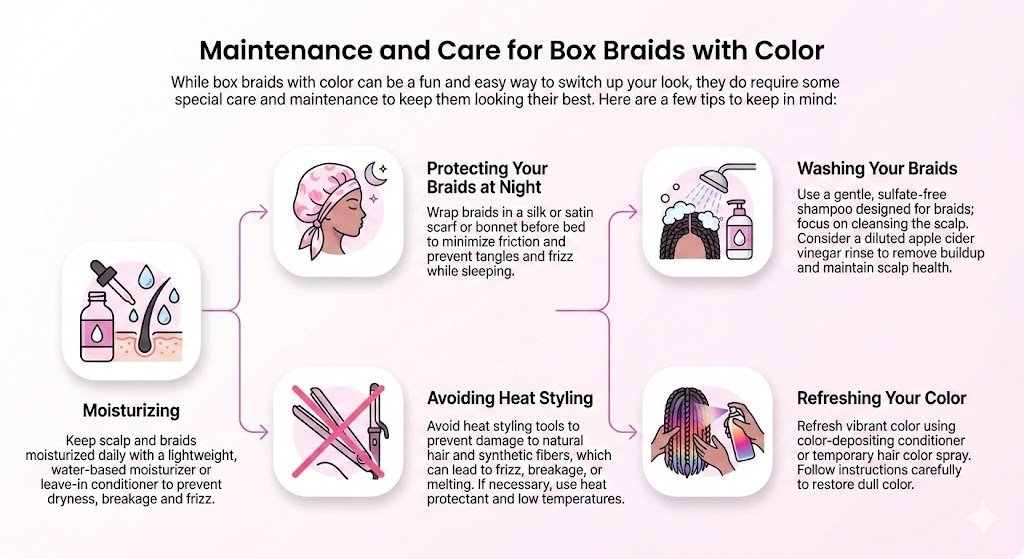
Keep them moisturized, wrap them at night, don’t cook them with heat. Do that and a set carries you for weeks. After that, treat the color as somewhere to experiment, because there’s genuinely no wrong way to wear it. Colored braids earned their spot among the changing fashion trends exactly because of that. The natural hair movement opened the door. The color’s just you walking through it your way.