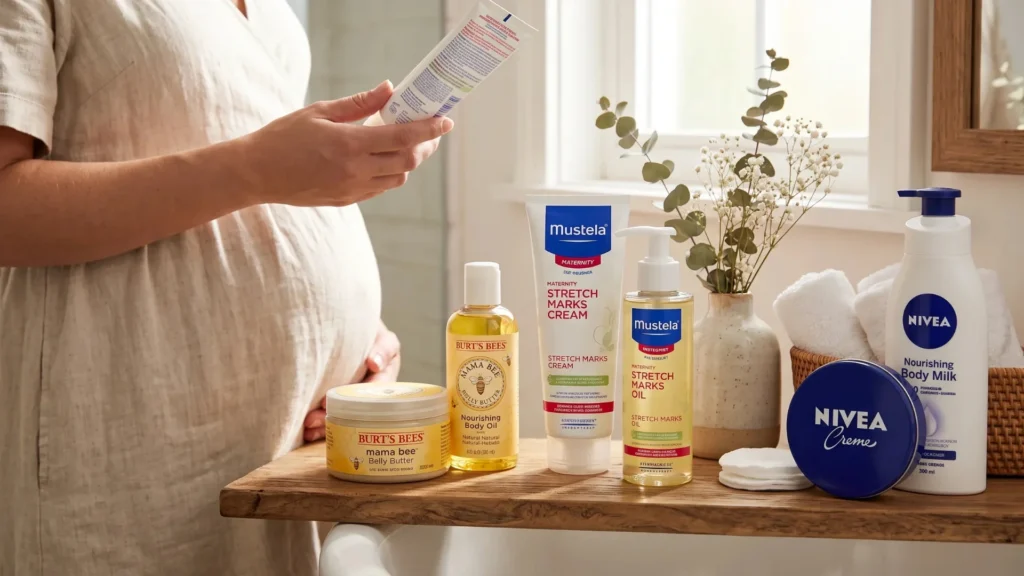
“I’m a pregnant woman. Is Nivea Safe in Pregnancy compared to Burt’s Bees or Mustela?” For the 2 classic Nivea moisturizers, the answer is yes in most cases, and moving to Burt’s Bees or Mustela will not make your skincare safer for the baby simply because those jars are sold for pregnancy.
When I assess a moisturizer, start with the ingredient panel, not the name on the front. Put the 4 creams in this comparison side by side and they differ in only a handful of ways:
- Fragrance: both Nivea creams contain it. Burt’s Bees Mama Belly Butter and Mustela’s fragrance-free cream do not.
- Lanolin alcohol: listed on both US Nivea panels, absent from the other 2.
- Phenoxyethanol, a common preservative: in Nivea Soft and Burt’s Bees, not in Nivea Creme or Mustela.
- Nut and soy oils: sweet almond, coconut and soybean oil appear in Burt’s Bees.
Those are differences in how your skin may tolerate a cream. They are not differences in risk to the pregnancy, and that distinction runs through everything below.
Are Nivea Products Safe to Use During Pregnancy?
The skincare ingredients with real pregnancy warnings are treatment ingredients, retinoids and hydroquinone above all, plus a few prescription medicines that dermatologists prescribe for acne and hair loss. A plain body cream has no reason to contain them, and neither Nivea cream below does.
Are Nivea products safe during pregnancy across the whole brand? It’s hard to answer that for every tube carrying the Nivea name, because the range also includes anti-aging, brightening and sun products that each need their own label check. For Nivea Creme and Nivea Soft, the US ingredient lists show moisturizing ingredients and nothing that appears on a pregnancy avoid list.
Nivea Creme
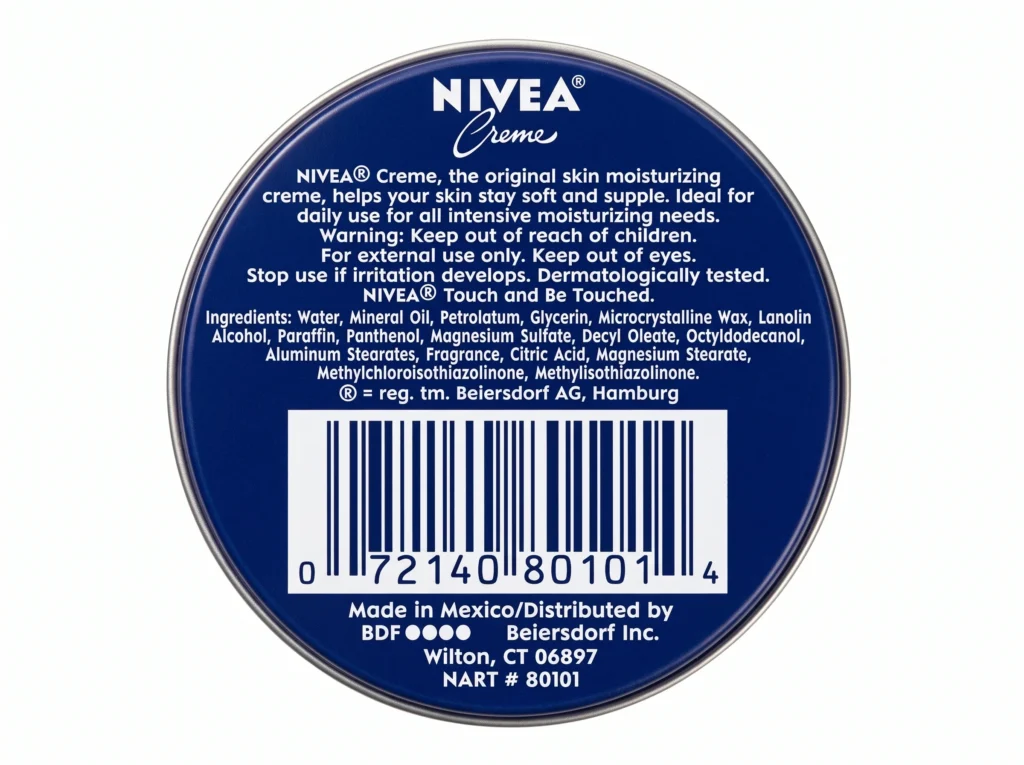
Nivea Creme is a heavy occlusive cream. Mineral oil, petrolatum, microcrystalline wax and paraffin form a film that slows water loss from the skin, glycerin draws water in, and panthenol (provitamin B5) conditions. That film is why it feels greasy on a large area like the belly, and also why it works well on dry knees, heels and hands. Nivea’s US page describes it as dermatologically tested.
Two ingredients on the panel deserve a look, and neither is a fetal concern:
- Fragrance, 12th of 16 ingredients.
- Lanolin alcohol, 6th on the list. Lanolin can cause allergic contact dermatitis in some people.
I wouldn’t automatically recommend changing brands solely because you’re pregnant. If you have used Nivea Creme for years with no rash, pregnancy alone gives you no reason to throw it out. What pregnancy can do is make skin more reactive, and the AAD lists sensitive skin among the common pregnancy changes. A cream you have always tolerated may start to itch or sting in the second or third trimester, and if it does, a fragrance-free cream is the sensible next step. AAD dermatologists also suggest fragrance-free products in pregnancy to lower the chance of irritation.
On evidence, I could find no pregnancy trial on Nivea Creme, and none on the other 3 creams either. A missing trial is not evidence of harm. The ingredients here are among the most widely used in cosmetics, and topical moisturizers are not where pregnancy skin risks come from.
Nivea Soft
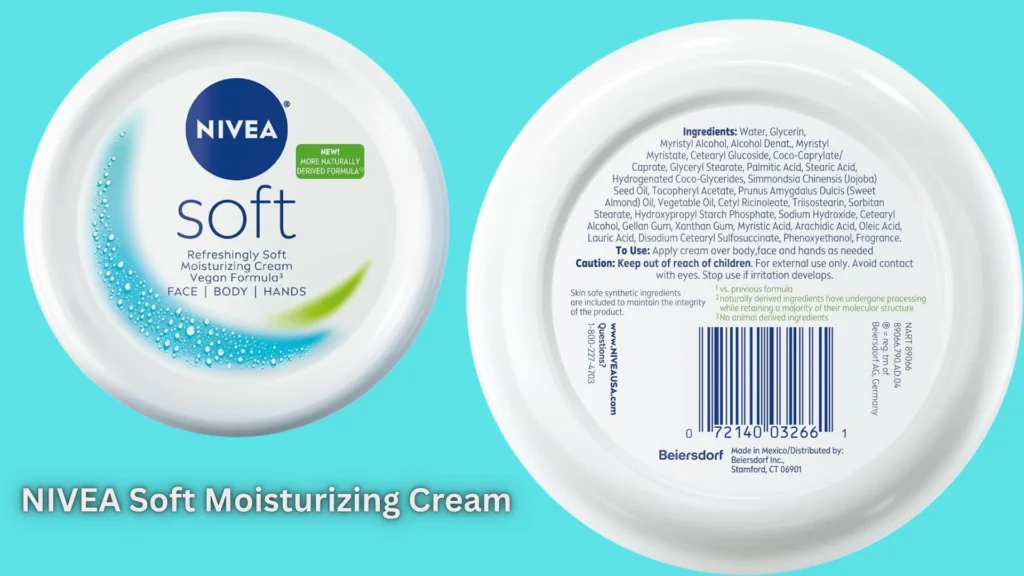
Nivea Soft is the lighter cream, made for face, hands and body, with a faster-absorbing feel. Where Creme leads with mineral oil, Soft leads with water, glycerin and myristyl alcohol, and it adds jojoba seed oil and tocopheryl acetate, a stable form of vitamin E.
Two kinds of “alcohol” appear on its label, and they do different things. Myristyl alcohol is a fatty alcohol, a waxy emollient that softens skin and thickens the cream. Alcohol denat. is denatured ethanol, 6th of 24 ingredients here, and it evaporates on contact, which helps the light feel but can sting skin that is dry, cracked or stretched. AAD dermatologist Shoshana Marmon suggests choosing pregnancy products free of fragrance and harsh ingredients such as alcohols. On an itchy, tight belly, I would choose Creme over Soft.
Soft also contains fragrance, lanolin alcohol and phenoxyethanol.
The formula itself needs checking more than any other product here. Nivea’s UK and Australian sites now sell Soft as a reformulated vegan cream with 95% naturally derived ingredients. The US page, as of October 16, 2026, still lists lanolin alcohol, which a vegan formula could not contain, while reviews posted on that same US page in September and October 2026 describe a “new formula.” I could not confirm which version is on US shelves right now. Read the panel on the tub you own rather than any website, including this one.
Is Burt’s Bees a Better Pregnancy Skincare Choice?
Burt’s Bees Mama Belly Butter
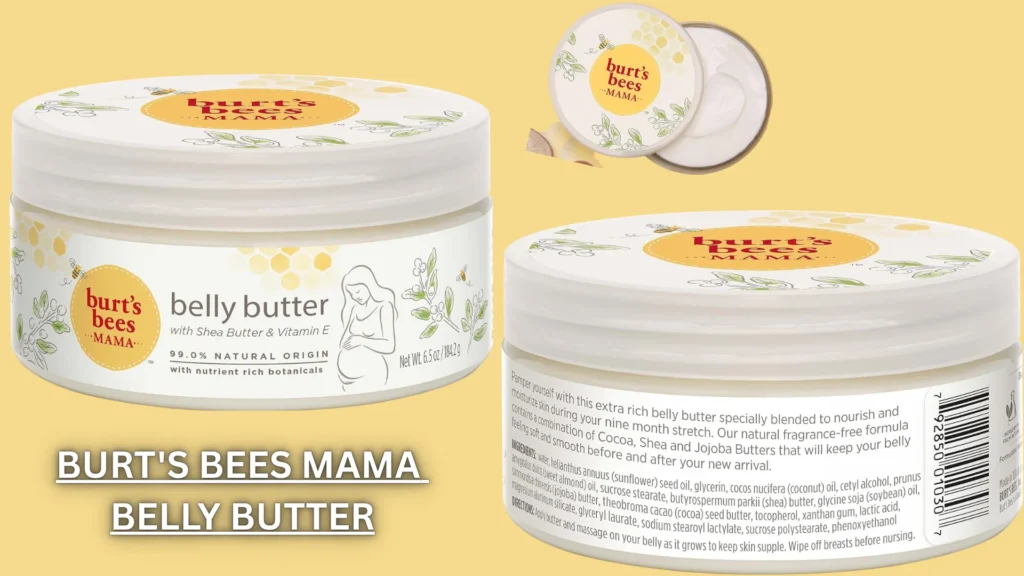
This is a product built for one job, a thick butter for the stretching belly. Its label calls it fragrance-free, 99% natural origin, and formulated without parabens, phthalates, petrolatum or SLS. The base is a stack of plant lipids: sunflower seed oil, coconut oil, sweet almond oil, shea butter, soybean oil, jojoba butter and cocoa butter, with glycerin and tocopherol (vitamin E).
Compared with Nivea Creme, it has 2 practical advantages: no added fragrance and no lanolin. For someone whose belly has started to itch under a scented cream, that matters.
The plant base brings its own sensitivities, though. Before you use it every day over a large area, check it against any allergies you already know about:
- Sweet almond oil, from a tree nut.
- Soybean oil.
- Coconut oil.
If you have a known almond or soy allergy, test it on a small patch of skin for a few days before using it all over.
Natural origin does not settle the safety question in either direction. Burt’s Bees preserves this butter with phenoxyethanol, a synthetic preservative, and that is a good thing: any cream containing water needs a preservative to stay free of bacteria and mold. Phenoxyethanol should not be confused with phenol, which the AAD lists among ingredients to limit in pregnancy. They are different chemicals.
The label also says to wipe it off the breasts before nursing.
So does it beat Nivea? On fragrance and lanolin, yes. On safety for the baby, the evidence does not separate them.
Is Mustela’s Maternity Cream Safer Than Nivea?
Mustela Stretch Marks Cream Fragrance-Free
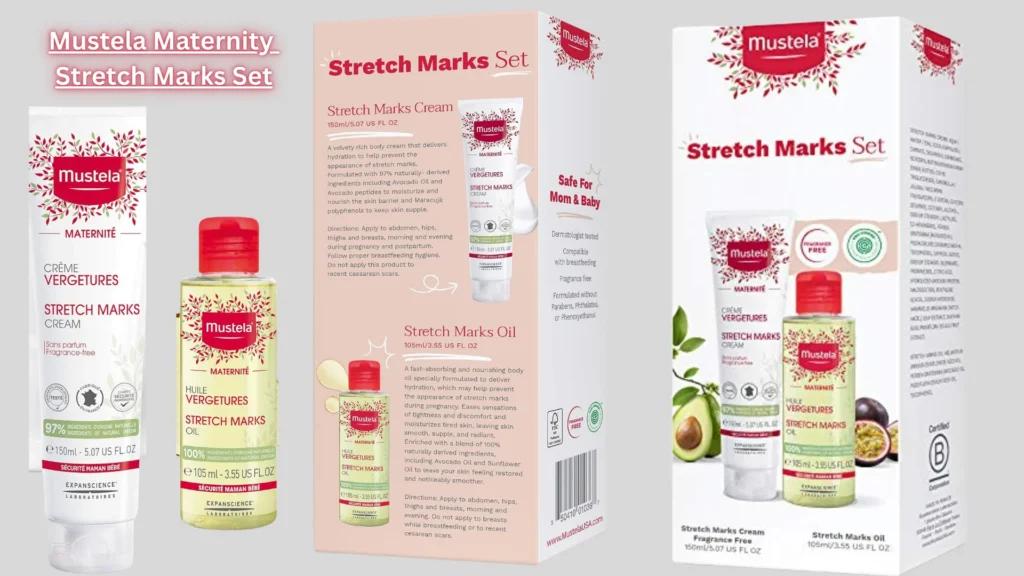
Mustela sells 2 stretch marks creams in the US: this 5.07 oz fragrance-free tube and a larger 8.45 oz Stretch Marks Cream. Check that “Fragrance-Free” is printed on the one you pick up.
The texture is lighter than either Nivea Creme or the Burt’s Bees butter. Its emollients are mostly lightweight esters (coco-caprylate/caprate, dicaprylyl carbonate) with glycerin, shea butter and avocado oil, plus hydrolyzed avocado protein, witch hazel leaf extract and passion fruit extract. It contains no fragrance and no phenoxyethanol, and Mustela advertises it as free from parabens and phthalates as well. A 5.07 oz tube lists at $25.
Mustela’s page makes these claims:
- “Safe for mom and baby.”
- Tested under dermatological and gynecological control.
- Compatible with breastfeeding when following proper skin care hygiene.
- 97% ingredients of natural origin, per the ISO 16128 standard.
The 2 numbers on that page are where need to slow down, so here they are with Mustela’s own footnotes:
- 86% of users said the cream helps minimize the appearance of stretch marks. The footnote: 64 pregnant women, 4 weeks, and the result came from the participants’ own self-evaluation.
- +42% hydration after 1 hour. The footnote: 22 subjects.
A 4-week trial cannot show that a cream prevents stretch marks. They commonly appear in the third trimester, so a month of use, scored by the women themselves, measures how the skin looked and felt to them in that month. The footnotes do not mention a comparison group either. The hydration figure tells you the cream moisturizes, which any decent moisturizer will do in the first hour, and it was not tested against Nivea or Burt’s Bees.
Testing “under gynecological control” is useful information. It tells you the cream was tolerated by pregnant women in a supervised setting, and for someone with reactive skin that carries weight. It does not show the cream is safer than a moisturizer that was never sold for pregnancy.
Mustela also tells users not to apply the cream on recent cesarean scars.
Nivea vs. Burt’s Bees vs. Mustela: Which Brand Is Better During Pregnancy?
| Feature | Nivea | Burt’s Bees | Mustela |
|---|---|---|---|
| Exact products reviewed | Nivea Creme; Nivea Soft (US listings) | Mama Belly Butter | Stretch Marks Cream Fragrance-Free, 150 ml |
| Primary purpose | All-over moisturizer for face, hands and body | Belly moisturizer for pregnancy and after | Pregnancy and postpartum body cream |
| Moisturizing approach | Creme: occlusive film (mineral oil, petrolatum, waxes). Soft: lighter cream with glycerin, fatty alcohols, jojoba oil | Plant oils and butters (sunflower, coconut, almond, shea, soy, cocoa) | Light esters with glycerin, shea butter, avocado oil |
| Added fragrance | Yes, in both | No | No |
| Pregnancy-specific positioning | None | Yes | Yes |
| Skin-sensitivity points | Fragrance, lanolin alcohol; Soft adds denatured alcohol and phenoxyethanol | Tree nut, soy and coconut oils; phenoxyethanol | Plant extracts (witch hazel, passion fruit); avoid recent cesarean scars |
| Main practical advantage | Creme seals moisture into very dry skin | Fragrance-free and lanolin-free rich butter | Fragrance-free, light texture, tolerance tested in pregnant women |
| Evidence for stretch-mark prevention | None | None | Manufacturer’s 4-week self-evaluation in 64 women; no prevention data |
| Superior pregnancy safety established? | No | No | No |
If your skin is calm, the table has no winner on safety. Where the products do separate is fragrance. Both Nivea creams contain it and the 2 maternity products do not, which makes Burt’s Bees and Mustela the better fit once pregnancy turns your skin reactive. Between those 2, the choice is mostly texture: Burt’s Bees for a thick butter, Mustela for something that absorbs faster. Nivea Creme still does the best job of sealing in moisture on cracked heels and hands, and pregnancy does not change that.
The Pregnancy Skincare Ingredients That Deserve Extra Attention
None of the 4 creams above contains any of these. They live in acne, anti-aging and pigment products, so this is the list to check against the rest of your bathroom shelf:
- Retinoids (tretinoin, tazarotene, adapalene, retinol): avoid. Oral retinoids are known to cause birth defects, and topical versions are avoided for that reason.
- Hydroquinone, a skin lightener: the AAD lists it among ingredients to avoid.
- Salicylic acid: the AAD advises limiting concentrations above 2%. MotherToBaby notes that ACOG suggests over-the-counter topical salicylic acid may be used if needed.
- Benzoyl peroxide: the same MotherToBaby sheet says ACOG suggests over-the-counter products may be used if needed, while the AAD lists it under ingredients to use sparingly and discuss with your dermatologist.
- Fragrance: no fetal risk is established. Its concern is irritation and allergic contact dermatitis in your own skin.
- Glycerin, shea butter, mineral oil, petrolatum, plant oils: none of these appears on any pregnancy avoid list.
The distinction I want you to understand is between skin and bloodstream. Skin is a barrier, and only a small amount of a topical product usually reaches the blood. More gets through when skin is broken or irritated, when a product is used often, or when it covers a large area. That is why a retinoid cream used across a large area would worry me far more than a scented moisturizer on your hands.
Can Burt’s Bees or Mustela Prevent Stretch Marks Better Than Nivea?
No cream has been shown to prevent stretch marks, so neither maternity cream can be shown to prevent them better than Nivea.
Stretch marks come from changes in the elastic supportive tissue just under the skin, and the American College of Obstetricians and Gynecologists says there are no proven remedies that keep them from appearing. They affect somewhere between 50% and 90% of pregnant women.
The strongest summary of the research is the Cochrane review of topical preparations for preventing stretch marks in pregnancy:
- 6 trials involving 800 women.
- No difference in the development of stretch marks between women using a preparation and women using a placebo or nothing.
- No clear difference in severity, in the 3 trials that measured it.
- The preparations tested included cocoa butter and olive oil.
Note the dates. The review’s search of the literature ran to October 2011, even though the Cochrane page carries a 2022 citation, so this is older evidence, and the authors themselves call for larger, better-designed trials. Still, nothing newer on these 4 products changes the picture. Cocoa butter, the ingredient most often sold as a stretch-mark fix, was among those tested and did not prevent them.
Hydration and prevention are different outcomes. A well-moisturized belly itches less, and ACOG says moisturizing as the belly grows may reduce itching. That is a perfectly good reason to use any of these creams. It is not the same as stopping the tissue underneath from tearing.
Which Moisturizer Should You Choose While Pregnant?
| Your skin need or situation | Product worth considering | Evidence-based reasoning |
|---|---|---|
| Already using Nivea Creme without irritation | Keep using Nivea Creme | Its ingredients are not on any pregnancy avoid list, and switching brands adds nothing for the baby |
| You want a lighter daily moisturizer | Mustela Fragrance-Free, or Nivea Soft if it suits you | Mustela is light and fragrance-free; Soft is light but contains fragrance and denatured alcohol, so check your current tub |
| Fragrance-sensitive skin | Mustela Fragrance-Free or Burt’s Bees Mama Belly Butter | Neither contains added fragrance, which the AAD suggests avoiding in pregnancy to reduce irritation |
| Dry, tight or itchy belly skin | Burt’s Bees Mama Belly Butter or Nivea Creme | Both are rich; Burt’s Bees avoids fragrance and lanolin, Creme seals moisture in best |
| Preference for botanical-rich products | Burt’s Bees or Mustela | Both are mostly plant-derived; check Burt’s Bees for almond, soy and coconut if you have allergies |
| You want a pregnancy-specific body product | Mustela or Burt’s Bees | Both are made and labeled for pregnancy; that labeling is not evidence of greater safety |
| Concern about stretch marks | Any moisturizer you like and will use | No topical product is proven to prevent them; moisturizing may ease itching |
| Using medicated or anti-aging skincare | Talk to your obstetrician or dermatologist | Retinoids and hydroquinone are avoided in pregnancy; some acne ingredients need a dose check |
Should You Switch From Nivea to Burt’s Bees or Mustela?
Not if your Nivea cream is working. Switching from a tolerated moisturizer is not necessary because you are pregnant, and none of these creams has been shown to protect your baby better or prevent stretch marks better than the others.
Switch when your skin tells you to. If a scented cream starts to sting or itch, move to Mustela Fragrance-Free or Burt’s Bees Mama Belly Butter, choosing by texture and by any nut or soy allergy you have. And spend your label-reading on the acne, brightening and anti-aging products in your cabinet, because that is where pregnancy skincare risk actually sits.