
Yes, Nivea can be a good starting brand if your skincare main need is a rich moisturizer for normal or dry skin. Garnier may be the better first choice if you want a fragrance-free micellar cleanser or a lighter product for oily skin. Nivea Creme contains fragrance and lanolin alcohol. Nivea Soft adds denatured alcohol on top of that. Garnier’s classic micellar water is fragrance-free, alcohol-free and oil-free.
Nivea Creme contains fragrance and lanolin alcohol. Nivea Soft adds denatured alcohol on top of that. Garnier’s classic micellar water is fragrance-free, alcohol-free and oil-free.
So the assumption people arrive with, that Nivea is the gentle one and Garnier is the one with all the chemicals, gets it backwards depending on which products you’re actually comparing.
That’s the real answer to your question. Neither brand wins as a brand. The formula on the specific bottle decides it, and both companies sell products that would suit you and products that wouldn’t.
| Your priority | Look here first | What to check on the label |
|---|---|---|
| Rich moisture, dry skin | Nivea | Fragrance, lanolin alcohol, whether the texture feels heavy |
| Makeup or sunscreen removal | Garnier | The micellar version made for what you actually wear |
| Oily or combination | Garnier’s lighter options | Oil-free, non-comedogenic, and don’t over-cleanse |
| Sensitive or reactive | No winner | Fragrance-free, short ingredient list, patch test |
| Acne | Depends entirely on the product | The active ingredient and its strength |
| A first routine | Either, or a mix | Mild cleanser, matched moisturizer, SPF 30+ |
Neither Brand Sells You a Face Sunscreen in the US
Before the rest of it, a gap worth planning around.
Nivea’s US face SPF product is a men’s post-shave lotion at SPF 15, which sits below the SPF 30 minimum dermatologists recommend for daily wear. Those SPF 50 face fluids you’ll find online are European stock. Garnier doesn’t make a facial sunscreen for this market at all.
Sunscreen does more for your skin than anything else you’ll buy as a beginner, so your third purchase comes from a third brand. Budget for it now.
Is Nivea a Good Starting Brand?
For dryness, yes.
Nivea Creme is marketed for face, hands and body, and the US ingredient list carries glycerin, mineral oil and petrolatum. Those pull moisture in and slow the rate it escapes, which is exactly what skin that feels tight after washing needs.
Two limits worth knowing.
A rich multipurpose cream sits heavily on an oily face, so what works beautifully on your hands may not work on your T-zone. And that fragrance and lanolin alcohol combination means it isn’t an automatic recommendation for anyone whose skin reacts easily.
Nivea Soft feels lighter and lighter doesn’t mean gentler. Its US formula lists denatured alcohol, fragrance and lanolin alcohol alongside the glycerin, mineral oil, petrolatum, dimethicone, jojoba oil and vitamin E.
Judge each product separately. The brand’s reputation for simplicity doesn’t transfer automatically to every bottle with the logo on it, and the same applies when you’re browsing any moisturizer range.
Where Garnier Has the Edge
Cleansing, and it isn’t close. The classic SkinActive Micellar Cleansing Water is listed alcohol-free, oil-free and fragrance-free. Mild surfactants suspended in water lift makeup and oil without scrubbing, and there’s very little a beginner can do wrong with it.
Garnier also sells micellar waters for waterproof makeup, for oiliness, for dullness. More choice helps and it also tempts you toward an active formula you don’t need yet. The plain fragrance-free version is the cautious first test.
One thing it isn’t: a complete routine. Micellar water doesn’t moisturize, it doesn’t protect you from UV, and heavy long-wear makeup or thorough sunscreen removal often needs a follow-up face wash. If a no-rinse product leaves your skin tight or stinging, rinse it off and try something else.
Which Brand Fits Your Skin Type?
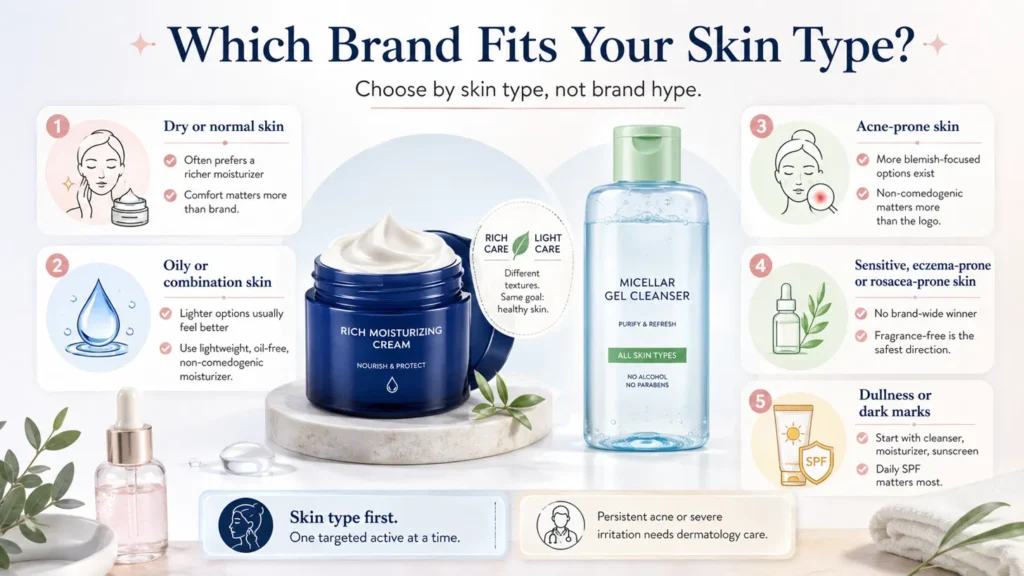
If you’re not certain what your skin type is, our free skin type assessment runs on AAD standards and takes a few minutes. Everything below depends on getting that part right.
Dry or normal skin
Nivea, most likely. Apply a small amount to slightly damp skin and judge it by comfort: skin should feel flexible afterward, not greasy or itchy.
Dry and sensitive is a different case. Richness alone isn’t the answer there, and the American Academy of Dermatology advises fragrance-free products for that combination. A fragrance-free facial moisturizer from any brand beats choosing Nivea purely on its reputation for moisture.
Oily or combination skin
Garnier’s lighter options will feel better than a rich cream, particularly for removing makeup and excess oil.
Oily skin still needs moisturizer. Lightweight, oil-free, non-comedogenic. What it doesn’t need is repeated cleansing to strip every trace of oil away, which tends to make oil production worse.
The AAD’s oily skin guidance recommends a mild face wash and notes that salicylic, glycolic and lactic acids can turn too harsh once irritation starts. One active, only when there’s a real concern for it to address.
Acne-prone skin
Garnier has more products aimed at blemish-prone skin. That doesn’t make any of them an acne treatment.
Nivea isn’t automatically unsuitable either. For a moisturizer, non-comedogenic labeling and how your own skin tolerates the texture matter far more than which company made it.
Deep, painful, scarring or persistent acne needs a dermatologist. Switching brands repeatedly for six months is six months that treatment could have been working. Our team includes a dermatologist working across clinical and aesthetic dermatology, which is part of why we’d rather point you there than sell you another cleanser.
Sensitive, eczema-prone or rosacea-prone skin
No brand-wide winner exists here.
Nivea’s best-known creams carry fragrance. Garnier’s classic micellar water doesn’t. Other products across both ranges vary, so the comparison has to happen at product level.
Look for fragrance-free rather than unscented, since unscented can mean a masking fragrance was added to cover a base smell. Don’t introduce an acid, a serum and a new moisturizer in the same week. And stop using anything that causes persistent burning, itching, swelling or hives.
Dullness or dark marks
Don’t start here. Cleansing, moisturizing and sunscreen come first.
Irritation makes discoloration more noticeable, particularly on deeper skin tones, so the brightening serum you buy in week one can work against you. Once the basics feel comfortable, add one targeted product and follow its directions.
Daily sun protection matters most for this concern, because fresh UV exposure undoes whatever progress you make on uneven tone.
A Beginner Routine Using Either Brand
You don’t need every step from one company. Pick the best product for each job.
Morning
- Cleanse gently if your skin needs it. Dry or easily irritated skin often does better with a water rinse in the morning; oily skin usually wants a mild cleanser.
- Moisturize according to skin type. Lotion or gel for oily, cream for dry.
- Broad-spectrum SPF 30 or higher on exposed skin before going out. Reapply per the label, especially after swimming or sweating.
Evening
- Remove makeup and sunscreen. Garnier’s fragrance-free micellar water handles this if your skin tolerates it.
- Follow with a gentle face wash when you’ve worn heavy or water-resistant products.
- Moisturize. Nivea Creme suits dry skin that tolerates its ingredients; otherwise a fragrance-free facial moisturizer.
Three steps, no actives, nothing to juggle. AAD beginner guidance lands in the same place: mild cleanser, broad-spectrum SPF 30 or higher, products chosen by skin type.
Once that routine has been running comfortably for a few months and you want to go further, that’s the point where a professional facial starts making sense, not before.
Can You Use Nivea and Garnier Together?
Yes, and there’s no benefit to brand loyalty in skincare.
Garnier micellar water followed by Nivea Creme is a sensible pairing for dry or normal skin. For oily skin, keep the micellar water and swap the cream for something lighter and non-comedogenic.
Sensitive skin should take whichever individual formula irritates least, even if that means neither of these brands covers one of your steps. Plenty of gentler alternatives exist at similar prices.
How to Test Something New Without Confusing Your Skin
One new product at a time.
The AAD’s at-home testing guidance suggests applying it to a small test area twice daily for seven to ten days, leaving it on for the same length of time you’d use it normally. Red, itchy or swollen means wash it off and keep it off your face.
If the test comes back clear, work it into your routine while changing nothing else. That way, if something goes wrong later, you can identify what caused it.
Check the packaging every time you repurchase, since formulas change and products sold in different countries don’t always have identical ingredient lists.
What Matters More Than the Brand Name
- Skin type decides the texture and formula you’ll tolerate
- Product role matters, since a cleanser, moisturizer, treatment and sunscreen do four different jobs
- The full ingredient list, because a familiar brand can still contain fragrance or a drying alcohol your skin dislikes
- Label wording: fragrance-free and non-comedogenic mean something, while gentle, pure and natural don’t
- Consistency, since a short routine you actually keep up beats an elaborate one that irritates you
- Sun protection, which neither a moisturizer nor micellar water replaces
This article gives general skincare information and doesn’t diagnose or treat any medical condition.