
Smooth skin does make a bracelet look a bit nicer. That part is fair. But it isn’t why I tell clients to think about their waxing in bend and their good pieces together. The reasons are more ordinary: skin chemistry, the residue that builds up on metal, and getting the order of things right. When the timing is off, your silver darkens sooner, your skin gets irritated under a cuff, or the wax doesn’t grip the way it should. When it’s right, you stop noticing any of it.
How waxing actually works
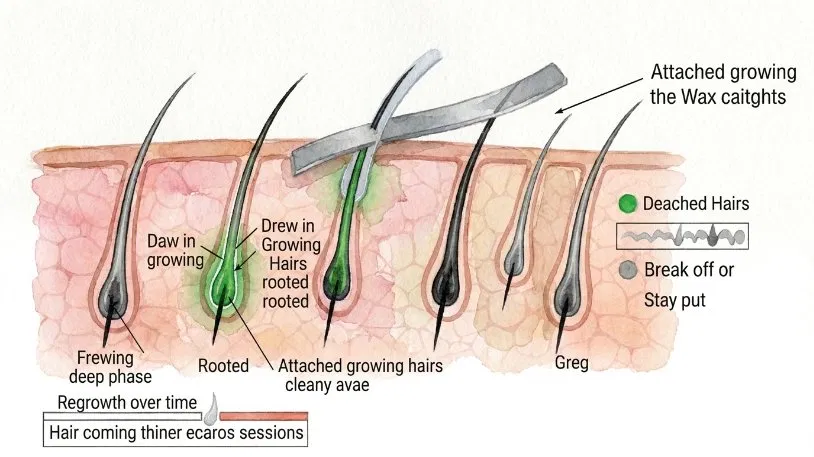
Your hair doesn’t grow on one schedule. At any moment, only part of it is in the growing phase, where it’s still attached at the root. Those are the hairs wax removes cleanly. The rest either break off or stay put. This is why one appointment never clears everything, and why your regrowth comes in thinner after a few months of regular sessions. You’re catching more of the hairs while they’re still attached.
Some things worth knowing before a first appointment:
- Your hair needs about two weeks of growth, roughly a quarter inch, for the wax to hold. If you shaved the day before, there’s nothing for it to pull.
- If you use a retinoid where you plan to wax, stop five to seven days ahead. Tretinoin, adapalene, and strong retinols all thin the surface of your skin. Waxing over them can lift skin along with the hair. Most people are never told this.
- Exfoliate a day or two before, not the same day. A gentle acid lotion clears dead skin so the hairs release easier and you get fewer in growns. Scrubbing the same day leaves the skin raw.
- Coffee and alcohol both make you more sensitive. If you bruise easily or feel waxing strongly, skip the morning cup.
Why a few days before beats the morning
After a wax, the follicles are open and the skin is a little inflamed. The redness is a normal reaction and it settles on its own. For a day or so, though, the skin is more reactive and more open than usual, and that is a bad time to put metal against it.
So book your appointment a few days before big events, not that morning. It has little to do with redness showing. A tight bangle or a carved cuff rubbing against freshly waxed skin can cause irritation bumps, and on an open follicle there’s a small infection risk you’d rather avoid. If you want to wear a bracelet right after your appointment, keep it to a smooth, loose chain and leave the snug or textured pieces for later in the week.
Different metals bracelets behave differently on your skin
Skin tone is one thing. How a metal holds up against your own skin, day after day, is another, and it gets talked about less.
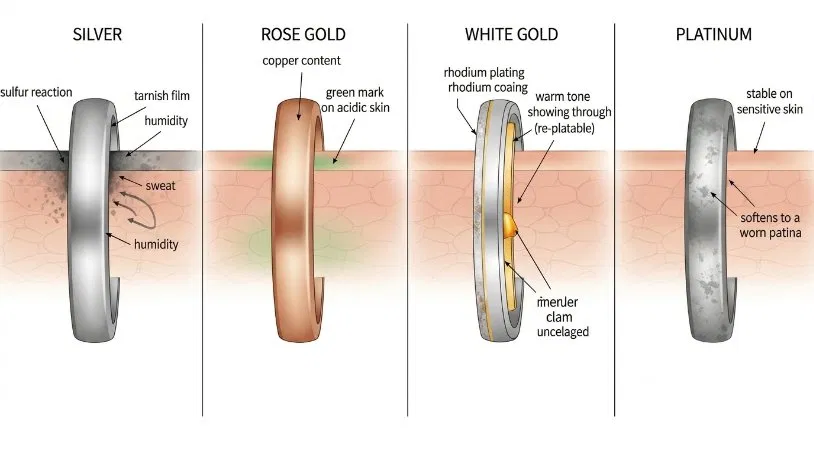
Silver Tarnishes. It reacts with sulfur in the air and in your sweat and builds up a dark film. Humid weather, lotions, even some foods on your hands will push it along faster. So if your silver dulls quickly, that’s usually down to your skin and where you live, not the quality of the piece.
Rose Gold has copper in it. That makes it tougher than plain yellow gold and stops it tarnishing like silver. The catch is the copper, which can leave a light green mark if your skin runs acidic.
White Gold is nearly always coated in rhodium to get that bright white. Over a few years the coating wears thin where it rubs against your skin and a warmer colour starts showing through. Nothing’s wrong when that happens. A jeweller can recoat it.
Platinum gives the least trouble. It’s heavy, it won’t tarnish, it sits fine on sensitive skin, and rather than corroding it just softens into a slightly worn look. If most metals bother your skin, try platinum.
And when one bracelet keeps marking or discolouring you, swap to a metal that gets on with your skin. Polishing it harder won’t fix that.
Lotion and your jewelry
Lotion is the quiet culprit here. Body cream, oils, and self-tanner all leave a film, and that film dulls metal and makes silver tarnish faster. Sunscreen does the same.
The way around it is an old habit jewelers keep: jewelry on last, off first. Rub your lotion in, give it time to actually soak in, and only then put the bracelet on once you’re dressed. At night, take it off before anything else. The metal stays clear of residue, and the bracelet isn’t pressing lotion into skin that’s still calming down from a wax.
A sensible order before a big day
If your hands and wrists are going to be on show:
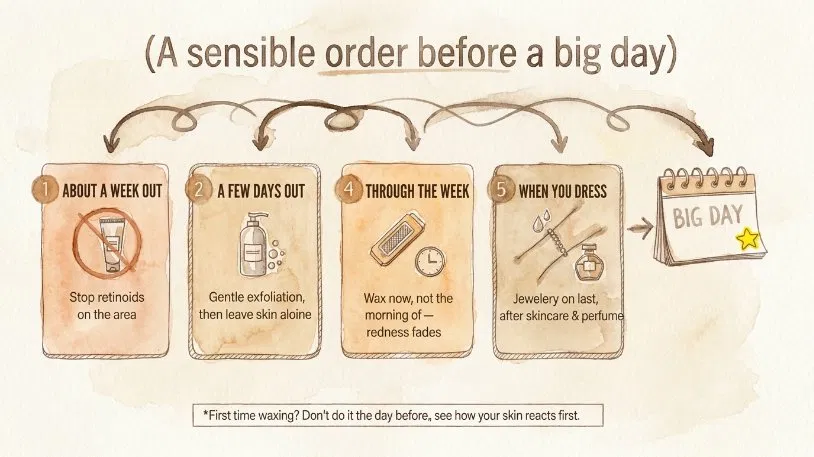
- About a week out, stop any retinoid on the area you’ll wax.
- Two days out, do your gentle exfoliation, then leave the skin alone.
- A few days before, not that morning, get the wax done so any redness has time to fade.
- Through the week, keep the skin moisturized, but let the lotion absorb fully before any metal touches it.
- When you dress, put the jewelry on last, after skincare and perfume.
If it’s your first time waxing, don’t do it the day before something important. Skin reacts differently from person to person, and you want to know how yours responds first.
Aftercare
For the first day or two, don’t go to the pool, sauna or hot tub or do any hard workouts. Open follicles + heat, sweat or chlorinated water = irritation + breakouts. Two reasons to hold off: some jewelry doesn’t mix well with chlorine, either.
Avoid heavy perfume and active skincare on the area for a day as anything with alcohol will sting. In a few days, if you want to keep ingrowns down, use a gentle salicylic acid product instead of a gritty scrub. The scrub dragged over skin that was still healing.
In short
A bracelet is not going to smooth your skin all by itself. But the work that goes into it – exfoliation, hydration, keeping product away from your metal, getting the wax timing down so your skin isn’t reactive – changes how your pieces wear, how they photograph, how long they keep looking good. It is all about chemistry and sequence. Do both and you don’t get the little problems most people don’t know about until it’s too late.