
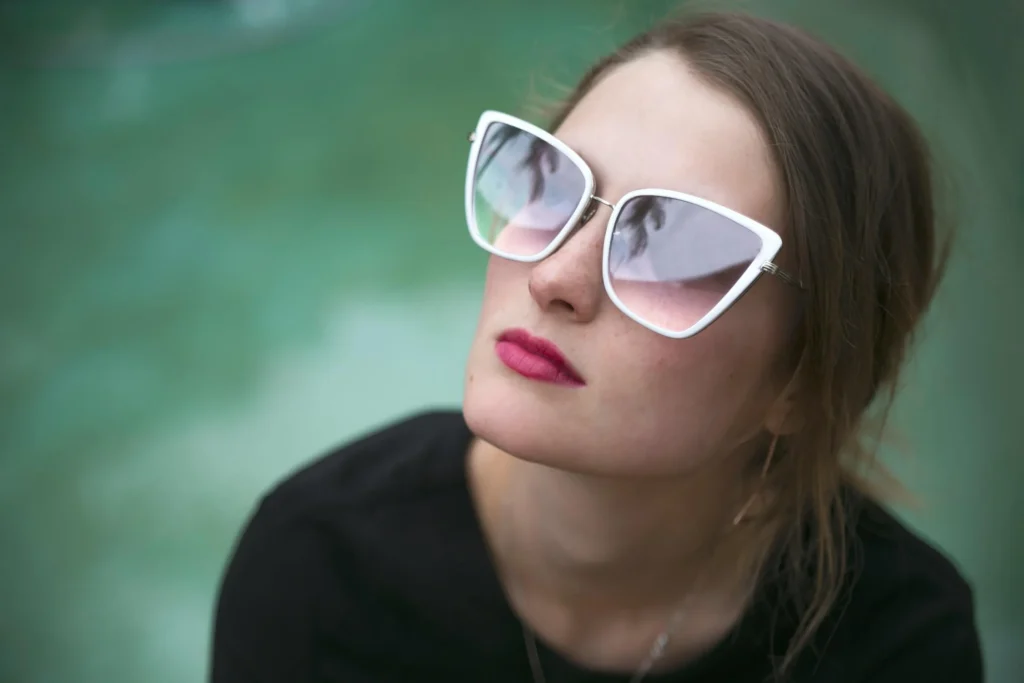
Most people reach for sunglasses on a bright day thinking about squinting. Not cancer. But protection is doing more work than style here, even if style is what gets you to actually buy a pair.
- Sunglasses aren’t simply for keeping a low profile or making a fashion statement.
- UV-rated sunglasses can also provide crucial protection for your eyes and the delicate skin surrounding them.
- To shed more light on the topic, here are a few things you should know:
Not All Sunglasses Provide UV Protection
Three kinds of UV light come down from the sun.
- UVA. Goes deeper. Drives long-term skin aging. Linked to cataracts over time.
- UVB. Causes sunburn. Bigger role in skin cancer risk. In the eye, causes photokeratitis, basically sunburn on the cornea.
- UVC. Absorbed by the ozone layer before it reaches you. Welding torches produce it directly though, different hazard entirely.
UVA and UVB are what matter day to day.
Here’s the part most people don’t know. A dark lens with no real UV filter is worse than no sunglasses at all. Dark lenses make your pupils dilate like they would in low light. If the lens isn’t blocking UV, more of it reaches the back of your eye than would’ve gotten through squinting bare-eyed.
Why UV Protection Matters
- Eye damage. Linked to cataracts, macular degeneration, and pterygium, a growth on the eye sometimes called surfer’s eye. Treated surgically or with steroidal eye drops.
- Glare. Polarized lenses cut reflection off water, snow, pavement.
- Comfort. Bright light strains the eyes. Sunglasses remove that.
- Skin protection. The skin around your eyes is thin and burns easily.
- Vision. Certain tints sharpen contrast, skiing especially.
Polarized isn’t the same thing as UV protection.
Polarized lenses cut glare, which is why you can see through a river’s surface wearing them. That’s unrelated to UV blocking. Plenty of polarized glasses carry no UV rating at all.
You Don’t Need Wraparound Sunglasses
Regular frames work fine. Tortoise shell shades block UV just as well as anything wraparound.
There’s no such thing as eyelid sunscreen, either. Regular sunscreen risks irritation on that thin skin and the bony socket around it. A frame and a hat brim are the actual protection there.
Price Doesn’t Buy Better Protection
UV blocking exists at every price point.
Check the tag for the UVA/UVB rating directly. Buy somewhere reputable. Amber or brown lenses help contrast if you have macular degeneration or diabetic retinopathy. For driving, brown, gray, green or yellow all limit distortion reasonably. If color and rating conflict, take the rating.
Transition lenses don’t always provide protection. Darkening outdoors is one spec. UV blocking is a separate one. Confirm both.
Designer sunglasses don’t provide better protection. Look for UV400 or 100% block on the tag, whatever the name on the frame says.
Yellow lenses filter less UV than gray or brown. Worth knowing if that tint is the one you like.
Sunglasses and Cancer Risk
Basal cell carcinoma is the most common malignant tumor on the eyelid by a wide margin, roughly 80 to 90% of malignant eyelid tumors across the published research.
UV exposure is an established risk factor for it.
Eyelid melanoma is separate and rarer. Ocular melanoma splits four ways, uveal, conjunctival, eyelid, orbital. The UV link is clearest for the eyelid type. The other three are less understood.
So the honest version: sunglasses cut UV exposure to the eyelid, and less exposure means lower risk there. Real and defensible. Not the same as “sunglasses prevent cancer.”
Choosing the Right Pair

UV rating first. Above everything else on this list.
| Lens Color | What It Does |
|---|---|
| Gray | Reduces brightness without shifting color |
| Brown/Amber | Boosts contrast and depth, good for hiking or golf |
| Green | Balances contrast and color, suits outdoor sport |
Material:
- Polycarbonate. Light, impact-resistant. The sport choice.
- Glass. Sharpest optics, scratch-resistant, heavier, can shatter.
- Plastic. Cheap, light, scratches easiest.
Frame shape for various face shapes:
- Aviators suit oval and square faces.
- Wayfarers flex across round, oval, square.
- Cat-eye flatters oval and heart shapes, lifts cheekbones.
- Round frames soften angular faces.
- Oversized reads well broadly, especially round and oval.
Fit gets skipped more than it should. Bridge sitting without slipping. Temples reaching the ears without pinching. Lens covering the eye without swallowing the face.
Prescription options exist too. Plenty of retailers now build a real prescription into a proper sunglass frame.
What’s Trending Right Now

Sunglasses are functional first, but they are also a fashion statement.
- Sustainable materials. Recycled plastic, responsibly sourced wood, gaining ground.
- Retro. ’70s through ’90s styling back in force. Oversized shapes, tinted lenses, geometric outlines.
- Bold color. Bright pink and deep blue where neutral used to sit.
- Minimalist. Clean lines for anyone who wants the frame to disappear into the outfit.
The Future of Sunglasses

As technology advances, the future of sunglasses looks promising. Innovations such as smart sunglasses with built-in augmented reality features and advanced lens technology are on the horizon. These glasses could integrate with smartphones, providing notifications and navigation while protecting your eyes.Moreover, advancements in lens technology will likely lead to improved UV protection, glare reduction, and even lenses that adjust to changing light conditions, ensuring optimal vision in various environments.
What’s Coming Next
Smart sunglasses with built-in displays and navigation are edging closer to normal. Lens tech keeps improving on filtering and adaptive tinting.
Get the rating right first. Color, shape, whatever trend catches your eye, is yours to enjoy after that. It’s what actually decides whether the pair you pick highlights your face and suit your lifestyle, or just looks good sitting in a drawer.